
Since the early days of Peace Corps in Morocco, many things have changed. I’ve said that before and I will no doubt say it again as long as I write here. As a senior citizen I do not take change for granted.
One development that has fascinated me, perhaps because many years ago I took college courses in geology, is Morocco’s increasing prominence in the world of paleontology stemming from frequent fossil discoveries that date from the time of the dinosaurs.
When the supercontinent Pangea could no longer abide by itself and decided to break up about 200 million years ago, North America and North Africa went their own ways and each got custody of some of their dinosaur children. Those children, separated by waters too deep to swim, evolved differently, and that is the interesting point of a recent article in The Conversation. The North American branch of the tyrannosaur family sports numerous fossil remains of T-Rexes from Montana, Alberta, and North Dakota, enough for some to have been sold to private collectors. Fossils of their North African relatives are rarer and are different in significant ways.

Much of Africa consists of high plateaus, mountains, and deserts. Until recently, Europeans knew little about Africa’s interior because rapids and waterfalls rendered the continent’s great rivers unnavigable for large craft. Volcanism, erosion, and rising sea levels have left Africa with relatively few areas where the fossil record is long and well-preserved. Fortunately, Morocco has been well endowed with fossil deposits where, in recent years, paleontologists have made numerous important discoveries.
Today some tourism companies tout fossil as souvenirs of Morocco, and I would never begrudge poor Moroccans for selling fossils. Just the same, I think that preservation of the country’s most important fossil beds as important cultural heritages, much as Canada has protected the Burgess Shale in the Canadian Rockies and Britain its Jurassic Coast, should be incumbent upon the government of Morocco.
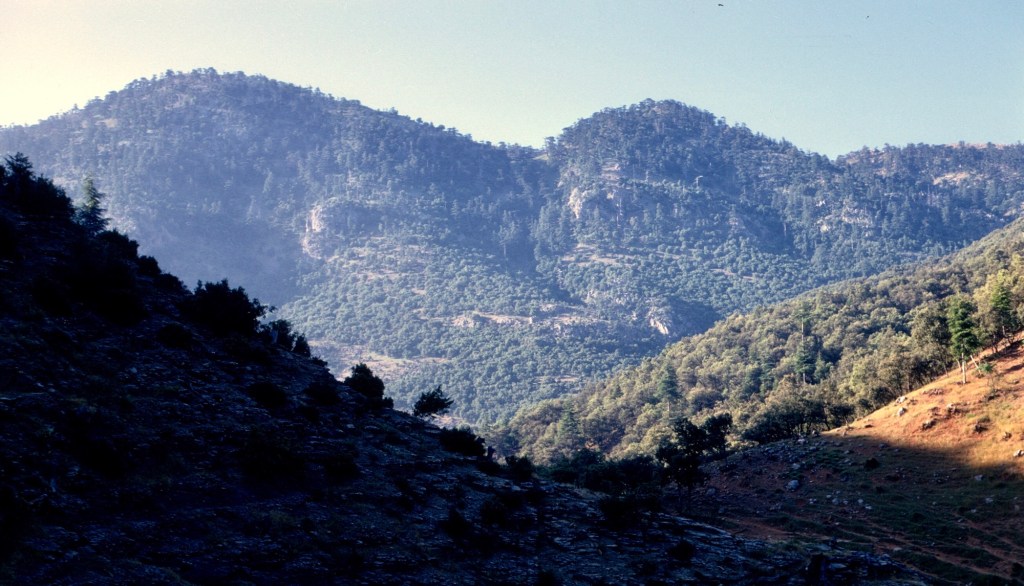
I did not return from Morocco with any rare fossils, but I do remember, when rambling about Jbel Bouiblane, that the gullies carved in the the mountainsides by melting winter snows did contain many fossils. In May 1969, on the outing described elsewhere on this blog, John Paulas found a large ammonite and had to be pulled away from the stream bed where he stumbled upon it so we could continue our way.
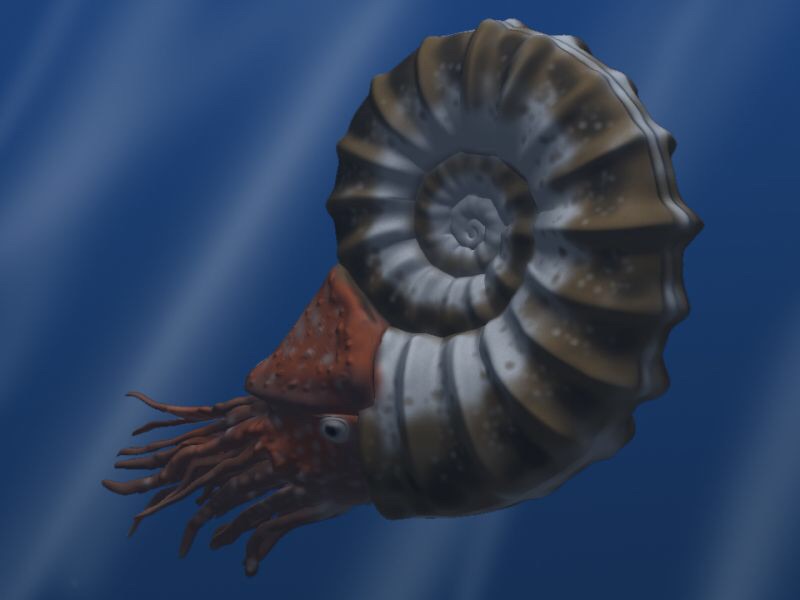
The ammonites had coiled shells varying from a few millimeters to over two meters wide. All ammonites were predators as are their modern cephalopod relatives, squid, octopuses, and chambered nautiloids. Though relatively common, overfishing and habitat destruction menaces the latter as well as almost all living things in the ocean today.

Interestingly, in medieval Europe, ammonite fossils were often called “snakestones” or “serpentstones” and thought to have religious origins or curative powers. They constitute a common fossil on southwest England’s Jurassic Coast as well as on the Dinosaur Coast, near Whitby in North Yorkshire, England, where Captain Cook learned his seamanship and Dracula’s ship washed ashore. Whitby’s coat of arms features “snakestones.”


Interesting post.
LikeLike