
Just recently, I was asked by a Moroccan reader of this blog, who wrote from Alberta, Canada, if I had photos that I could share of the Cherry Festival.
Now, Morocco, spectacular for its natural beauty, is also be a country of spectacles. For me, the Marrakesh Folk Festival comes to mind immediately, along with the various celebrations of holy men and religious fraternities although there are many other culture and sports events. Still, there are many smaller festivals that are less well-known. Among them, the Cherry Festival in Sefrou is the oldest, having been founded in 1920.
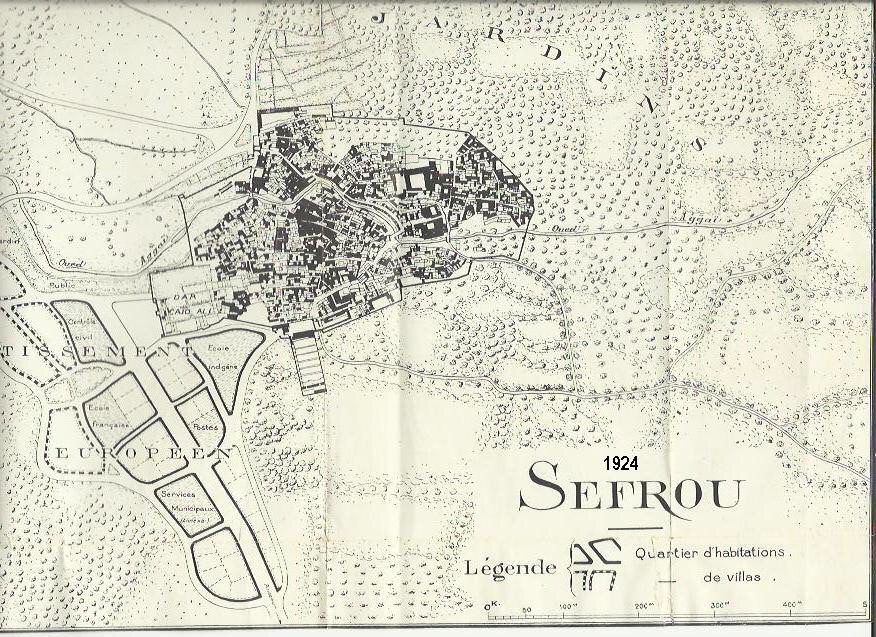
Sefrou, only 28 kilometers south of Fes, has one of the best known local festivals, La fête des cerises. This ancient city, very close to Fes, has traditionally been the last truly urban place south of Fes, on a road formerly known as the treq es-sultan, the king’s road. A major highway follows the old caravan route, crossing the Middle Atlas Mountains, descending onto the plains of the upper Moulouya River, and then rising again to cross the High Atlas Mountains to end in the Tafilelt, birthplace of the ruling Alouite dynasty, on the very edge of the Sahara. Today tourists travel that highway to reach the impressive sand dunes at Erfoud, and truckers carry their cargos of manufactures and dates and saffron to and from Fes, braving slippery snow-covered roads on the Middle Atlas plateaus.

Once a home to a very large Jewish community, many Jewish tourists now visit the city since the establishment of diplomatic relations between Morocco and Israel. There are several websites dedicated to documenting the Jews of Sefrou, and the city itself dates back to the time of the founding of Fes or perhaps even earlier.

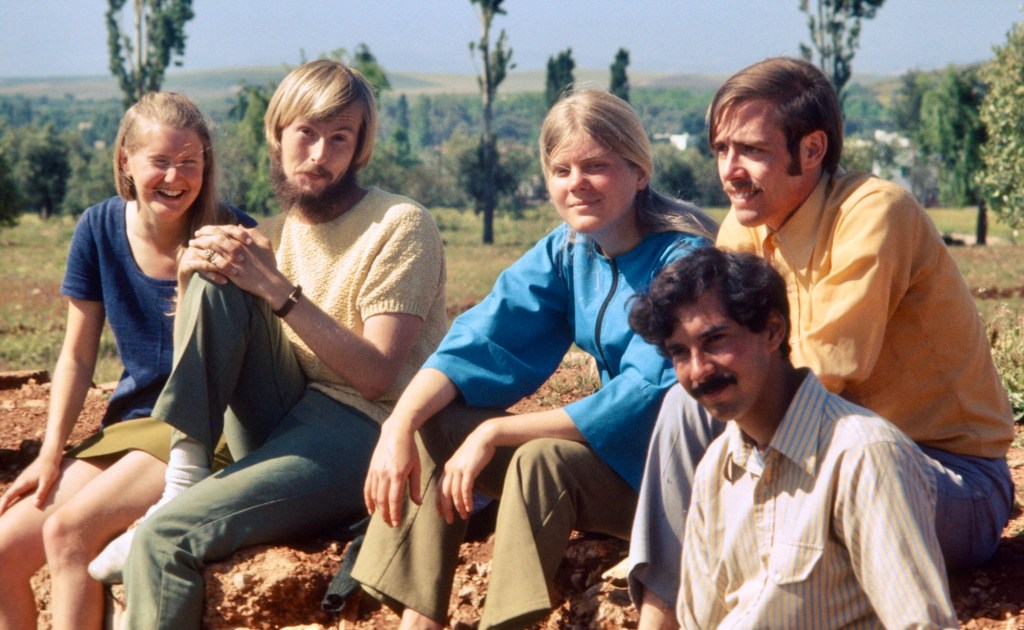
Not long after I moved to Sefrou in 1968, I attended Sefrou’s Cherry Festival for the first time. Gaylord Barr was already in Sefrou working at the Ministry of Agriculture CT (Centre des travaux agricoles). Jerry Esposito, who had been teaching English at the newly opened lycée, may have completed his service and already left the country by time of the festival in June. Carolis Deal and John Abel, who had started the primary school chicken coop that I took over, also had left.

Several other volunteers showed up in Sefrou to attend that year: Phil Morgan, Marc Miller, and Steve Boeshar.
Sefrou’s proximity to Fes and easy access made the Cherry Festival a major regional attraction, and, with volunteers already living in Sefrou, accomodation was never a problem for the visitors.
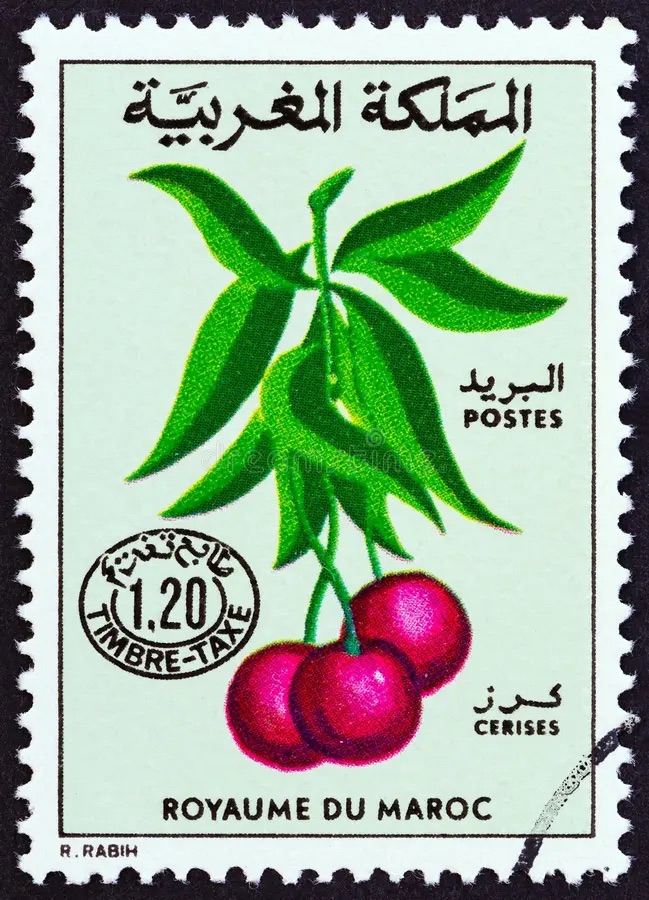
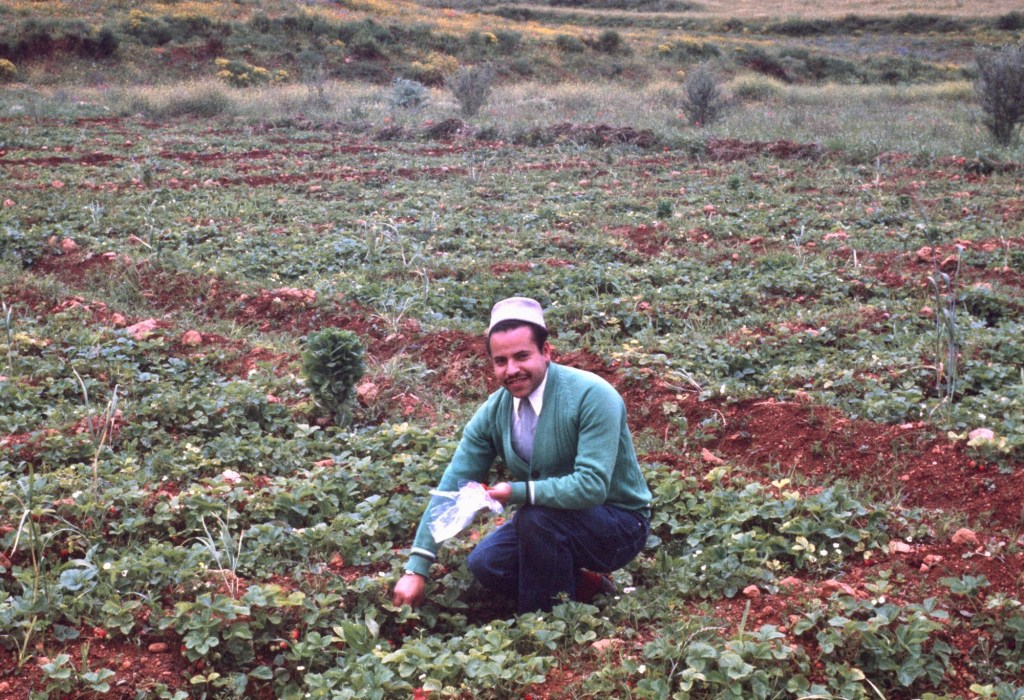
I knew little about the event, other than it featured cherries. Moroccans call cherries hab el-moulouk, which mean the love of kings, and the local variety, el-beldi, is reputed to be especially sweet and flavorful. Sefrou occupies a mountain depression at a high enough altitude for cherries to thrive, but the city had many other fruits and vegetables in the old gardens that surrounded it. In the orchards grew oranges, pomegranates, figs of more than one variety, and many olives trees. I really liked the local strawberries more than the cherries.
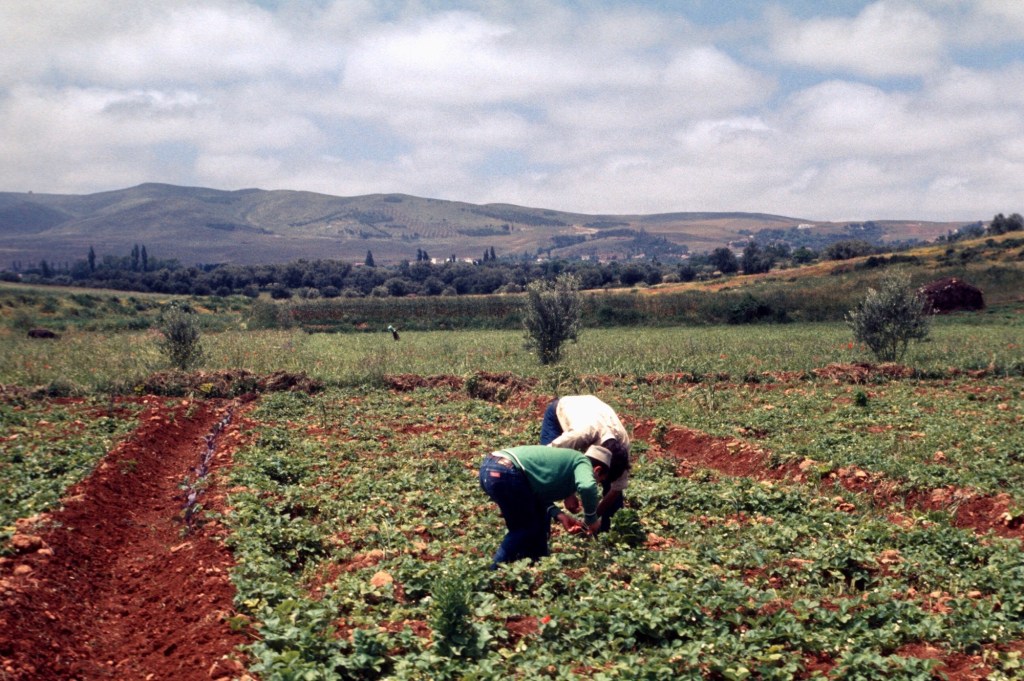

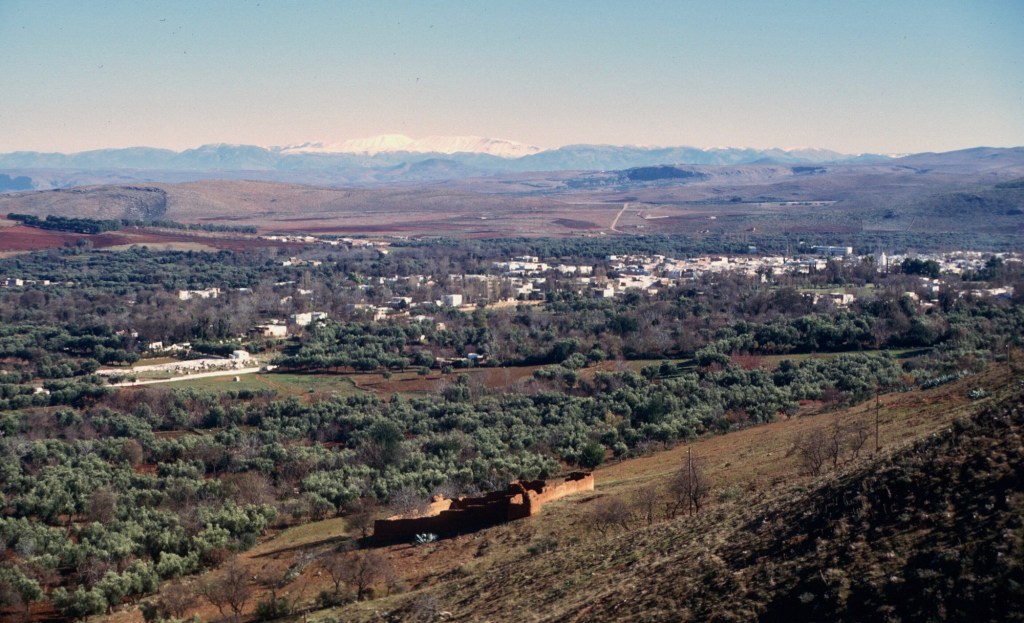
The city population has more than doubled since I lived there, and the built-up area has spread far beyond the old city’s walls. The growth surprised Gaylord Barr who stopped in Sefrou on a trip home from Saudi Arabia in 1997. In my memory, the extra-muro areas, excluding the ville nouvelle, were mostly limited to the Derb el-Miter, Habouna and Seti Messaouda quarters. I make this digression into the demography and urbanization of Sefrou before the sprawl simply to underline how easy it used to be to walk out of the medina, and, within a few minutes, be in the gardens that surrounded the city. On Fridays women would walk in groups, small children in hand, to picnic in the orchards, eating fresh fruit, getting some fresh air, and, of course, gossiping over tea. I loved the proximity to the country and took frequent walks to the neighboring village of Bhahlil, famous for use as caves for dwellings.

People used to talk about Sefrou before the flood. I wonder if they now talk about Sefrou before the sprawl, the time when almost everyone, save the rich and powerful and foreigners, lived in and around the medina. The gardens and orchards of Sefrou characterized the city in those days, and sometimes travelers not unsurprisingly likened the city to an oasis.
The term moussem has been used to describe the festival, but from what I can gather, the Cherry Festival, created around 1920, was celebrated more as an agricultural fair in the European or American sense. The word moussem often has the meaning of a religious pilgrimage to the tomb of a local saint, common in the Maghreb. There were several zawias, or religious brotherhoods, located in Sefrou, as well as a marabout and a few special places sacred to the locals, but I never witnessed a regional religious celebration on the scale one finds at Moulay Bouchta or Jbel Alam. The Cherry Festival appeared to be a uniquely secular event in a country where religion permeated daily life and most public ceremonies. The selection of a “Miss Cherry” and parading the young woman struck me as at odds with Muslim values.
There were, of course, the usual tented dining facilities for local dignitaries that one would find at any public Moroccan celebration as well as hawkers of wares, foods, sweets, and drinks. People from the medina and the countryside circulated in the ville nouvelle.




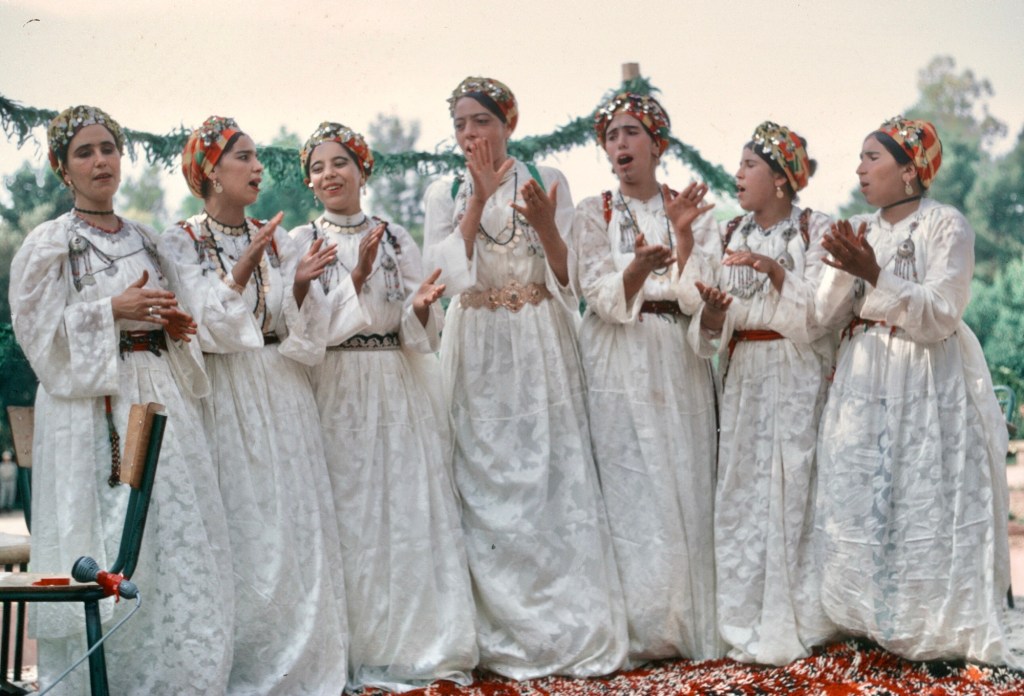
A jury of prominent locals selected a Miss Cherry, who was paraded down the main street of the ville nouvelle aboard a float. One of the floats that first year also featured dancers performing as they were carried along.


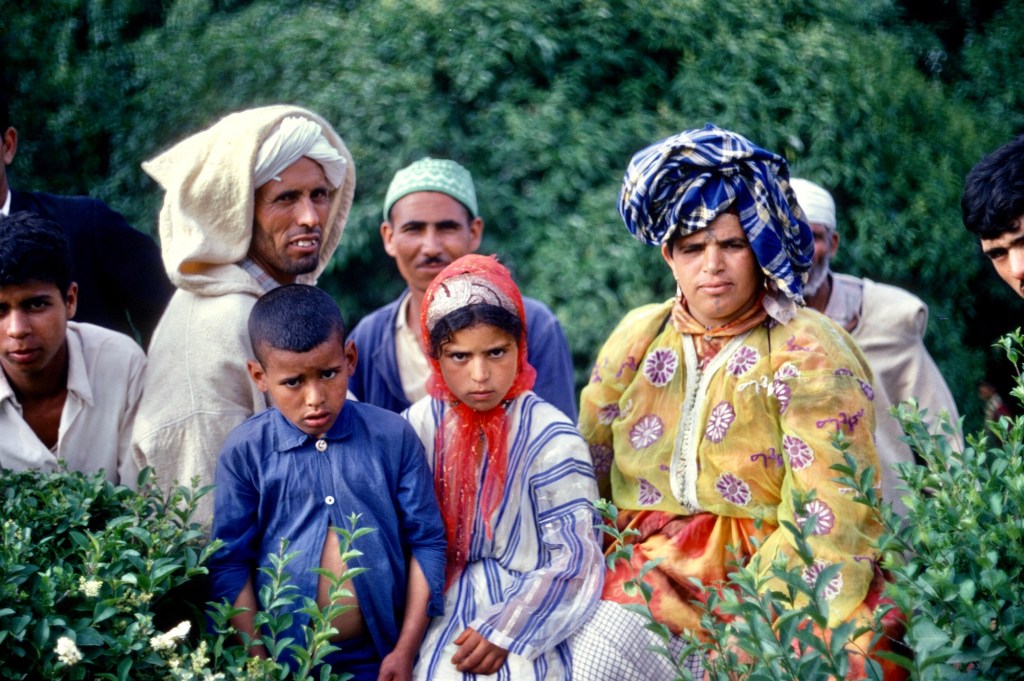
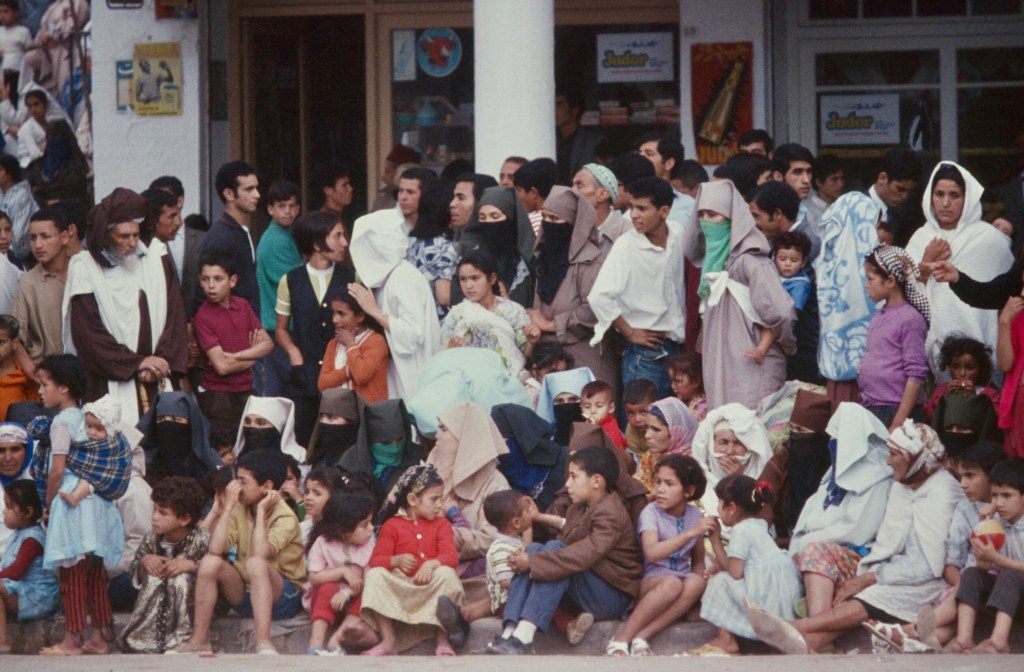
The parade included the public display of a woman quite unusual in a land where women covered themselves in public. The crowds along the main street of the ville nouvelle were curious.


The festival did offer the opportunity for religious brotherhoods to perform, perhaps as entertainment for the spectators, but as serious ritual for the performers.
I have always referred to those I saw as Aissawa, which would have made them part of the Sufi brotherhood centered in Meknes. A large shrine with a mausoleum where the Sufi master lies, Ben Aissa, who is also referred to as shaykh el-kamal, the perfect leader, exists in Meknes. An important moussem takes place there every year on the day celebrated for the birth of the Prophet Mohammed, the Mouloud.


In the first Cherry Festival that I attended, a group of Aissawa or, perhaps, Hamadsha, who ate fire and handled biting snakes, danced themselves into a trancelike state. A few of the photos show the wide-eyed faces of onlookers: these performances were far from the formal rituals of everyday Islam!

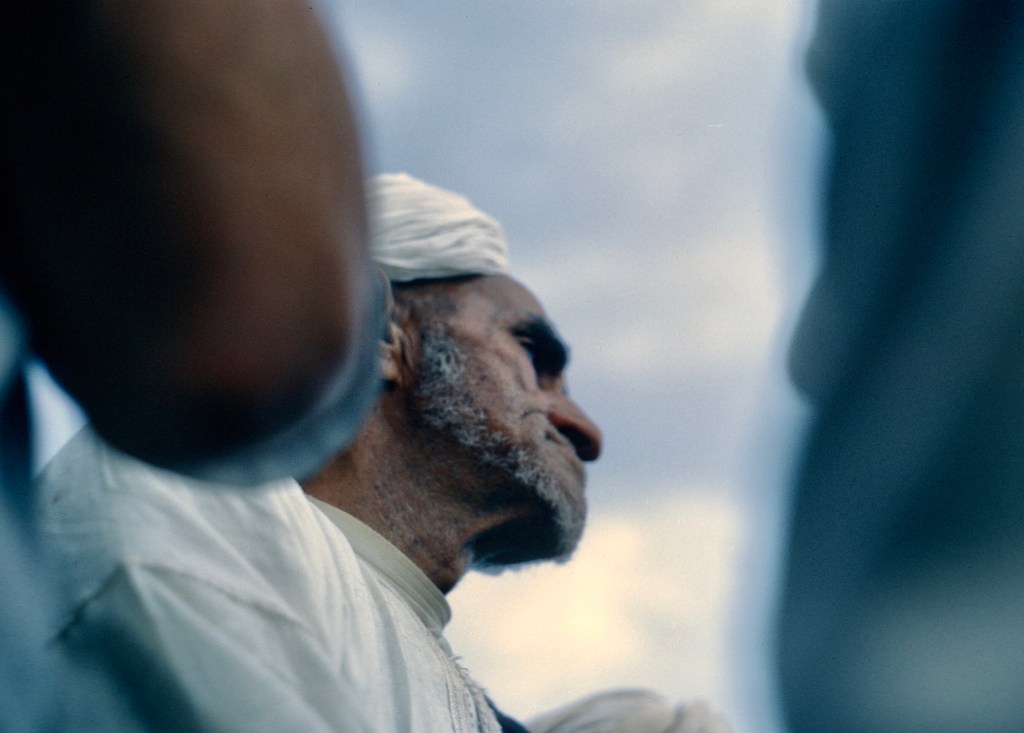
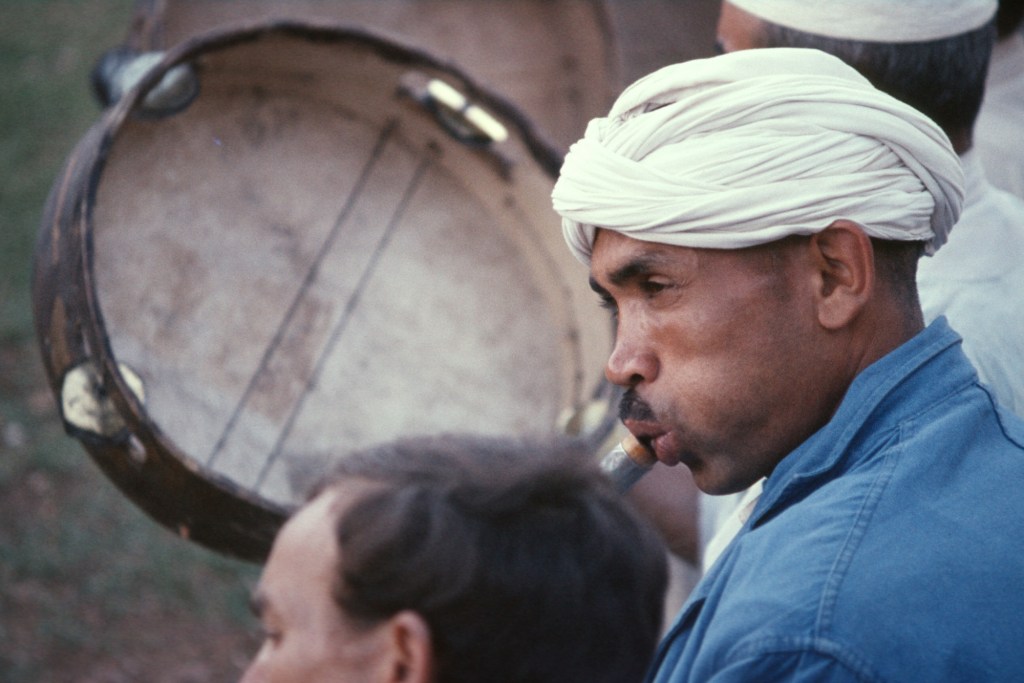
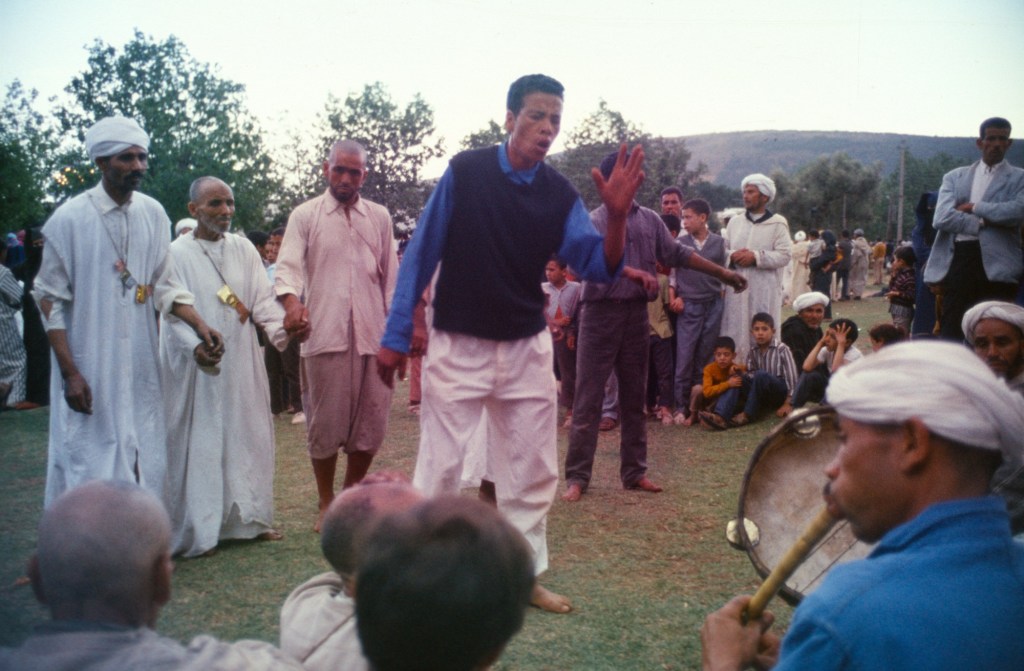
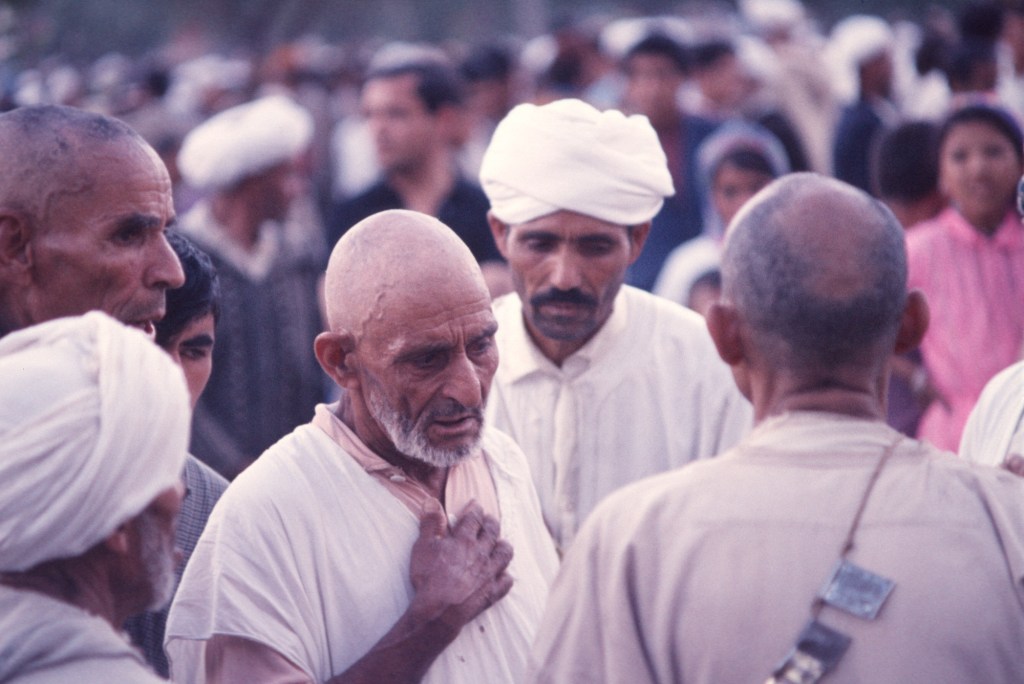

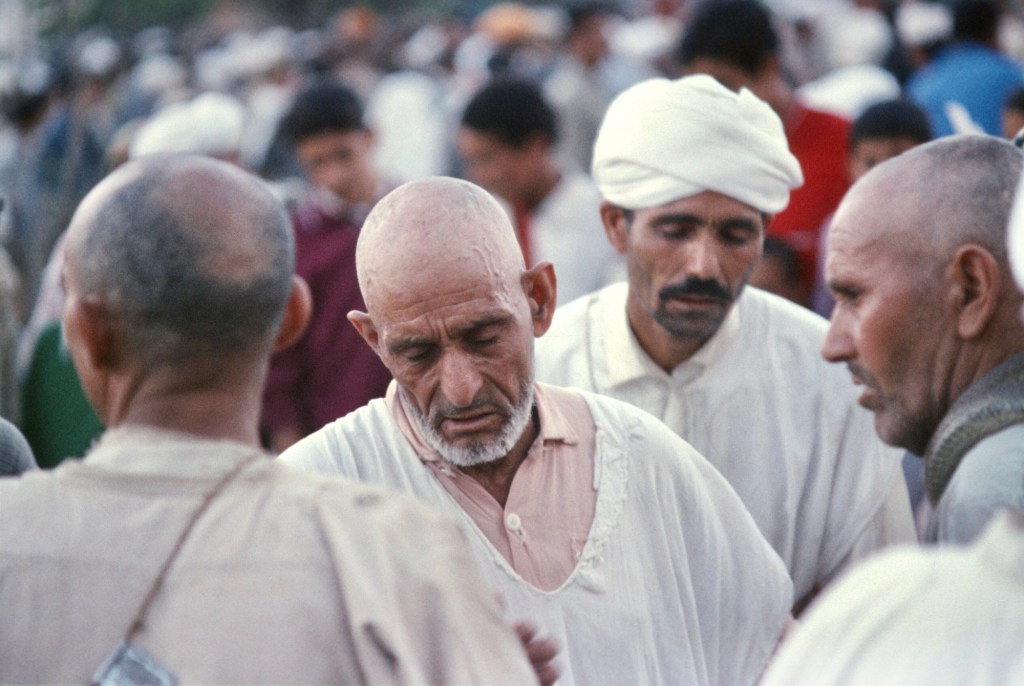
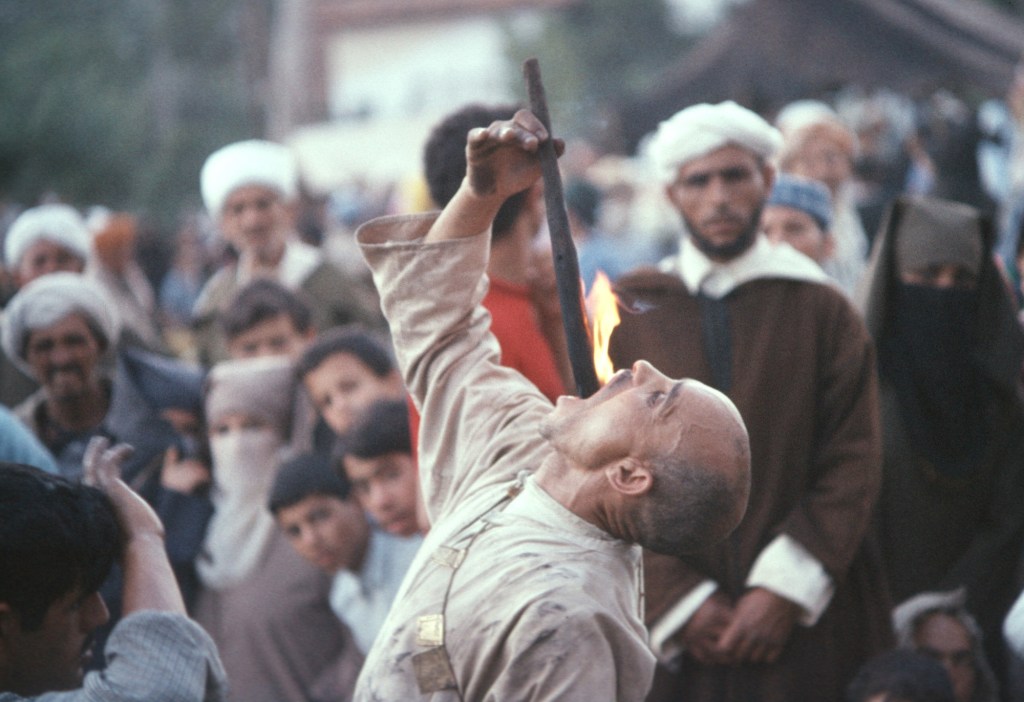

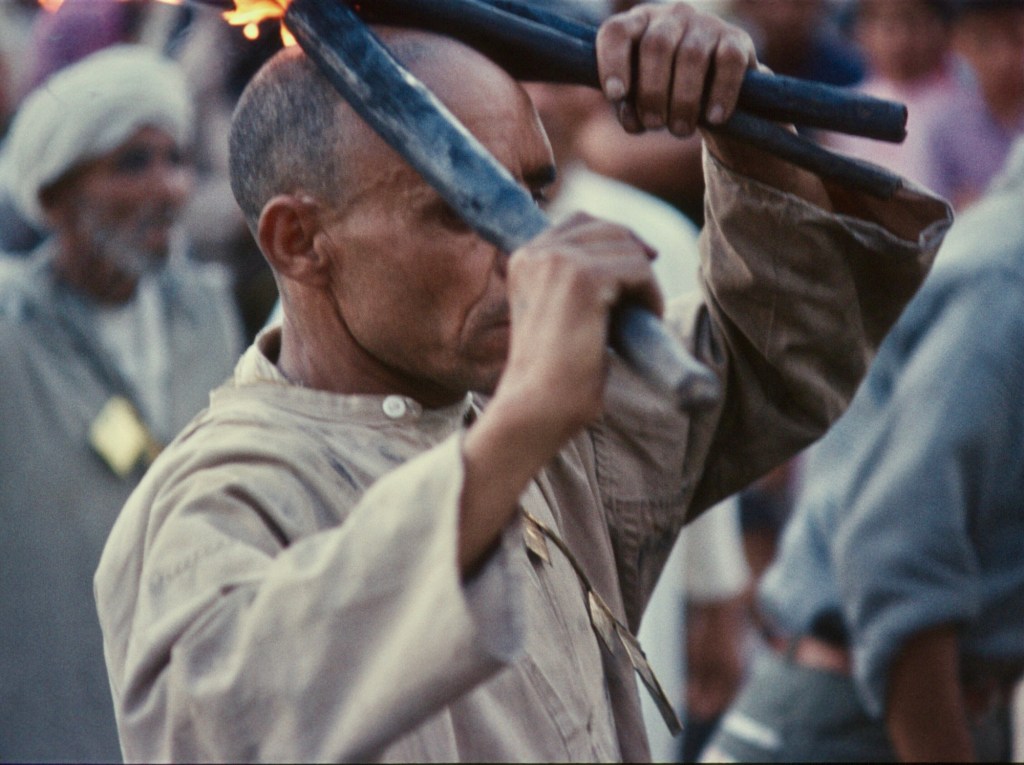

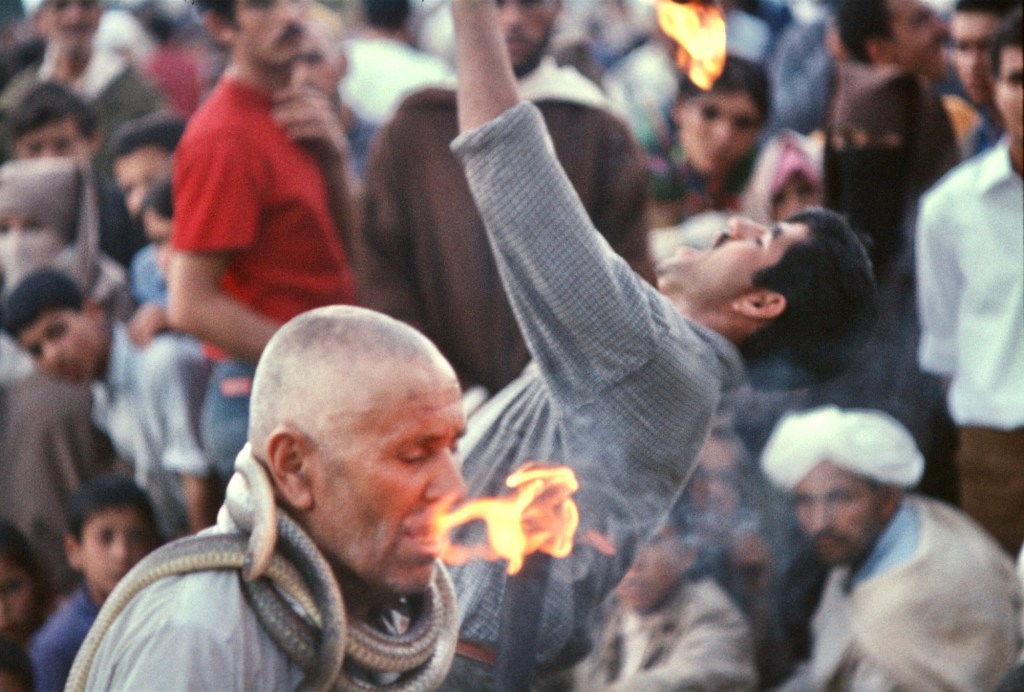
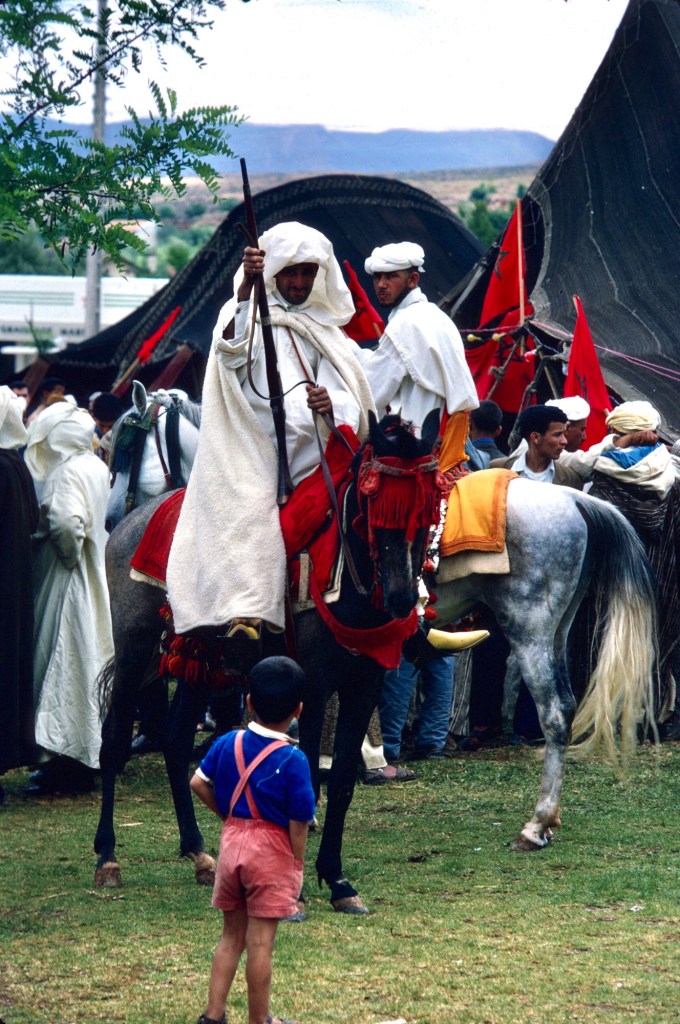
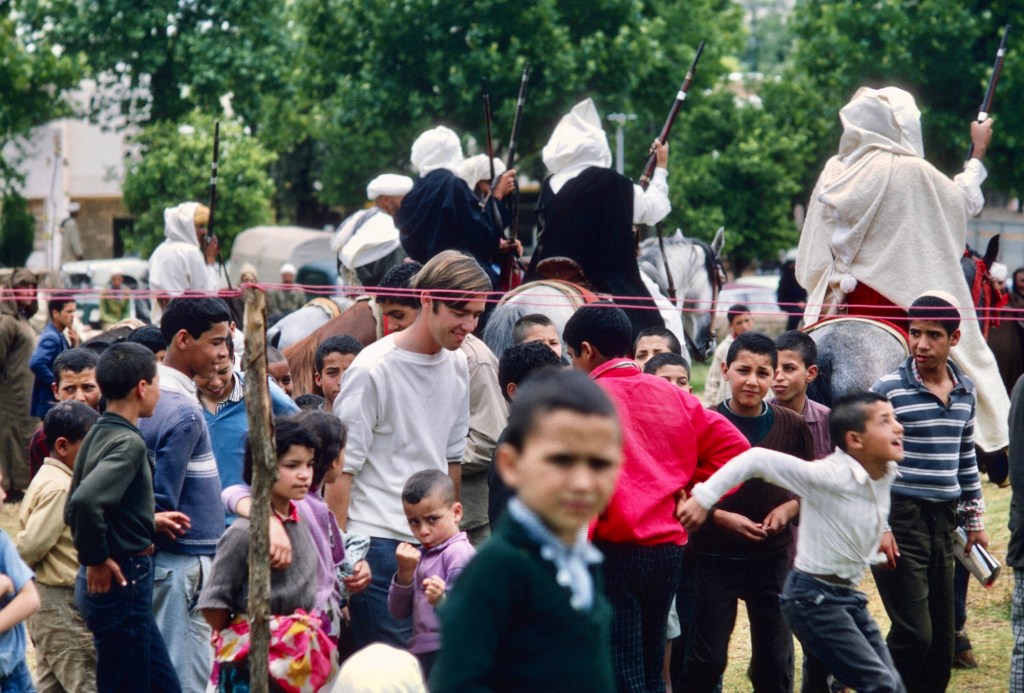
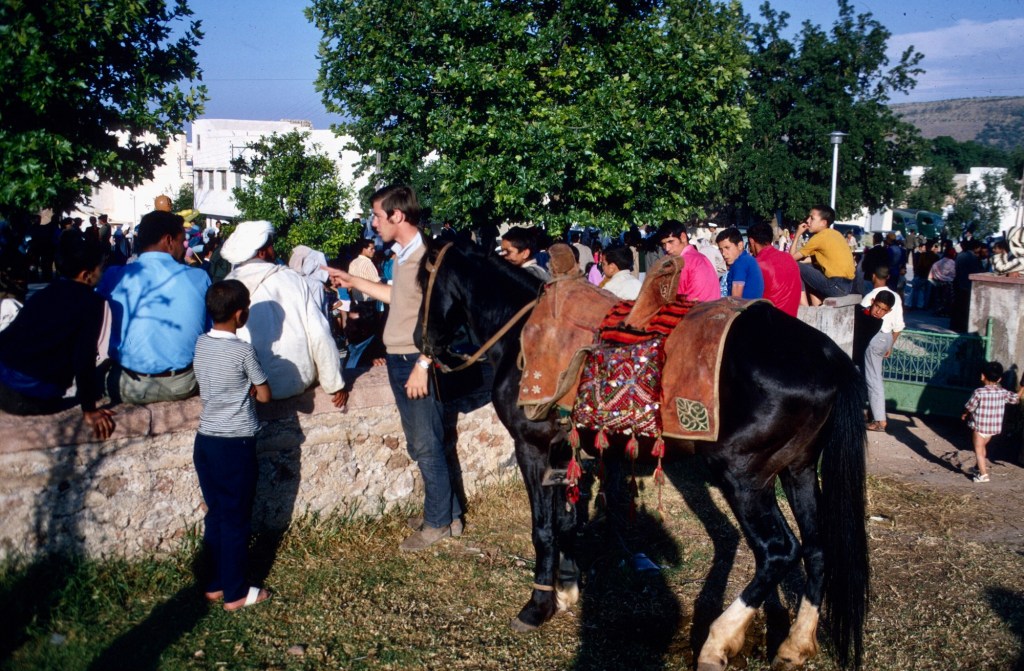
The festival traditionally lasted three days, though I only remember one day. The following year, 1969, I may have been away during the festival. In 1970, I once again attended. That year there was a fantasia, a traditional display of powder play and horsemanship—the only one that I ever witnessed while living in Morocco. Well, the only one with horses, because at Moulay Bouchta a procession armed with old muskets walked to the space before the shrine and put on an impressive display.

At the Cherry Festival, the riders lined up their horses on flat ground, spurred on their steeds, and galloped down the field waving their muskets before firing salvos into the air,


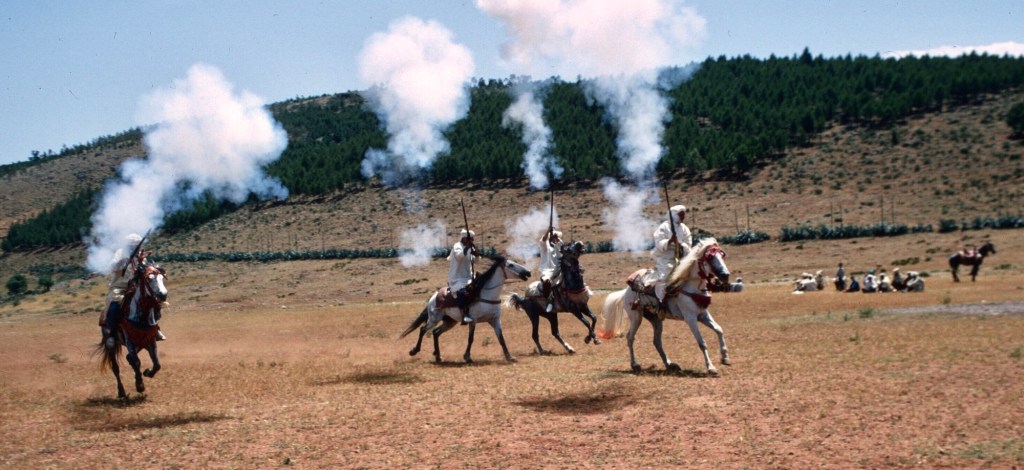
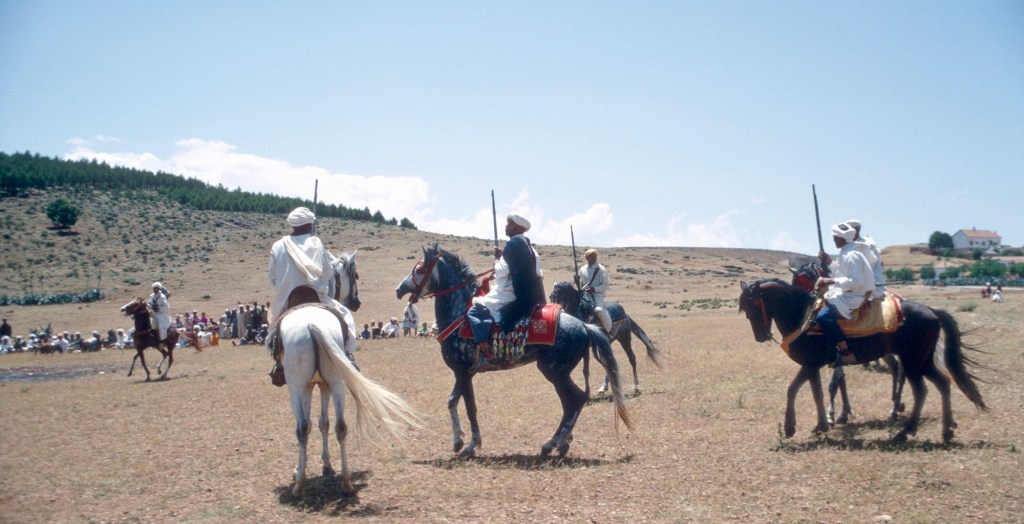

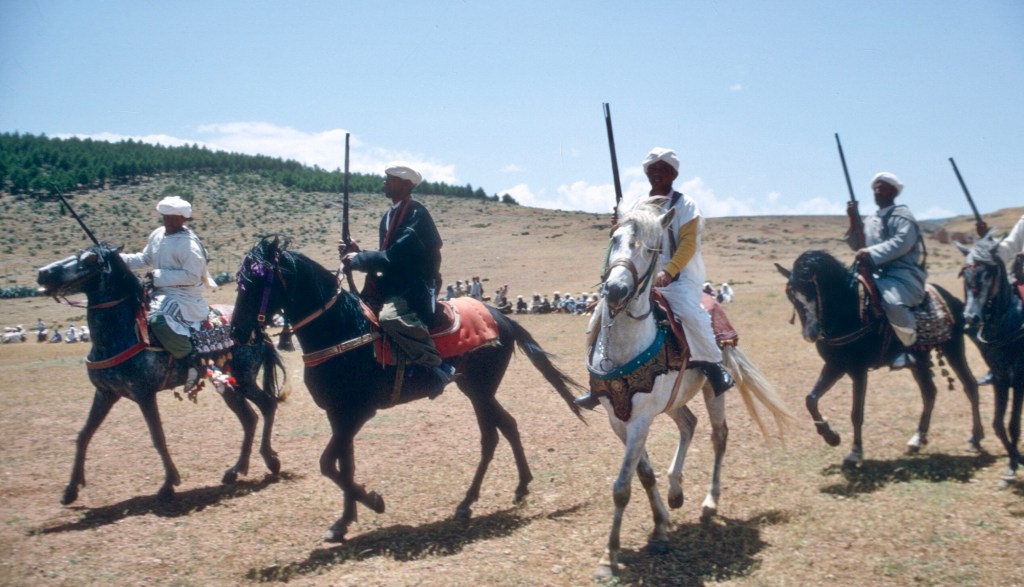

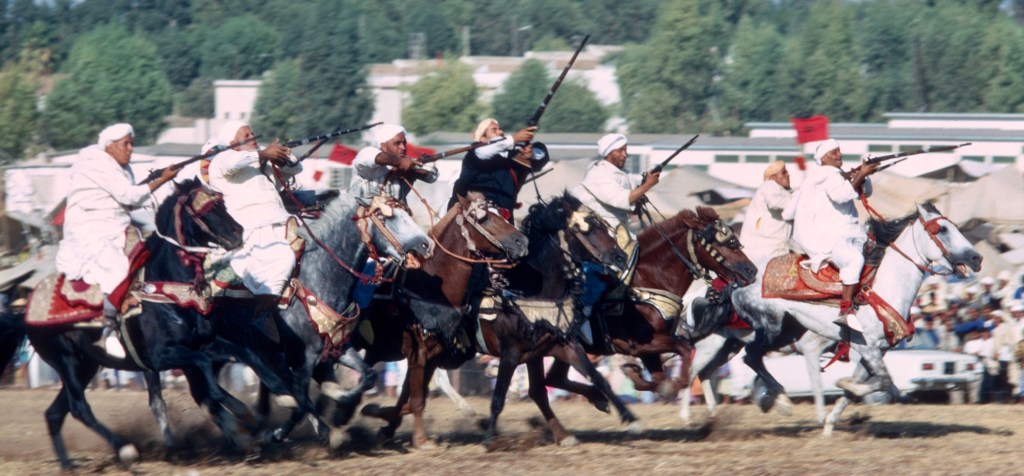


The photos in this blog piece present the Cherry Festival as I saw it, both as a newcomer to the country, and then as one who had lived in Sefrou for a couple of years. State and county fairs are common in the US and Canada, wherever agriculture is important, but I have never visited the Niagara County Fair, in Lockport, NY, close to where I live. Fairs are not for me, though attendance at the Canadian National Exposition in Toronto, Ontario, was a highlight of my childhood because I loved the amusement rides of the midway and the foods.
The Cherry Festival was great fun. In June the weather was always fine. The ville nouvelle was crowded. The entertainment was interesting. And friends visited from all over the country. That said, years later, at now home again, I do not go to the Peach Festival in Lewiston, NY, just 12 kilometers away, nor to Lewiston’s Smelt Festival, a much smaller affair celebrating a small but tasty fish that runs up river in the spring. I think that fairs are for the young, the exhibitors, and vendors and merchants. But the Cherry Festival is now recognized by UNESCO as a part of the national heritage of Morocco. If you happen to be in northern Morocco in June, you should think of attending. At the very least, you will have the pleasure of seeing crowds of Moroccans enjoying themselves. When I lived in Morocco, life was difficult for many and holidays were opportunities to celebrate with friends and family. I imagine that in that respect nothing has changed at all.

 Morocco That Was
Thank you so much for your amazing work Mr. Dave. Those are a wonderful articles.
LikeLike
What a fascinating glimpse into times past! I love the photos. That must have been some work transferring all you old slides to digital format. I bet you’d love to see what the festival looks like now. Hopefully the same as you saw it and the same as it has been for decades before that. Thanks for sharing.
LikeLike
Thank you, Pete. The digitizing takes time, though it can be automated. One of the other contributors to this blog, Don Brown, farmed it out to a service, and he seems to be happy with the results. He probably has 100x more slides than me, as well as a busier life, so that option makes sense.
I have a fair number of color negatives, and a few black and white ones, and still have to do them if I can find them. They are scattered in the detritus of my life—maybe a good representation of the flotsam and jetsam that washes ashore from the currents of memory.
As my old friend, Jim (and erstwhile partner in this endeavor) said the other day in an email, he didn’t have a camera back then and film was so expensive. I like to think that some of the photos will connect others to memories that they hold dear.
LikeLike
Thanks again for doing this, Dace
LikeLike
Tttt
LikeLike
I was having a hard time replying. Thanks for doing this Dave. I, too, was in Meknes for the Mouloud. Perhaps not the same year, I don’t remember, but I remember clearly being moved along by the throng of people to the courtyard of the sanctuary and being roughly disguised as a Moroccan I entered to find a very strange ritual in progress involving a lot of people. but what I remember the most was a kind of epiphany watching a solitary man surrounded by a few gita players and a crowd of onlookers. He was dancing about randomly but in a very relaxed manner. After a while he picked up a pair of very actively flaming torches and proceeded to slowly cross them back and forth across his chest, the flames licking all around his face ( he had shoulder length hair and a full beard). He did this multiple times and never was a single hair singed. I was one of those wide eyed, open mouthed onlookers! I will never forget that and to this day it makes me emotional on the rare occasion that I will tell that story to someone.
Sam
>
LikeLike
What a great comment, Sam! We shared something very special, I agree. So happy to hear from you and know you are alive and kicking. So is Jim, I’m sure, who deserves much of the credit for this blog.
Dave
LikeLike