The Harka

Moroccans used the term harka (حركة) to describe the military expeditions that sultans led to extract taxes from tribal areas and to force tribes into submission when necessary. Walter Harris, in Morocco That Was, describes a harka during the reign of the Sultan Moulay AbdelAziz, as does Gavin Maxwell in his book, Lords of the Atlas.

A view of the Algerian desert along the Algiers-Agadez route. 1971

Why Moroccan Peace Corps volunteers chose the word as a title for their volunteer newsletter in 1963 is a mystery. Perhaps the first issue explained their choice. In any case, volunteers, with Peace Corps office support, published the Harka at irregular intervals during the first 10 years of the Peace Corps.

Electronic copy machines such as those made by Zerox were just appearing in the mid nineteen sixties. I still remember my cousin Irene’s husband, John Maroney, proudly showing one to me in his Union Carbide offices in Manhattan in 1964. The Peace Corps administration in Morocco still did not yet have one when I arrived in 1968. All cheap reproduction was still done by mimeograph from copy prepared on typewriters. The process required a special machine and produced copies relatively slowly.

As the contributions to the Harka came from volunteers spread over a large country, the editing and assembly of each issue demanded time and patience from the editors, who presumably lived near Rabat. Depending upon who typed up the manuscript, some strange errors crept in. How many editions of the Harka appeared and when the newsletter ceased publication in its paper form are unknown to me. Perhaps one of this blog’s readers can enlighten us about the publication’s origins, history, and demise. There is little question in my mind that the Peace Corps administration looked upon the free expression of volunteer views with a bit of trepidation.

I have at least four copies of the Harka, two generously furnished by Don Brown. The four date from 1966 to 1968. I will post them on the blog as an incipient archive, hoping that readers may have additional issues to share.

The articles in the Harka present insight into what volunteers were thinking in the late nineteen sixties, not only about voluntary service abroad and all that it entails, but also contemporary cultural issues such as the draft and marijuana use.

The March 1968 issue contained an article by Bob Draper that was particularly of interest to me. Draper crossed the Sahara by the central western Saharan route, south to north beginning in GAO and ending in Oran after traveling on the Niger River through Mopti to Timbuktu. What a great journey! Draper led the way for other volunteers, demonstrating that one could reach West Africa overland from Morocco, and do it on a small budget to boot. If Draper could do it, some of us reckoned, we could do it, too, and so a few of us did.

Draper found the desert scenery uninteresting, but enjoyed his river travel and some of the people he met in West Africa. His brief cultural observations were similar to mine though his style and tone are not. Traveling the westernmost route, by way of contrast, I saw some spectacular scenery and visited more of West Africa, but missed out on the wildlife and the fabled Timbuktu.

Today the trip is mostly made by migrants trying to make their way to Europe at great risk to themselves, as Islamic and ethnic insurgencies plague the western Sahel.

Draper’s account of his trip follows, with typos and original grammar mostly left uncorrected:

DRAPER IN AFRICA (March 1968)

I must begin every letter nowadays with “Sorry to have been out of touch for so long but there was too much sun and too much newness and no motivation whatsoever to put pen to paper, beggin’ your pardon.” The jungle, the savannah, the steppe country. And the Sahara, which had filled my mind for two years, always the Big Thing, which turned out to be a flat lot of sand, the only interesting part being the people—the Touaregs and the Arab truckers who pilot 20-ton snarling hunks of metal through a country still staggering in its huge emptiness, and have pieces of infinity in their eyes. But it’s true anywhere, that it’s the people in a country or town that are interesting, that the sperm and the egg that formed you in the U.S.A. would have been the seed of a savage had it developed in the rain forest, or that in the fishing village of the Niger, would have been shaped into something still different.

You tell more about the forest, get a better feel for it, by seeing the little
stocky guy trotting along with his machete and poison arrows than by looking at bone-white trees in the rank greenery. You see a piece of the Niger river, water and bank and hippos, but the Iong Bouzou, an intricately-worked black needle pirogue which seems an extension of his body, heavy with cargo, or used as a pointed mobile stage for the flinging of a circular net, is an intensification and quintessence of the river past and present, the distillate of the whole scene, what’s left in the bottom of the centrifuge tube after everything has been concentrated.

I was dead afraid when I bounced off the boat at Abidjan from Casa. The jungle and heat were overpowering, at that point mainly the heat. I gobbled a salt tablet. I couldn’t move or breathe. The animals and birds looked as if they had been assembled by an insane child, armed with an infinity of feathers, scales and colors. I was dizzied by the colors on the women’s dresses and by the fresh pineapple and mangos and birds. My toes rotted in my boots, had to buy sandals. Heard of some missionaries in town so I stayed with them, because I was afraid to put up the tent in the jungle and because there were no clearings there in the solid mass of green and thorns. I could see why authors call the jungle malignant. The green is too green, the animals are insane. God knows what could be lurking three feet away and who would know. Little guys with poison arrows. Man.

A devious route up to Bobo Dioulasso miles and days on “mille-kilos”
and Peugeot taxis to my rendez-vous at the big French research center with the tse-tse fly boys in Bobo. Plunged into a life of super-color for a couple of weeks, fantastic food served and prepared well, the first~class seats in the movie (second-class ? Oh, that’s for them…) really an evil sort of unhappiness for most of the French there: the middle class, always the source of racism, always searching for reasons for their miserable lot, weaving “C’est ca, les Africains”, incredible looms of boredom. Bobo, in the savannah, not so overpowering as the forest or the desert, because there’s neither the absolute closeness nor the too openness.
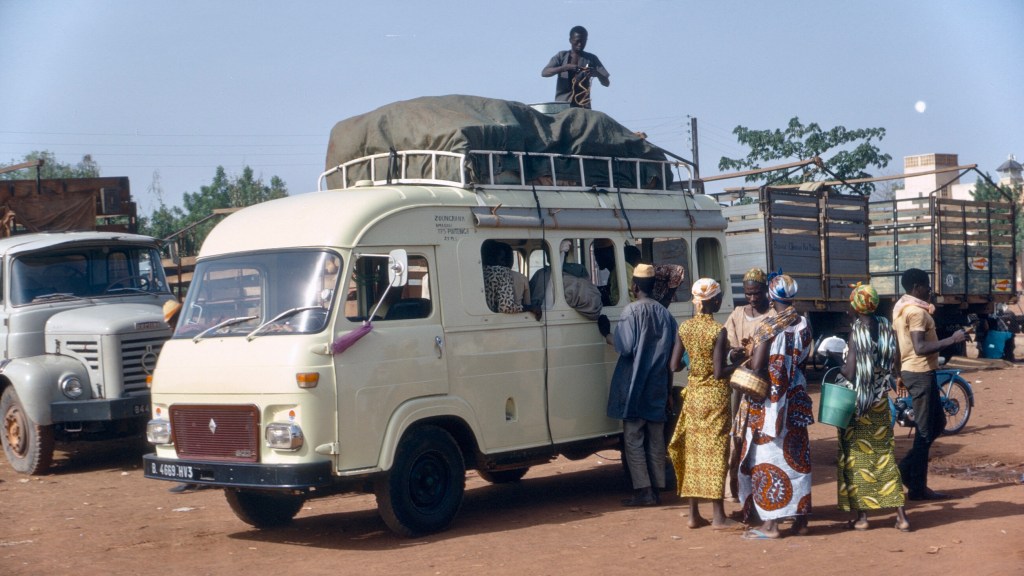
A Renault mille kilos. The rear of this little truck was fitted with bench seats. Filled to capacity and perhaps more, open windows provided ventilation. After a few hundred kilometers of dusty, washboard dirt roads, passengers were always happy to arrive at their destination. Niger. 1971

It’s just when you get upon a hill and look out and see the same twisted thornbush and head-high grass stretching and rolling out to infinity that you say God, we’ll never get there, the truck will break and there is nothing here. You can’t eat these thorns and dry grass. Fear.
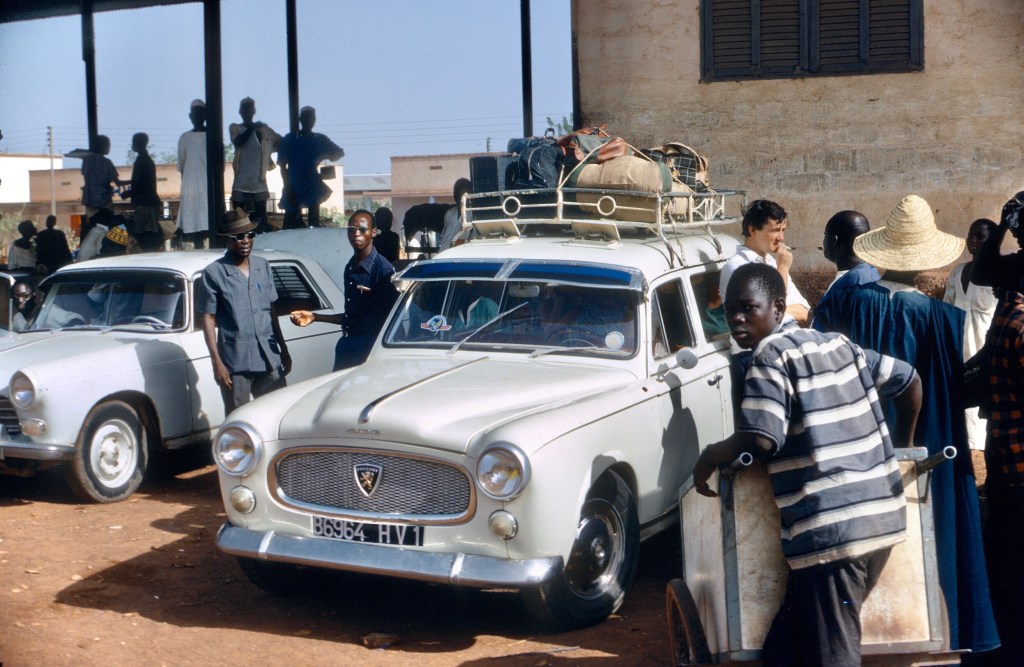
A Peugeot Taxi. Niger. 1971

Then it happened, a flat and then another. No tire repair kit on a back
road, sun sucking the moisture out of every pore. The Africans? Nothing. The chauffeur takes a bicycle off the top of the truck, puts a boy on it, sends it off towards the south down the endless washboard. Two very tall men amble off into the brush with very big knives. The chauffeur takes out inner tubes, finds the hole, kind of primitively trial-and-error like, trying several ways of getting the tire off of the rim before succeeding. The two lanky guys get back dragging large branches which they lay beside the chauffeur; they sit under a shrub, cleaning their teeth with chunks of twigs, turning their eyes inward. The chauffeur takes an old inner tube, makes a patch, sticks it on with the sap from the hacked off branches, puts the tube in the tire, the kid shows up with a pump he borrowed from a village off the road somewhere, they pump up the tire, leave, after leading me to my seat because I was saying: “Wha?” and standing around with my mouth open.

After having gone through an hour of “I used to work in an American filling station, bums, want me to show you how?” the sight of a bouncy, healthy tire was too much: I have preserved dried leaves of the “tire-repair” tree.

Most of the nights I was lodged in with the Africans in whatever village we were at when night fell. Smetimes, though, I stayed with missionaries, who were more than glad to feed me and have me listen to them, satisfied with a sleepy nod now and then at random points in their monologue, breaking out dusty bottles of spirits hidden away for medicinal puposes. One good old boy was from Memphis, Tennessee, and after praying together, we threw place names at each other (we had no common acquaintances.) Grits and gravy for breakfast. “Bye, now, write us a letter…”. Teenage daughter looks like Candy, going to Bible College in Nashville, ministering to the pagans along with her father. Asking for the good Lord’s help in a heathen land.

Next random impressions: the sexual freedom of all the natives I saw outside of the Arabs. Many of the Europeans working in the African bush have mistresses supplied them by their villages with the understanding and maybe an occasional present is the only payment required. After dinner in one household three beautiful girls walked in, sat down, were greeted and started to Ieaf through magazines. Wild colored dressed. Chattering in a local language but quietly with grace. Equally as quietly going off with their men, one of whom, as I learned later, was soon going to marry his girl. The others would go off leaving presents and maybe a baby, of which the girl and the village would be proud.

I will write now of the two modes of transportation possibly the least used by most tourists in Africa and possibly the cheapest and most interesting.

  1. Boat on the Niger: bi-weekly Mopti-Timbuctoo-Gao. $25 2nd class, five days good food. Hippopatamuses and crocodiles. Fishermen and nomads at the stops. Old cities along the river, notably Timbuctoo, Gao, Djenne and Mopti. Beautiful people. Feels at times like the womb of the earth, the constant fertility in the middle of the desert. Traditional evening baths each evening in the shallows for everyone.
  2. Truck on the desert: Gao-Adrar (western trail) or In Salah-Tamanrasset-Agades (eastern trail). Western trail-constant traffic (dates and tobacco down, sheep up) never a wait of more than a few days for a truck. $16, 1500 km., 5-3 days, good food. Take a chapstick and a sleeping bag, cigarettes for trading with the Touaregs for milk or with the truckers for dates. Clean , dry air.

Enough, because if anyone is going there they’re welcome to get more information of general or specific nature by sitting down with me over a coffee somewhere, and those that aren’t, aren’t, regardless of how much is written. The important communication is that it’s no big thing, no pilgrimage to the wilderness, no ordeal, no masochism. The trip was a pleasure and not at all hard. No problems, Coca-Cola partout. Everyone everywhere loves tourists including in Mali and Algeria, even though the only books I saw in Mali were “Pensées de Mao” and slogans on schools, the usual thing, “Work hard you brats”—all had the little “Mao” underneath. Skinny Chinese cats nervously smiling and bowing to hotel clerks as they paid their bills. Worthy of note is a widely distributed poster in Algeria of the “watch out for deviationists and revisionists” ilk, on the bottom of which you see in boldface except, of course, for our tourists to whom we should extend the traditional warm welcome.

Surprisingly, the total trip Casa-Abidjan-Bobo Diolasso-Gao-Bechar-Oran-Oujda was cheap, $290~for 12,000 km. eating well, frequent beers, traveling slowly. The trick is to always to plead poverty and refuse to stay in the hotels, or at least the European ones, which are all $10 or so a night minimum. I stayed 1/3 of the time with Africans, some with European and American missionaries. (Only two small nonviolent cases of diarrhea the whole way—polymagma-controllable.)

The only bit of proselytizing I’ll do is to say that there’s a certain amount of value in exposing yourself to a third primitive culture (after American and Moroccan). I found I had made certain generalizations about underdeveloped countries which did not hold water outside the Arab world. And, on a much simpler level, I enjoyed the trip because I left the rain and cold and sinusity behind and swam and played in the sun, and lost (temporarily, to be sure) sight of the Peace Corps and the realization of selfless service and the lousy job and could just wonder a while. It’s kind of nice.

Bob Draper

The Harka March 1978

A Touareg herd near Tammanrasset. The Ahoggar mountains in the distance. Algeria. 1971

Roman France

“All Gaul is divided into three parts.” This blog entry is about one of them.

enlight157
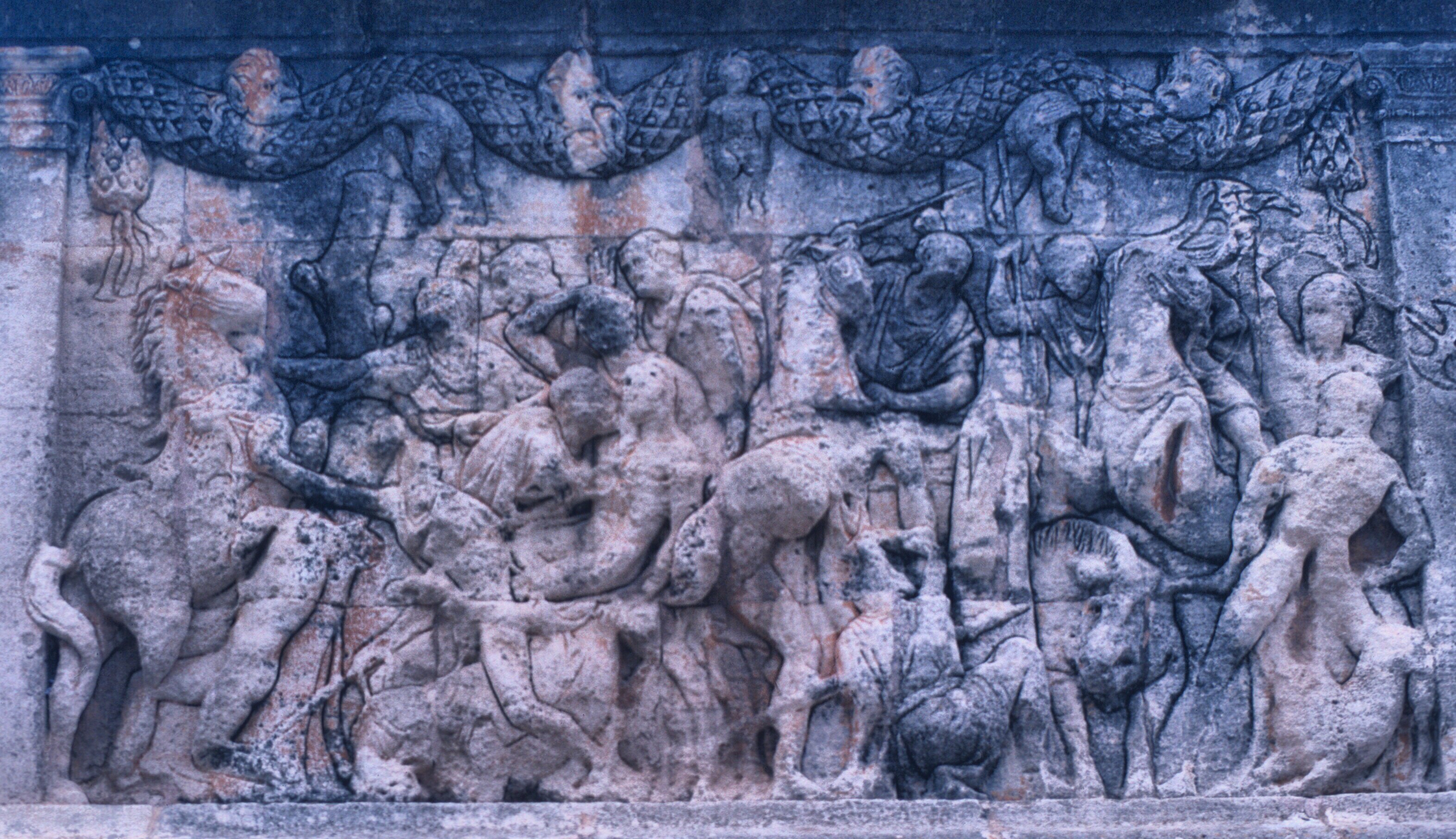
One of the friezes on the mausoleum at Les Antiquités. The sculpture represents mythological themes.

enlight172
The statue of Vercingetorix, who fought Caesar’s legions. He is a French folk hero, who hailed from Auvergne in the Massif Central, where this statue is prominently displayed in the center of Clermont-Ferrand. Vercingetorix gave himself up to spare his men, was taken to Rome and imprisoned for 5 years, and then strangled at a triumph for Caesar.

Not too long ago, my old college buddy, Jim, called to catch up, and he mentioned that he and his wife were going to France. I think his exact words were a somewhat uncharacteristic “Eat your heart out, Dave, we’re going to Paris.” Francophile that I am, I confess to being jealous, especially as my proposed Pyrenees hiking and climbing trip keeps getting put off. As it turns out, Jim’s plans are really for a trip to southern France, where he and his wife, active Quakers, God bless them, will spend some time at a Quaker-run facility, where Jim will get a couple of weeks of French tutoring in an effort to improve his verbal proficiency. French is the language of one of his daughters-in-law. What worthier motive could there be to brush up on a language he hadn’t used for years just to please his son’s wife!

Among other topics, we got to talking about Provence. For me, there are two Provences: the glitzy Côte d’Azur, and the area west of Marseille. I know that many will jump in with Jean Giono’s Alps, and with Marseille, and with Peter Mayle’s cute hill towns, and probably with Avignon, but having lived in Languedoc, my Provence is Roman Gaul. Perhaps if you pressed me, I would add the Calanques and the Camargue, and Laurence Wylie’s Village in the Vaucluse, a classic (and very readable) anthropological study of a small village, but the lower Rhône offers visitors an extraordinary collection of Roman monuments of high quality, and all within a relatively small area. This is no secret, since every guide book recommends that you visit them, but at 20, when I traveled to France for the first time, I wasn’t very interested in things Roman.

As a former high school history teacher, my duties required teaching more or less uninterested 14- and 15-year olds about ancient civilizations. In their defense, when I was 15, I was never interested in Rome either. In Rome’s defense, most of my students were not interested in anything historical, much less the sociological underpinnings of an ancient society.

I was not a student of Latin either, and I thought the only useful languages were those people spoke. No one spoke Latin except Catholic priests during the Mass. Now you no longer even find it there very often.

Rome actually met me in France, a chance encounter. I was studying in Pau and hitchhiking about the region at every opportunity.

france pau pyrenees vista
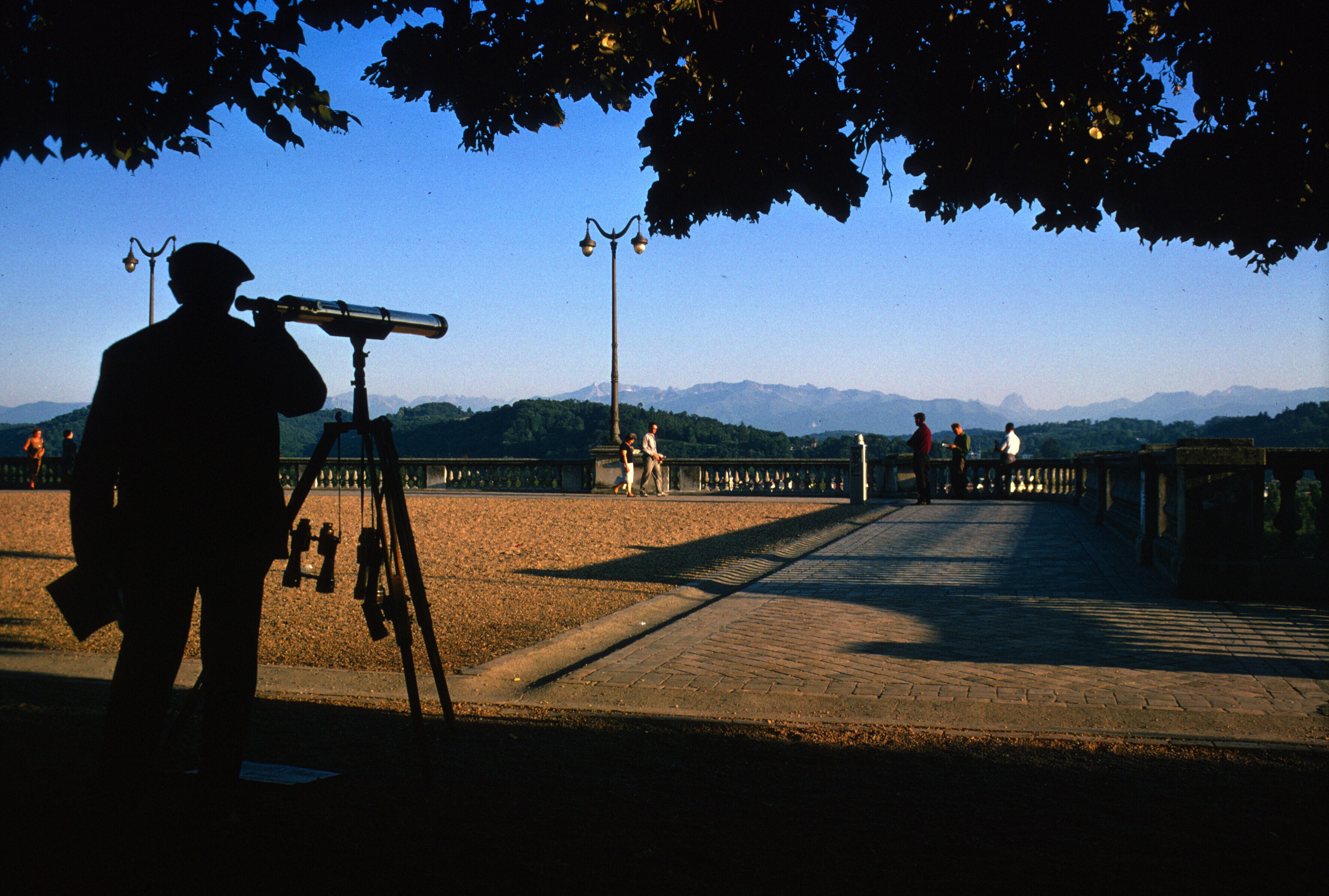
View from the Boulevard des Pyrénées. Pau. Directly south, up the valley of Laruns, is the solitary Pic du Midi de Bigorre, right on the Spanish border.

I wanted to see the scenery in the mountain resort of Luchon. On the way was St. Bertrand-de-Comminges, a fortified cathedral in the village of the same name, on the edge of the Pyrenees. Inside, the impressive wooden choir, carved by an unknown sculptor, contrasts with the old Romanesque and Gothic architecture. The choir alone is worth the trip.

St. Bertrand was a large and important Roman center, but was destroyed by various barbarian invaders, and not rebuilt until the Middle Ages. It is also a stop on the pilgrimage route to Santiago de Compostela. I have pics somewhere, but they are not yet available for this post.

img_3627
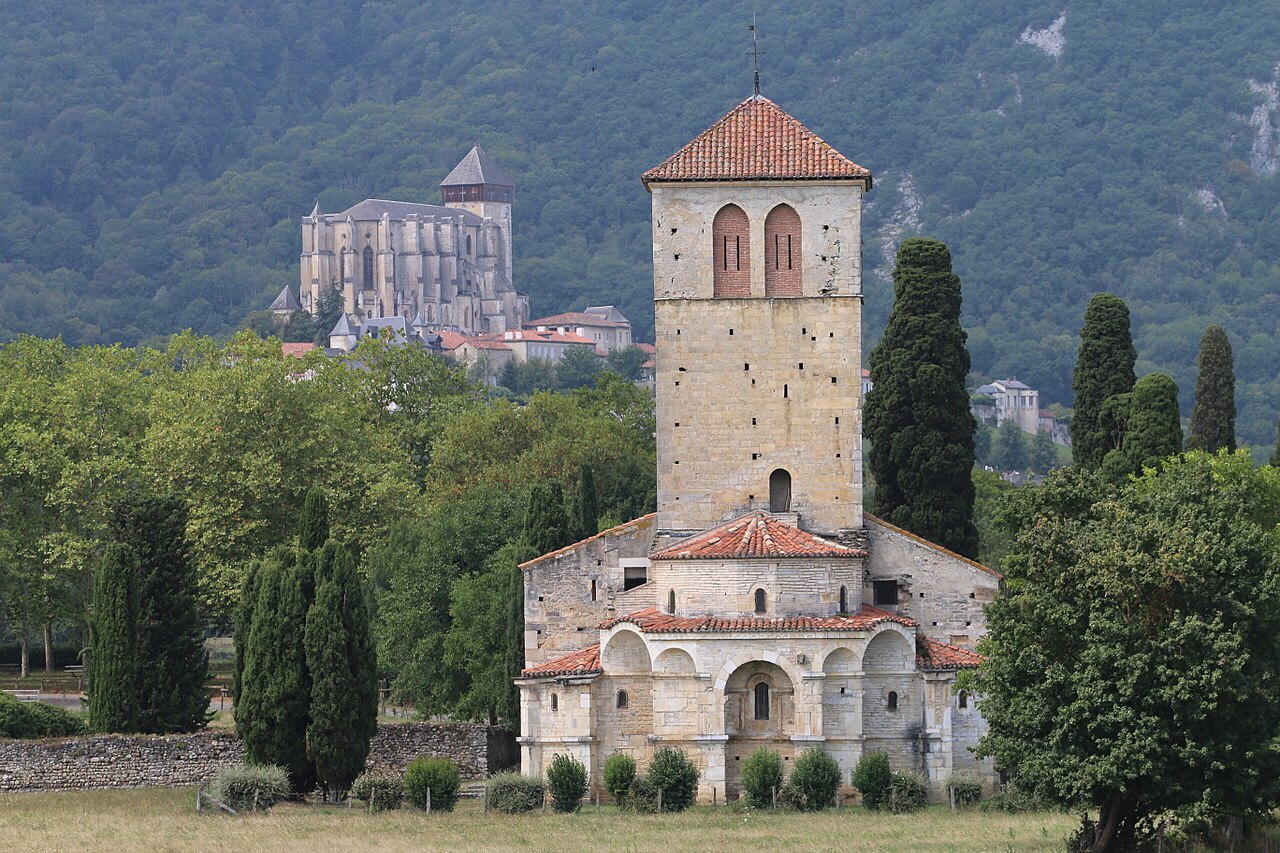
Saint-Just de Valcabrère, with St. Bertrand beyond. Source: Hubert Fleury, WikiCommons.

The mention of St. Bertrand is a digression, intended to bring us to Valcabrère, for it was there that I met Rome. The Basilica of Saint-Just de Valcabrère is an early Romanesque church which sits in a rural area a kilometer or two from St. Bertrand. The cathedral sits up above in the village. One approaches St-Just through an arch in the cemetery wall. After crossing the small graveyard, the facade of the building stands before you. There are a great many old Romanesque churches in Europe. What made this one so interesting to me was the statuary on the facade. The sculptor clearly used Roman statues as models, and the figures are classical and sublime. That is how I met Rome, reflected a thousand years later by an anonymous medieval sculptor. At the time, the church was locked and I couldn’t visit the interior, so my memories are of that quiet graveyard lined by cypresses and the simple, but striking facade. I have seen many more examples of Romanesque statuary from famous churches and cathedrals, but I shall never forget the faces that look at you from the facade of St-Just.

After Pau, I moved to Montpellier in the southeastern part of Languedoc, on the very western edge of Provence. Here near the mouth of the Rhône, the Romans brought urbanism to newly conquered Gaul.

france montpellier les graces-1
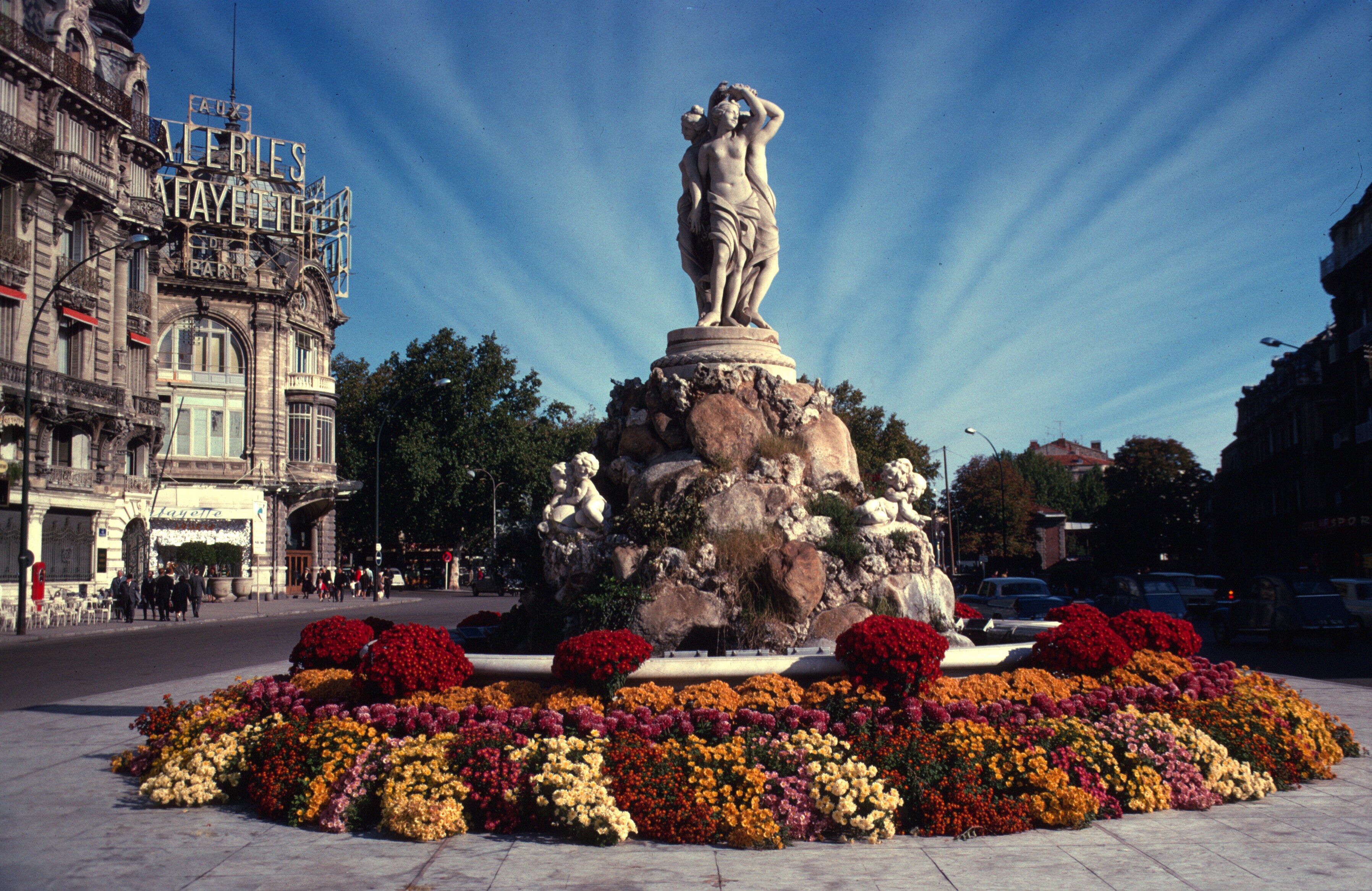
The center of Montpellier when it was an egg-shaped plaza.

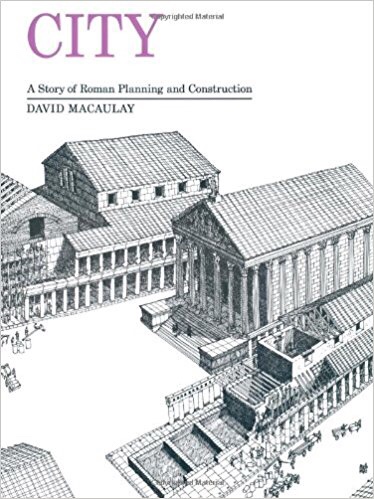
If you are a fan of the illustrator and author, David Macaulay, and I am a big one, you may be familiar with his book, City, in which he illustrates how a Roman city might come together from scratch.

img_3585
Roman City is one Macaulay’s best! You can watch a video made from it on YouTube.

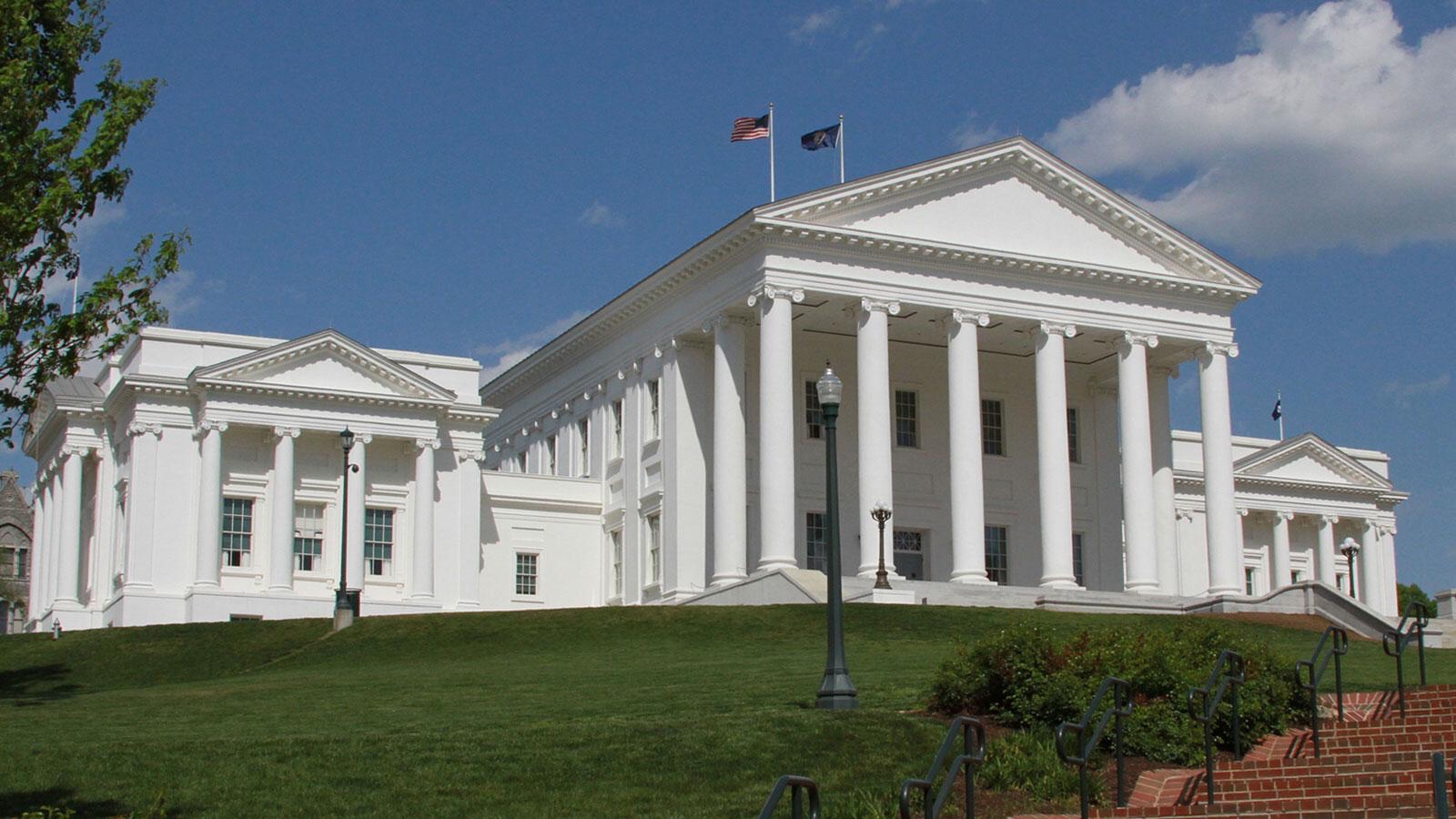
I love the text, which is for kids and adults alike, and the wonderful architectural drawings. Macaulay clearly used Nîmes as a model for his book. Interestingly, Thomas Jefferson used one of Nîmes’s monuments as a model for his design of the Virginia State House.

img_3586
Jefferson based the center section on thé Maison Carrée in Nîmes, which he had yet to visit!

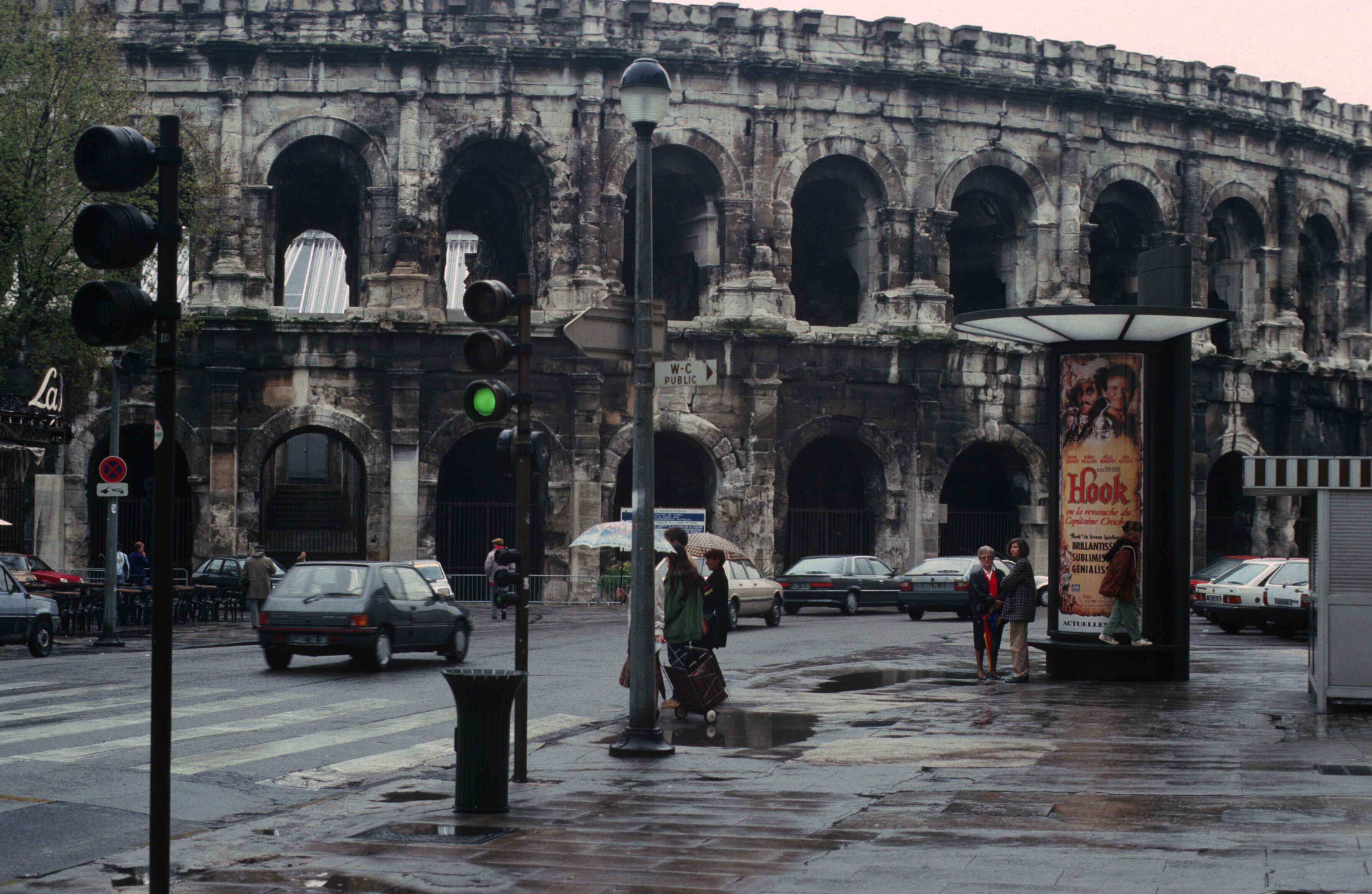
Nîmes is about an hour or an hour and a half from Montpellier. It boasts an impressive amphitheater.

enlight169
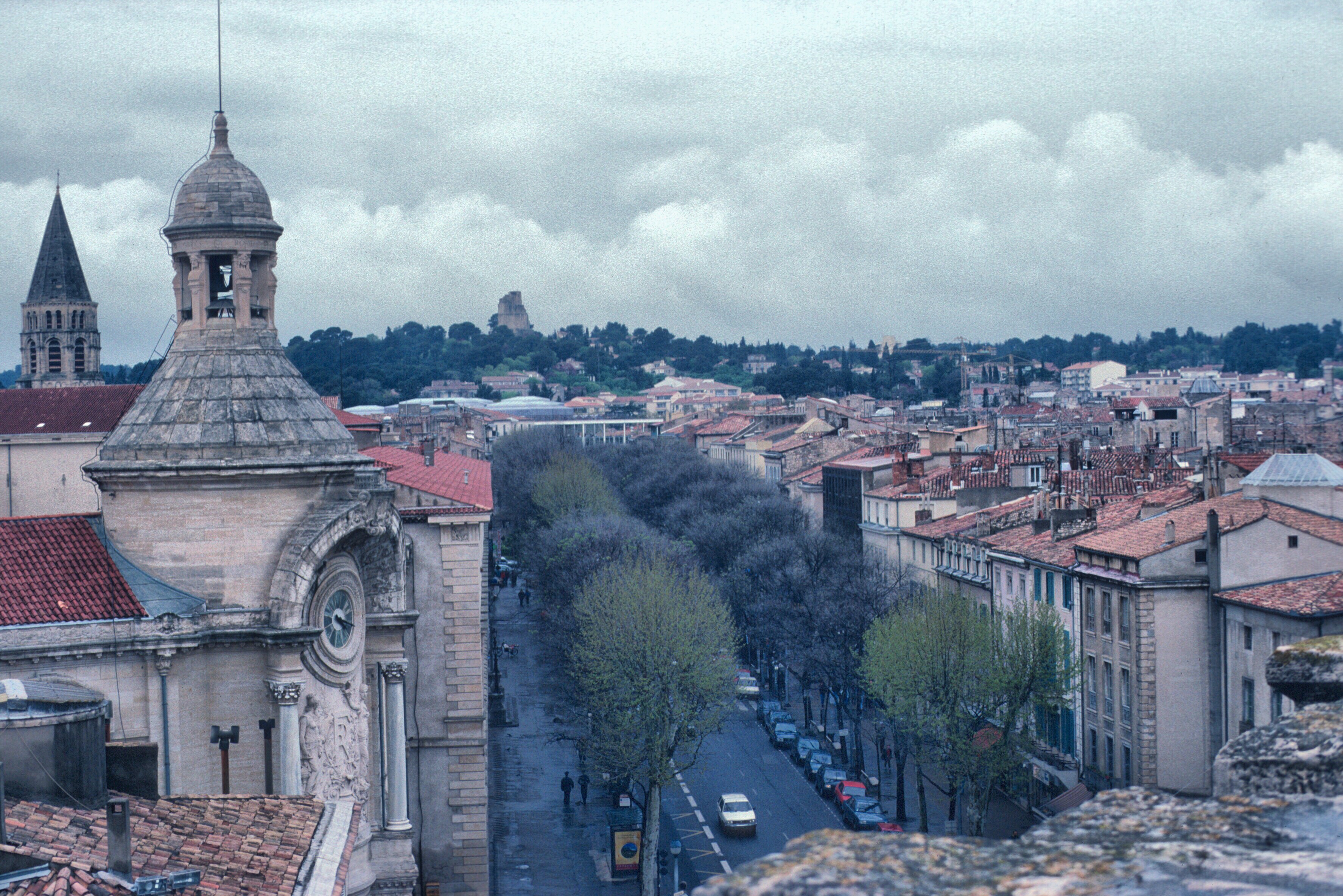
A view from the uppermost level of the amphitheater toward the Tour Magne, a Roman watchtower. Below. The amphitheater is still used for events today. I attended a bullfight.

france arles roman theatre
The Tour Magne and the theater. Below: La Maison Carrée. Thomas Jefferson used this Roman temple as a model for his design of the Virginia State House.

Other than its Roman ruins, its main claim to international fame is the cloth “serge de Nîmes” which gave its name to denim cloth. The word jeans, by the way, also is of French origin, from an association with Genoa, Gênes in French.

Nîmes is part of a rectangle of places, all within about an hour and a half or two from each other, that have major Roman monuments, including Arles, Orange, Pont du Gard, and St. Rémy-de-Provence.

Arles, like Nîmes, has an amphitheater, but the amphitheater was formerly used for housing, and that of Nîmes is more complete.

enlight154
Les Alyscamps. A vast cemetery of Roman sarcophagi. Artists have immortalized it. The Romans buried their dead outside the city walls, as Muslims do. Arles.

Orange has a triumphal arch and a theater. Orange was named Arausio in Roman times, after a Celtic river god, but the name was corrupted into Orange over time. The city became property of the House of Orange. Louis XIV added it to France by conquest. The House of Orange later produced William of Orange, husband of Queen Anne, invited into Great Britain during the Glorious Revolution.

enlight158
The triumphal arch at Orange.

france orange theatre 2
The stage of the theater at Orange, and some of the seats.

Pont du Gard is a beautiful and wonderfully preserved aqueduct.  It was constructed with huge blocks of quarried stone, set without mortar, and took 15 years to build. The water channel required constant maintenance, and eventually became choked with limestone deposits. Its survival is probably due to its former use as a bridge.

enlight171

Pont du Gard is actually a bridge that carries the aqueduct over the river Gardon. The aqueduct is 31 miles long, and carried water to Nïmes.

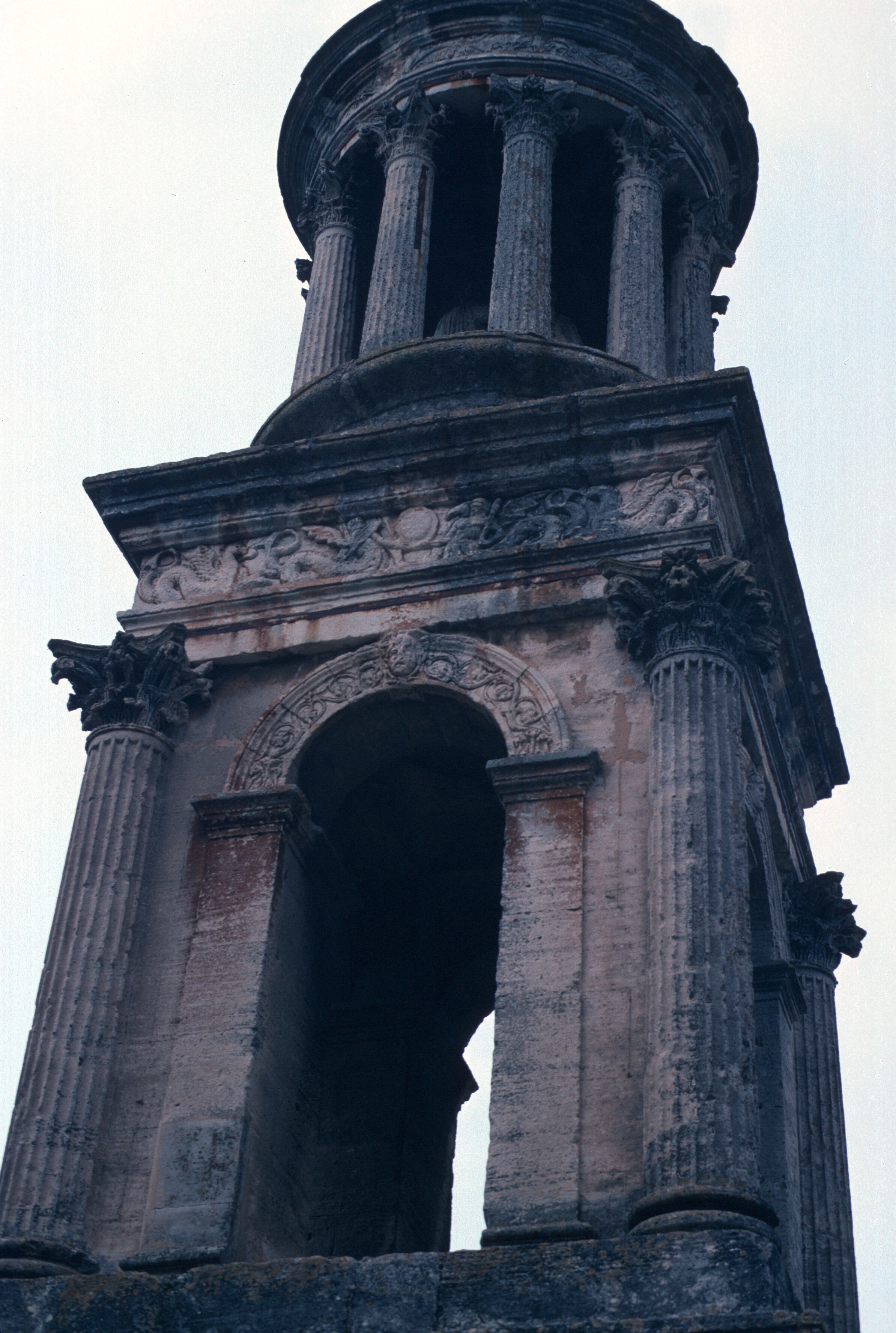
Finally, St. Rémy has Les Antiquités, a triumphal arch, the oldest in France, and a unique mausoleum. I remember thinking during my first visit that we were in the middle of the country and wondering why the monuments were there. In fact there was a Roman settlement, Glanum, close by. The monuments were on a road just outside its walls.

enlight153
Les Antiquités consist of the Mausoleum of the Julii, a rich local family given Roman citizenship, and a triumphal arch celebrating Caesar’s conquest of Gaul.

france les antiquites
The mausoleum has an unusual architecture, with a little triumphal arch surmounted by a tiny temple.

The Romans called this part of southern France, like much of southern Gaul, Gallia Narbonensis,and these places offer the most interesting monuments of Roman France. The Romans also referred to it as Provincia Nostra, from which the name Provence is derived. I have included, among the pictures below, a few of Vaison la Romaine, in the Vaucluse, Wylie country for you anthropologists who want to know what made the French villagers tick, albeit a half century ago. Wylie’s book is a classic, and, if you are a French teacher and haven’t read it, you might check it out. It has even been translated into French, for use in courses teaching French culture.

enlight164
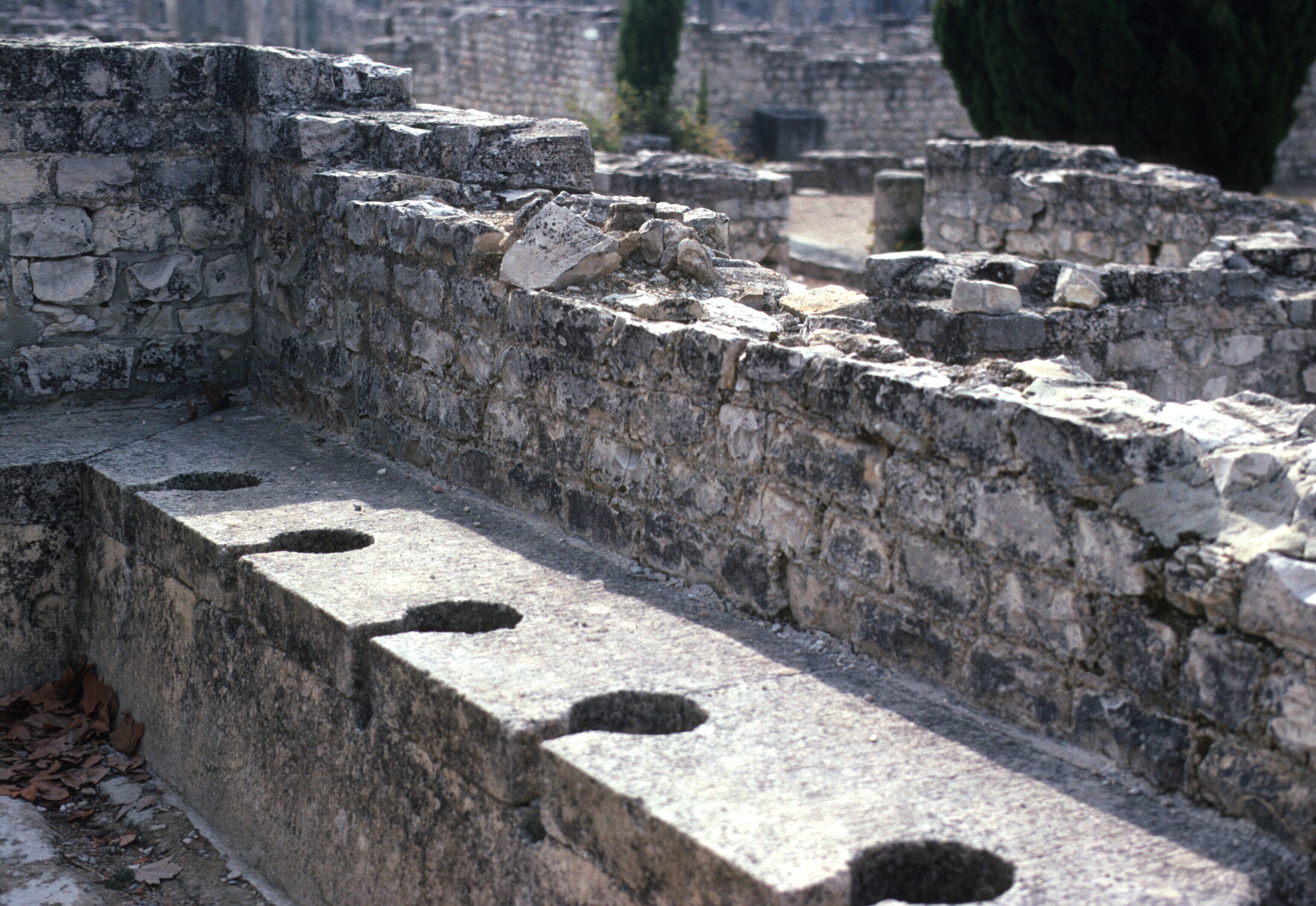
Toilets at Vaison-la-Romaine. Roman toilets were unisex.

france vaison la romaine market
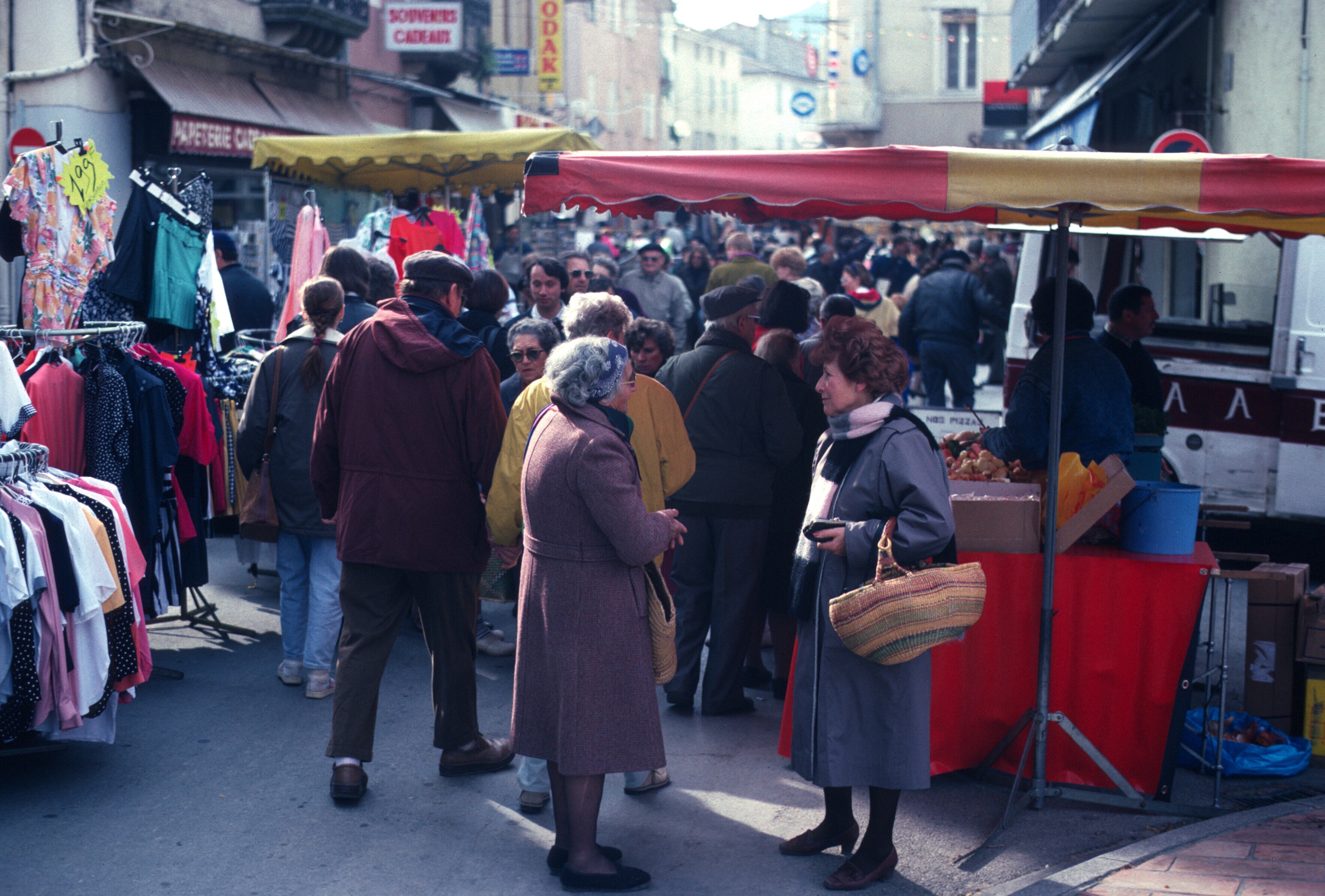
The weekly market at Vaison.

france vaison la romaine 3 theatre
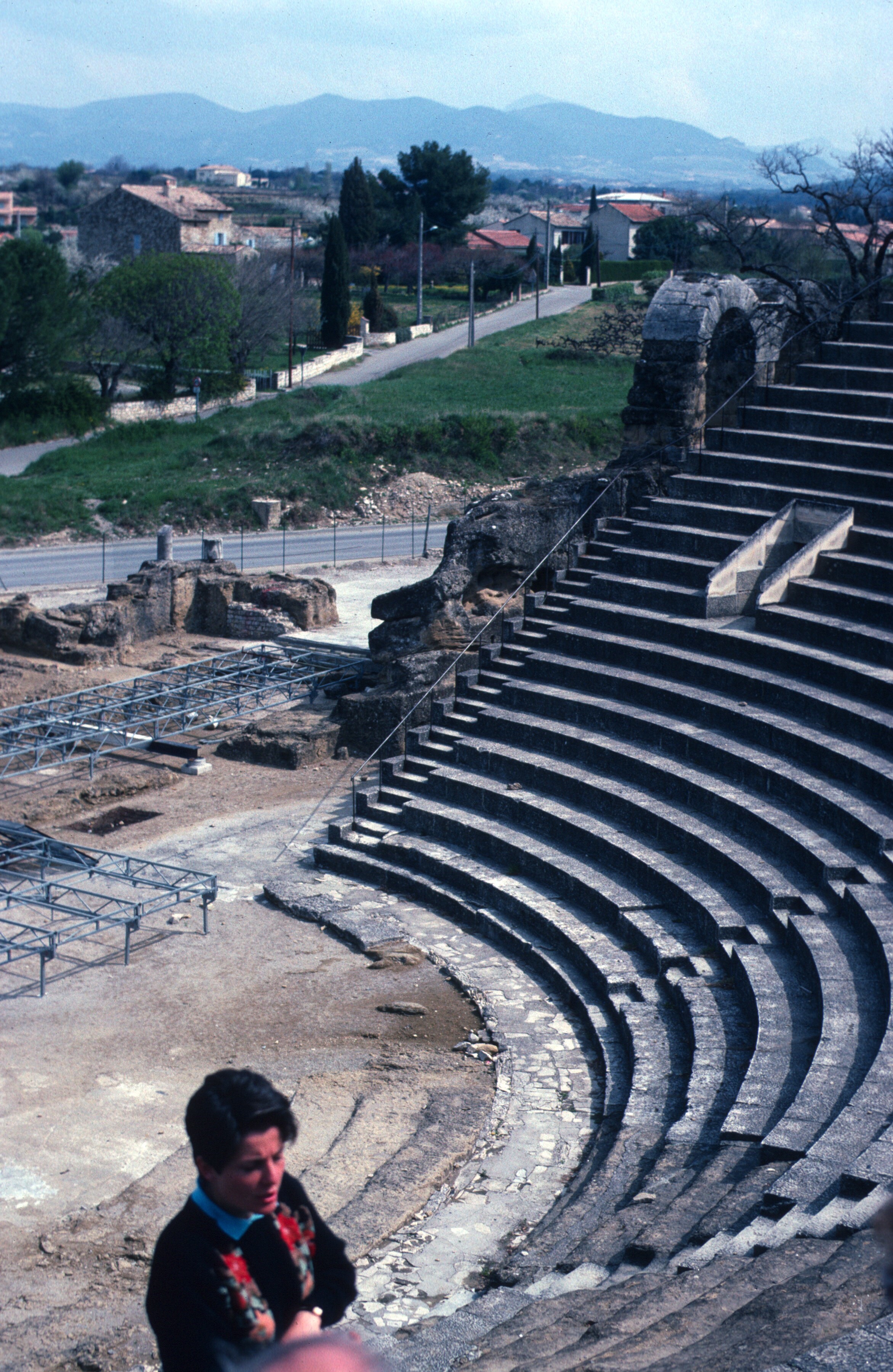
A docent explaining the theater at Vaison.

enlight170
View from a B&B near Vaison

I put this post together for Jim, but will continue to add pictures later. I have many more pictures of the Roman sites, and, I hope, some of St. Bertrand. I’ve been to all of the Roman sites more than once.

Hope you like the show, Jim.

The Pillars of Hercules

enlight117
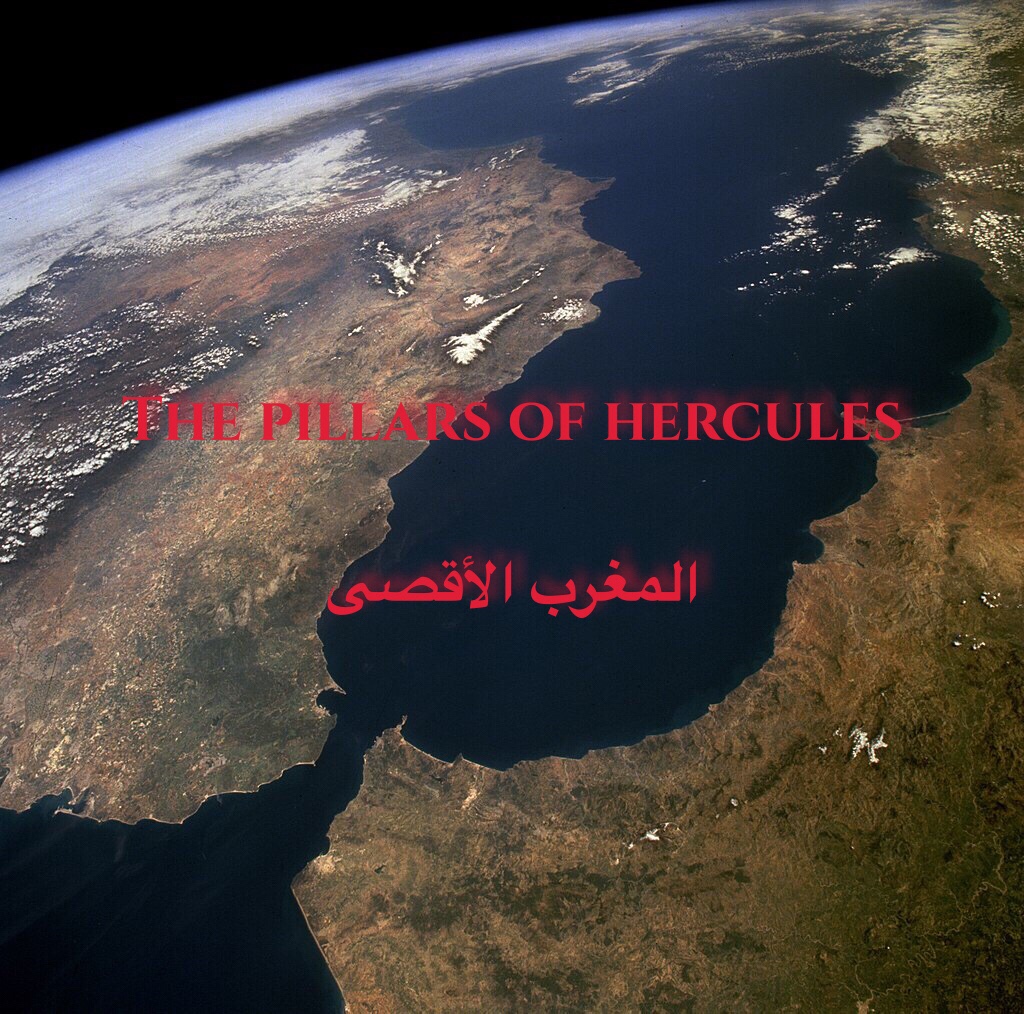
The Strait of Gibraltar. Looking toward the Mediterranean. The city of Fes is barely visible at the bottom left. Tangier, Tetouan, and Algeciras and Ceuta are clearly visible. Volubilis is slightly to the northwest of Fes. NASA photo.

woman 3
I love this passage. A god’s view of the Mediterranean, as I recently commented on another blog. Too bad the rest of Wilder’s novel wasn’t as interesting.

Morocco might be called an outlier. Until modern times, it has always been a place on the marches. It has always existed on the edge of large empires, but it was never part of them. Arabic historians traditionally referred to Morocco as the place of the Farthest Sunset (المغرب الأقصى), where the sun set in the Atlantic, an immense, unknown ocean.

The Phoenicians set up trading posts in Morocco. They were more traders than colonists or empire builders, though in Carthage, in the middle of the Mediterranean, they produced an empire that rivaled and threatened Rome.

The Romans had client states in the north of Morocco, where Rome eventually took full control during the Empire, but it left most of Atlantic Morocco untouched. The Byzantines had only nominal control, and the Ottomans never got past Algeria.

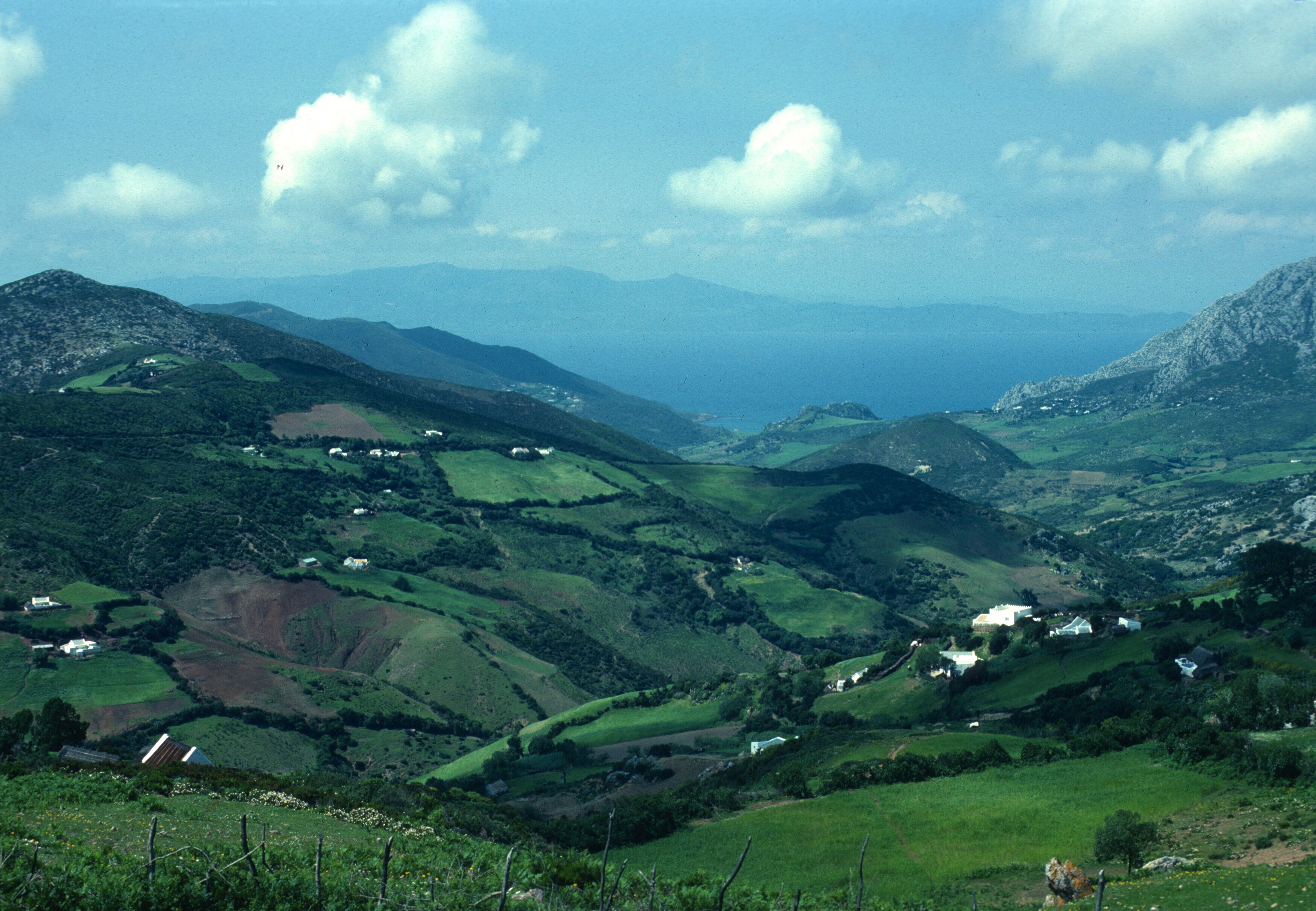
Some Moroccan dynasties reached across North Africa and into Spain, but none were long lived. The Mediterranean world was focused on the basin of its sea, and had its own dynamics. Morocco had an inhospitable Mediterranean coast with mountains crowding the shore. Most of the country, and its richest agricultural lands, faced the Atlantic. Morocco was barely part of the Mediterranean, the world of the “sea between the lands.” Mare Nostrum, our sea, the Romans called it, because it indeed was theirs at the height of Rome’s power.

The natural continuation of Morocco is Spain, not the Sahara or the rest of Africa. Only 15 kilometers wide, the Strait of Gibraltar can be crossed in one-half hour by car ferry. The Strait of Gibraltar posed few difficulties for the Vandals, who invaded Morocco in Byzantine times or for the Arabs and Berbers who invaded the Iberian peninsula a bit later. Today it poses few problems for migrants swarming into Europe.

morocco straitsspain copy
In the distance, about eight miles away is Spain as seen from Morocco.

After the Spanish Reconquista, the Strait took on a new role as a moat, protecting from invasions, much like the English Channel protected England. It separated Christian Europe from Muslim Africa. The Spanish and Portuguese tried to establish toeholds on the African continent, but ultimately were repulsed except at Ceuta and Melilla.

morocco ksar esseghir bones copy
Burial in the Portuguese fortress of Ksar es-Seghir. This toehold didn’t last long.

morocco spain straits copy 2
On the left, the tip of Gibraltar, on the right, Jbel Musa and Ceuta. The Mediterranean is in the distance.

Barbary pirates harassed European ships, but technology favored the Europeans. Now technology enables migrants, desperate for work and a better life, to cross cheaply and relatively easily into Europe.

As European sea power grew, the Mediterranean Sea became even more inhospitable. Morocco’s connections to the east were more and more by land, and there were no longer roads as in Roman times, but only horse and camel tracks until the advent of steam ships and cheap air travel put the Hajj within the reach of those with better means.

Trade continued via new routes. The British brought tea, and Queen Anne style teapots. But despite trade connections, Morocco became more and more landlocked until the twentieth century, when the French seized control and established a protectorate, a system under which the Moroccan sultan was relegated to a ceremonial role, while the French ran the colonial government as their own interests dictated. With independence and modern technology, the isolation is broken forever, for better and for worse.

When I lived in Morocco, I always thought of it as a backwater, and I suspect many Moroccans, proud as they were of their country, may have felt some inferiority. Important events in the Arab world took place in the east. Important history in Maghreb had taken place in Al-Andalus. The greatest monuments of western Islamic Art are in Al-Andalus.

None of this is said to disparage Morocco, which is a place I love dearly, but simply a recognition that Morocco is an outlier, and has been for a very long time. Yet another example: Morocco was one of the first, if not the first, countries to recognize the new United States.

If someone asked me where to see the ruins of a Roman city in North Africa, I would say, without hesitation, Timgad in Algeria or Leptis Magna in Libya. Perhaps I would suggest that they go to El Djem in Tunisia, and visit the largest arena outside of Rome. If western Islamic architecture were their interest, I would suggest going to Córdoba to walk under the superimposed, multicolored arches and through the marble columns of the Mezquita, and then go to Granada, to wander through the rooms of the Alhambra and the gardens of the Generalife. I once did that at night. The palace was dimly lit, and virtually empty. It was as close as I could ever get to Washington Irving’s vision. You would be fortunate, indeed, to have that experience today.

scan-110109-0111 copy
The Court of the Lions, in the Alhambra palace.

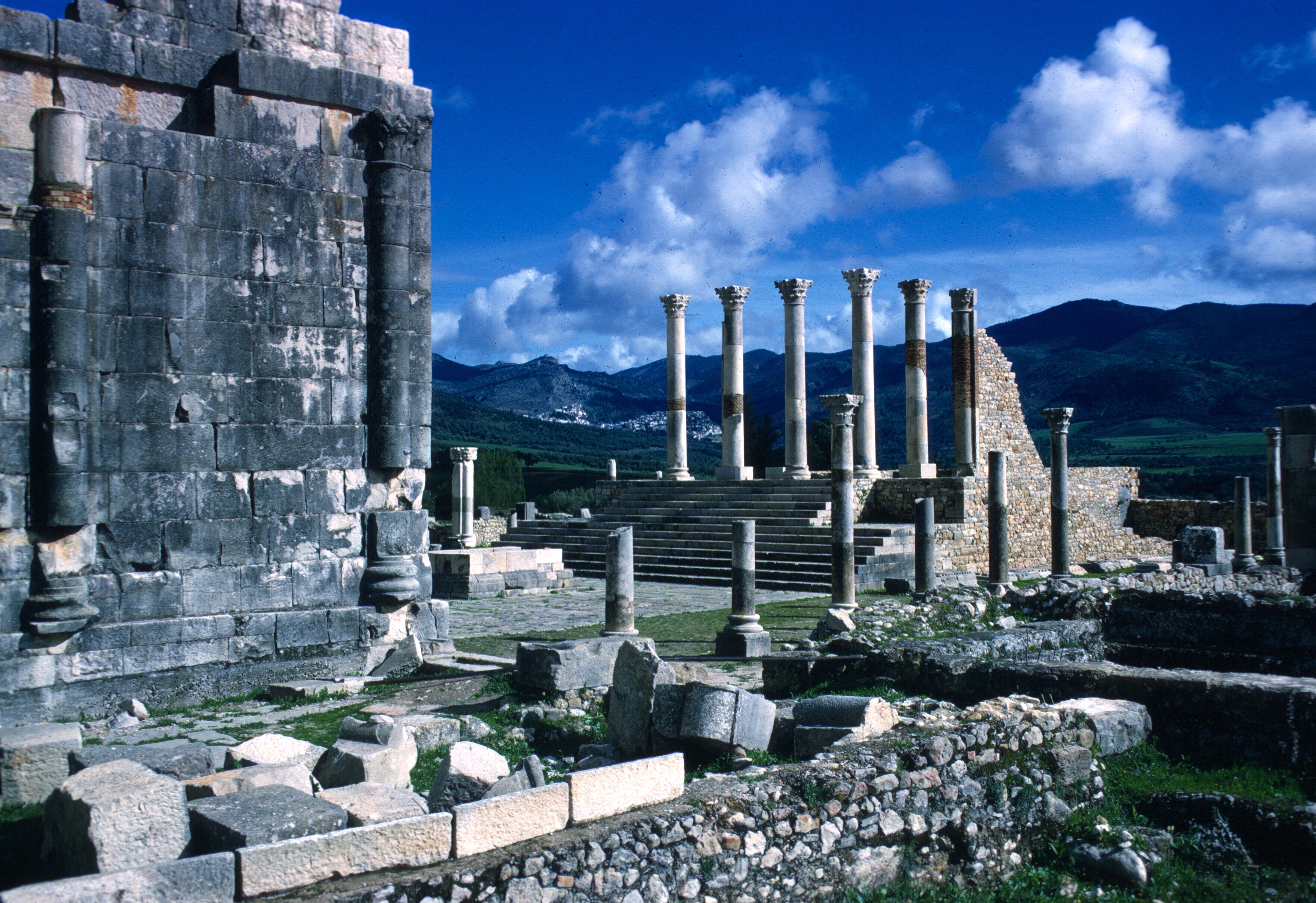
Still, there are virtues that arise from being off the beaten track. Morocco’s most important Roman site is Volubilis, a short drive from Fes, north of the Massif of Zerhoun, just a short distance from the town of Moulay Idriss. The Arab leader, Moulay Idriss established the first dynasty in Morocco at Volubilis, before building his capital a short distance away, partly from stones quarried from the Roman city. After the fall of Rome, it was common practice to reuse stone from the abandoned Roman cities.

tunisia kairouan minaret door copy
The base of the Great Mosque at Kairouan. Note the block with Latin inscriptions to the left of the door.

Today there is a large shrine devoted to him.

morocco my idriss
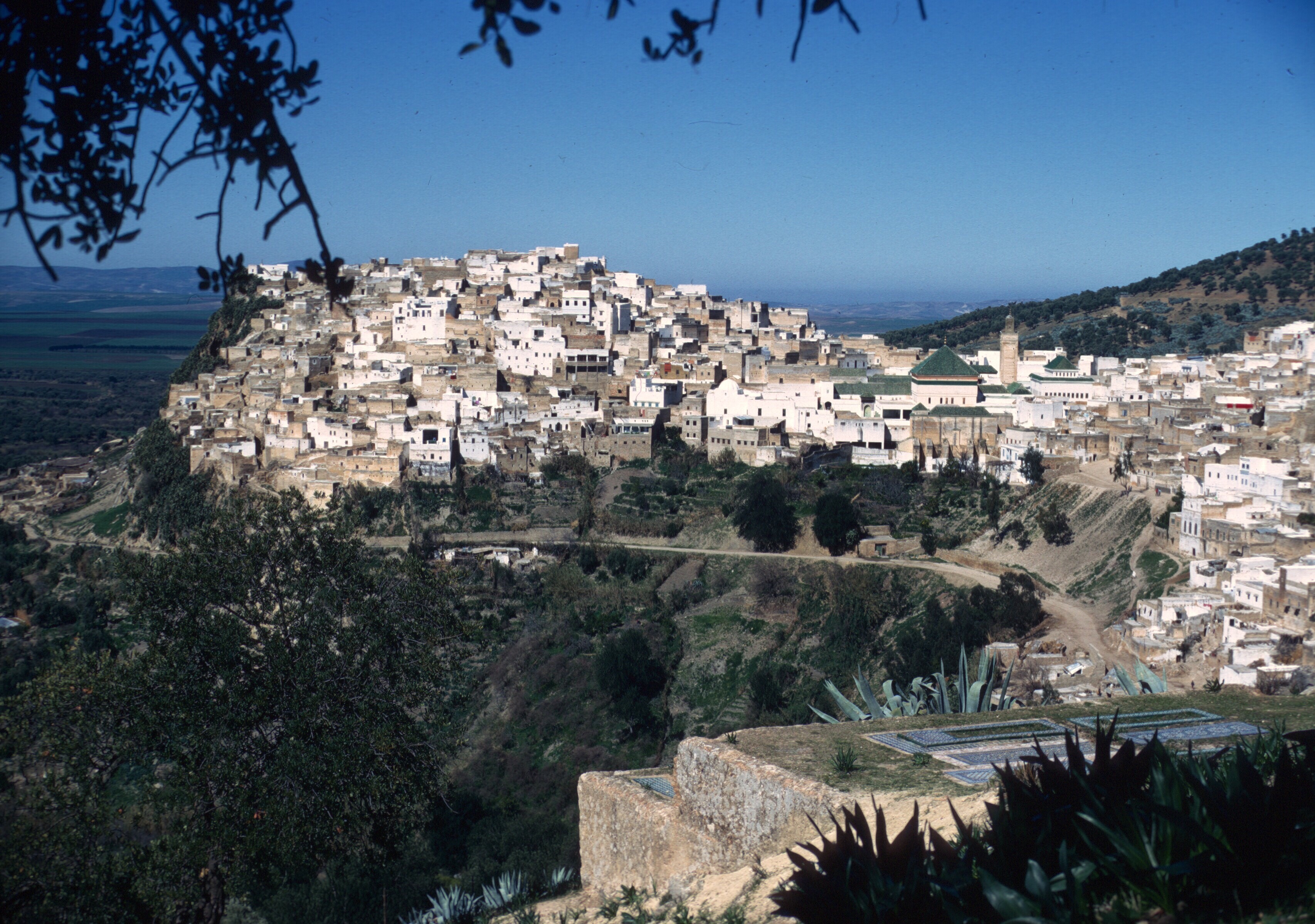
The town of Moulay Idris. The green tiles roofs cover the shrine of the founder of Morocco’s first Arab dynasty.

When I visited Volubilis in the late sixties and mid-seventies it was virtually without tourists, even on weekends.

morocco volubilis road
The road leading to the site was a dirt track, in the middle of wheat fields

One could wander through the ruins, step into and out of Roman houses, climb the forum stairs, and do it all in complete freedom, with no crowds to distract from the quiet of the place.

morocco volubilis forum
The forum. Moulay Idris can be seen in the fold of the hills in the background.

enlight102
Emperor for a day. The forum at Volubilis. 1968.

Tourist facilities were limited to a tiny cafe that served simple, but delicious, food.

enlight114-1
Dining at the little cafe, Peace Corps volunteer Gaylord Barr. Spring, 1968.

It may be different today when Morocco has twice as many inhabitants and the tourism industry has grown substantially, but then it was a place lost in time and space. The city of Volubilis, wrecked by earthquakes, quarried for building materials, seemed to float over the rich agricultural lands that surrounded it, a stone oasis.

enlight106-1
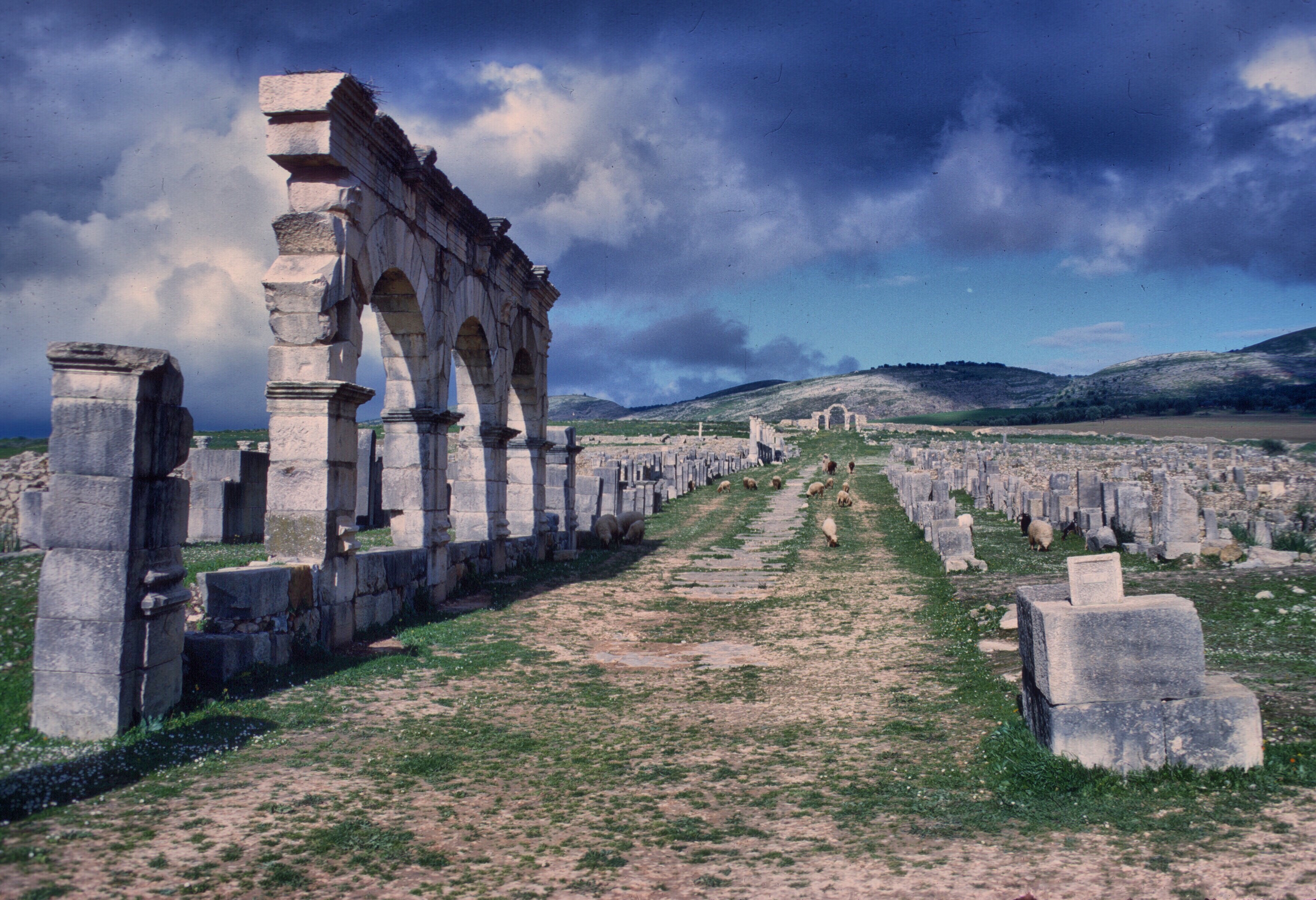
Volubilis. The main thoroughfare.

One could wander through it, dreaming of the life and people of that ancient place, reflect on history and the passage of time, and do it alone, in the quiet of the countryside.

enlight108-1
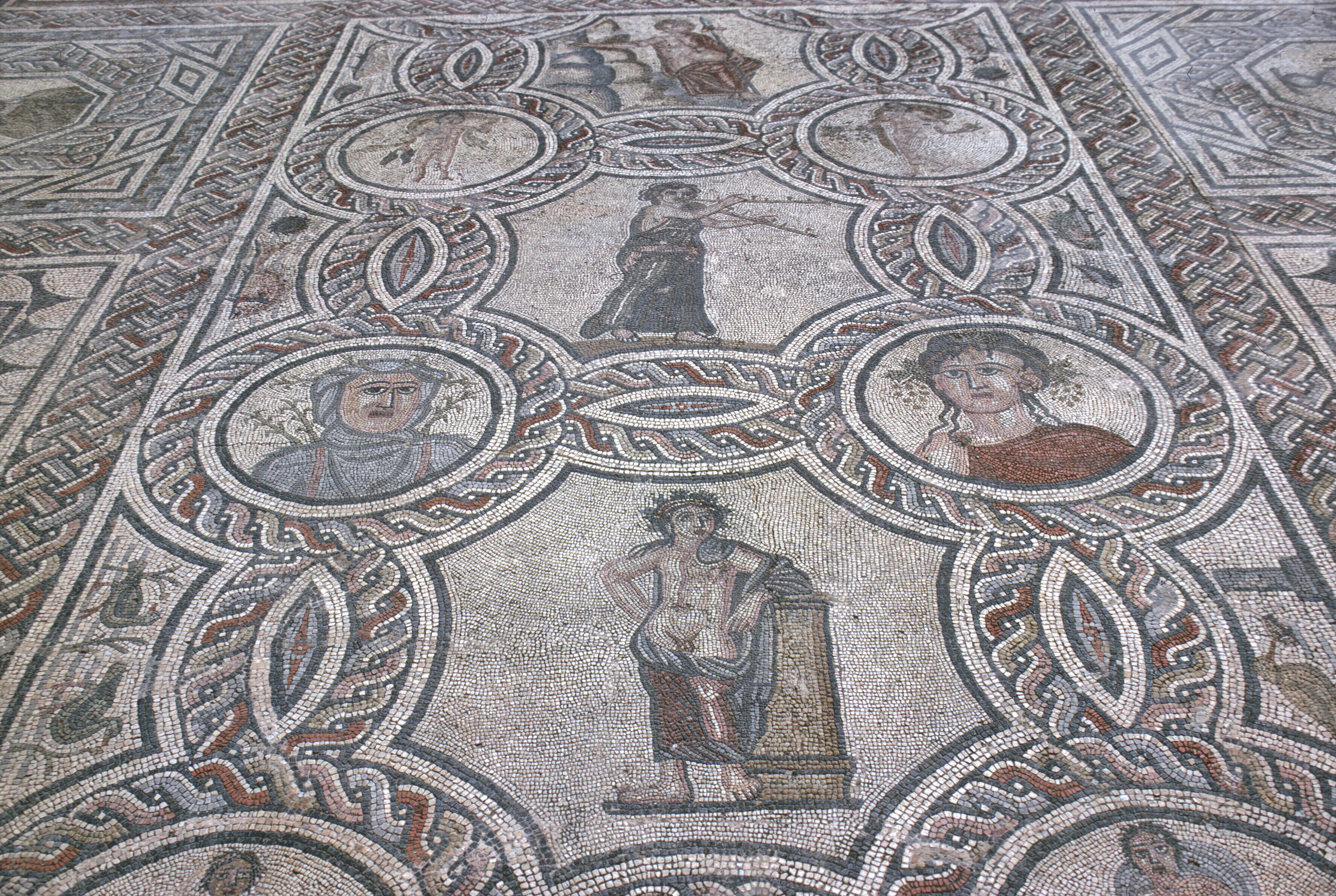
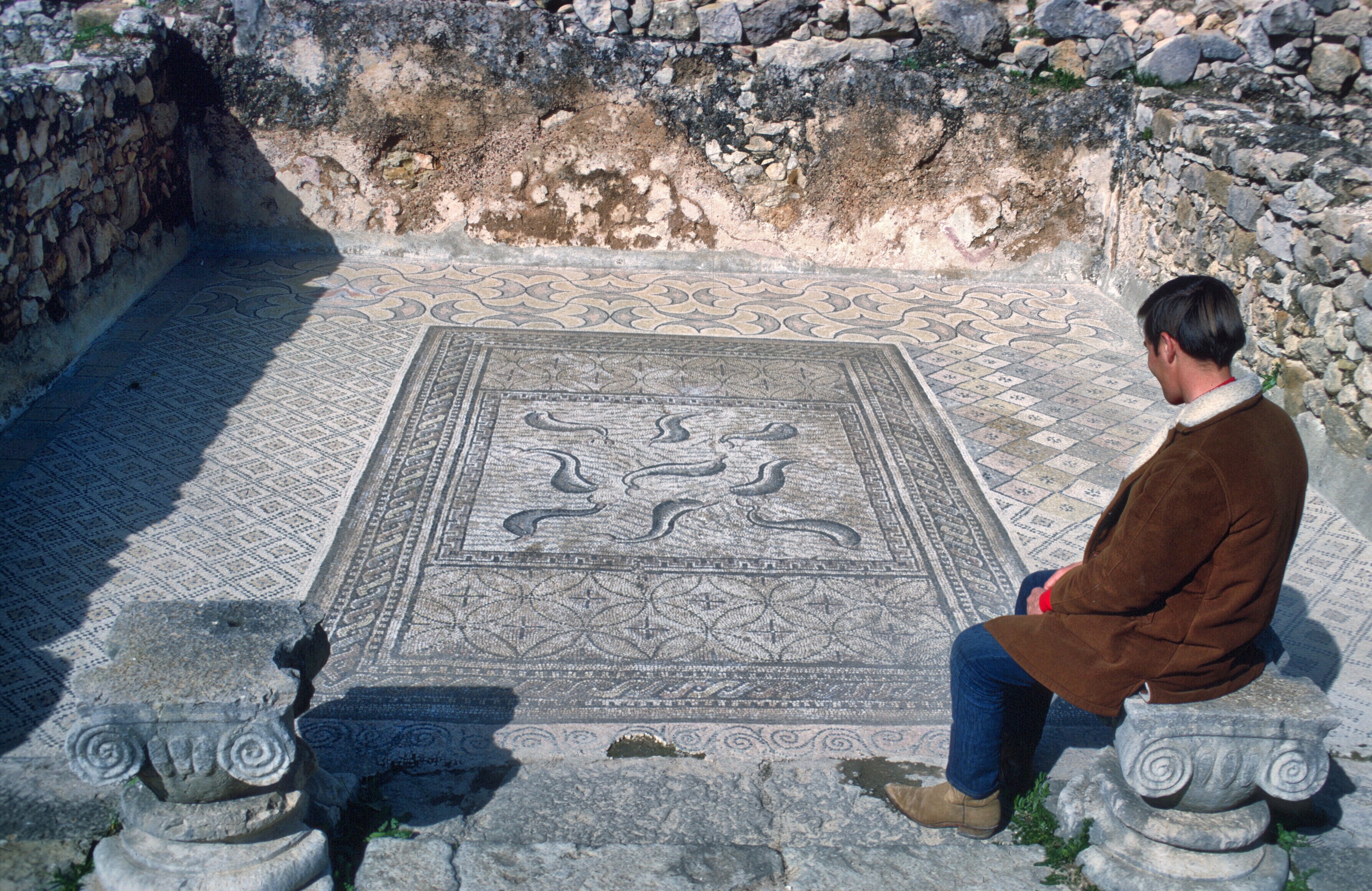
Mosaic floor of a house.

enlight104-1
House of the dolphins.

There were no guards to remind you to keep to the path. There were no tourists to jostle you. You were really alone.

enlight109-1
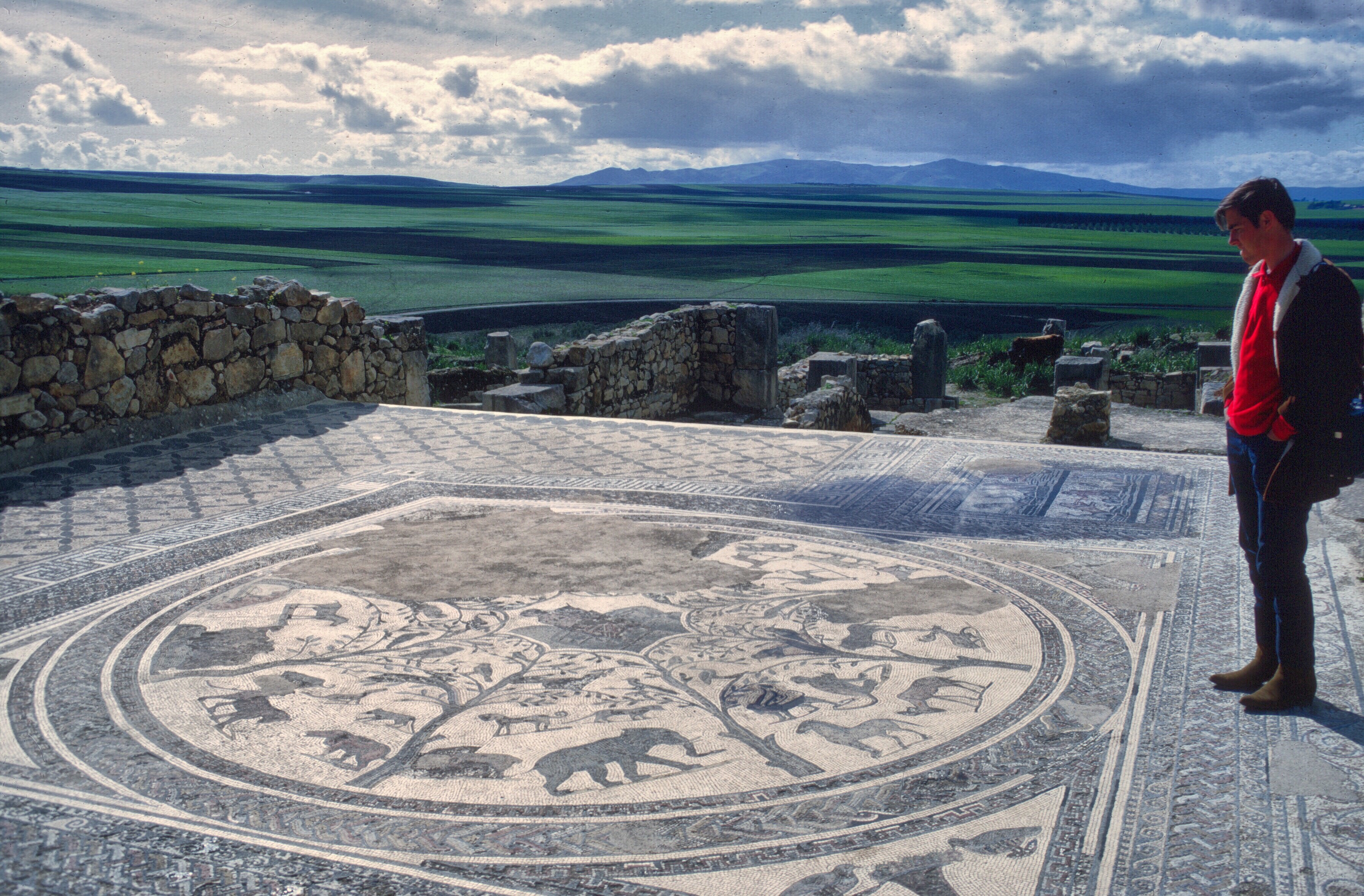
Many houses had mosaics, a testimony to the town’s wealth.

enlight107-1
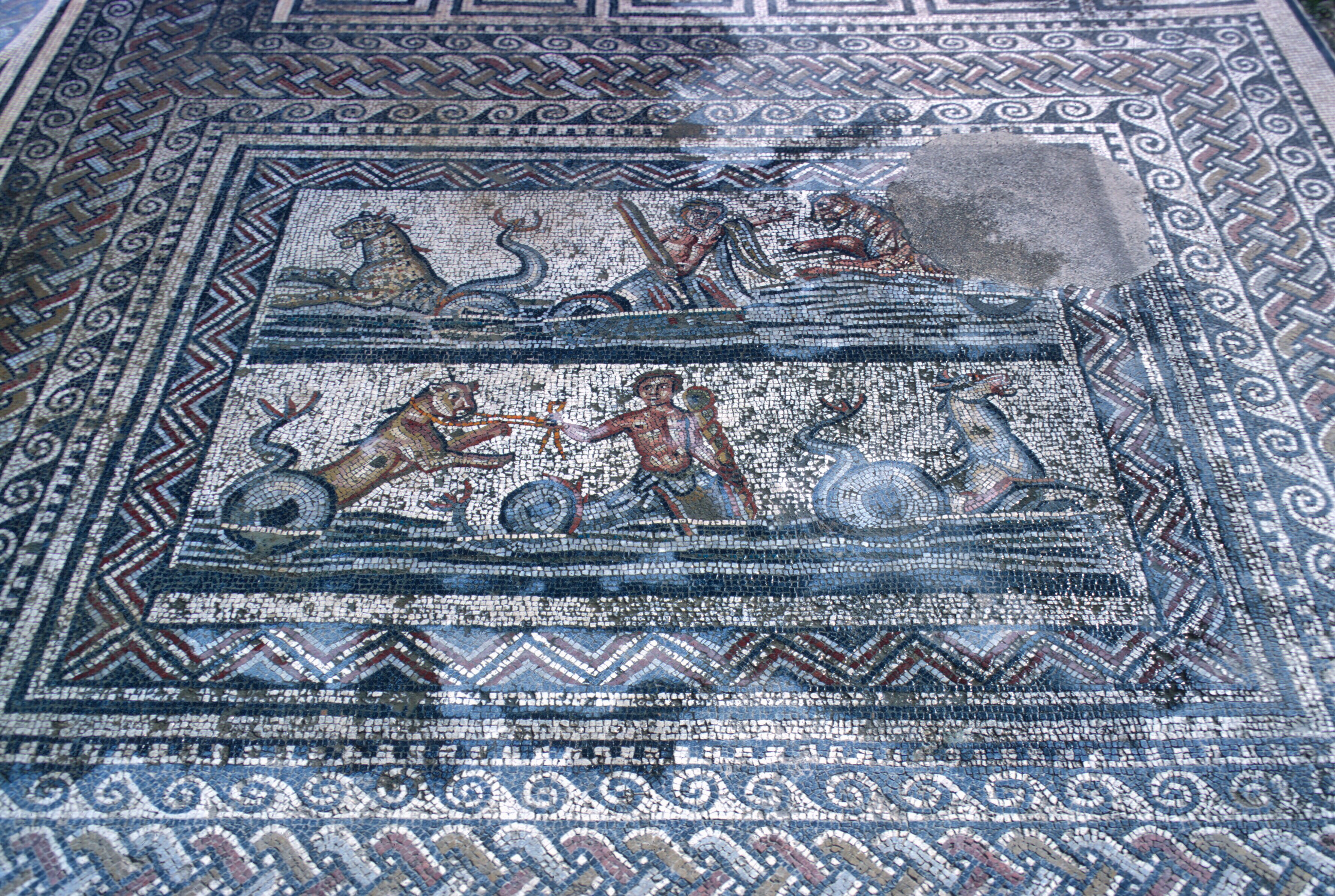
This mosaic depicts the labors of Hercules.

enlight110-1
Some of the animals that formerly were found in North Africa.

Volubilis was not a big or important center. It was an outlier. It grew to prominence just before the Empire entered its long decline. Still, to a young person, new to North Africa, it was a truly magical spot.

enlight115
Main Street, leading to a former gate in the city wall.

There are many other places to see larger and better preserved triumphal arches.

enlight101-2
Triumphal Arch. Volubilis.

There are larger, better preserved, and much finer mosaics elsewhere.

enlight111-1
When wet, the mosaics show their colors.

There are spectacular aqueducts, great temples, immense baths, and fantastic amphitheaters scattered all over the Mediterranean. Volubilis lacks all that, but at Volubilis you felt and heard the wind, and you breathed the scent of the fields around you, while the only footsteps that echoed from the 2,000-year old stones were your own.

enlight105
The Wind. Note that the modern labels were not in the best condition in 1968.