
In the summer of 1974, I was travelling alone throughout Iran. I had just spent the night in Gorgan where I had visited the peasant village my thesis advisor, Dr. Dick Antoun had been studying.
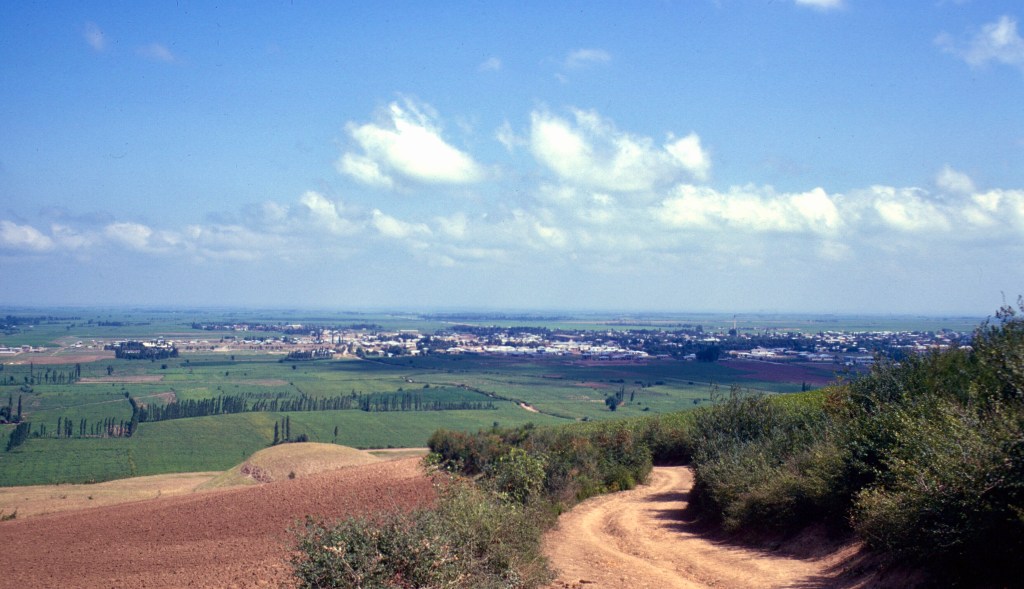

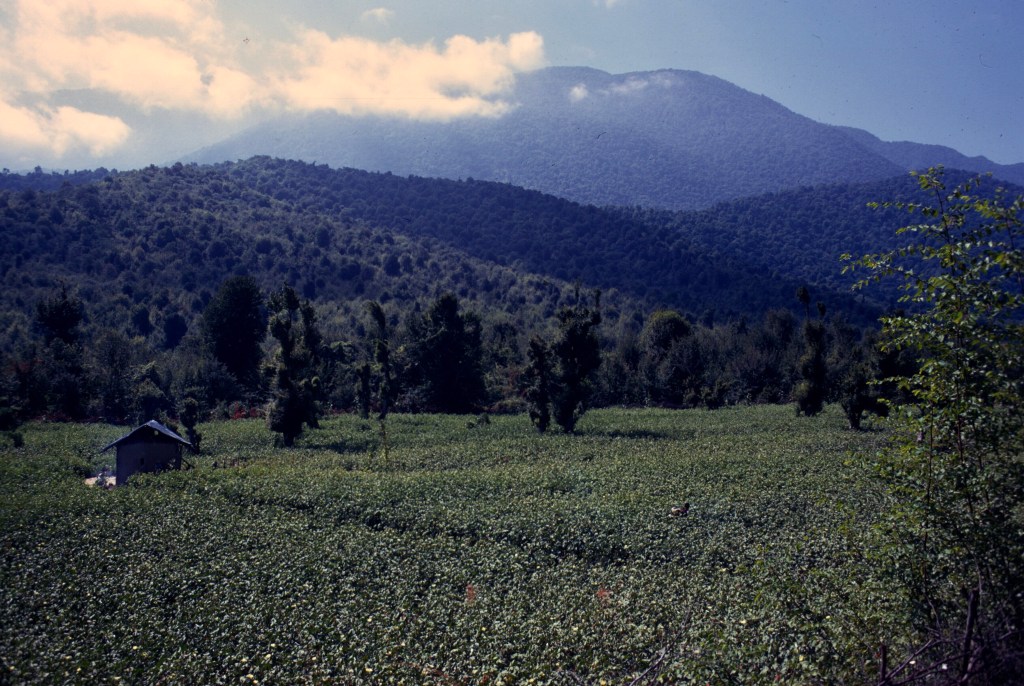
Leaving Gorgan, I boarded a bus to the shrine city of Mashhad. As the bus traveled east, leaving behind the lush deciduous forests on the Caspian slopes of the Elburz mountains, the Gorgan plain gradually dried up and flattened out.
The bus stopped along the route to pick up passengers. Most were Turkmen tribesmen with oriental features unlike most Iranians, and in traditional nomadic dress. As the bus approached the city of Gunbad ē Kavus, the funeral monument of the Ziyarid prince Qabus, rose in the distance. From high points on the plain, the 200 foot tower can be seen from 20 mikes away. The tower is an architectural masterpiece, a United Nations Heritage Site, and unique in many ways.

At this point, it occurred to me suddenly that I was really far from home, and, on a bus full of Iranians and only speaking a little Farsi, I began to experience some cultural shock. As the tower grew ever talller, I came under its spell: here I was in Central Asia.
The spell was broken, alas, as the bus entered Gunbad ē Kavus. On the roadside, there was a huge yellow sign: The Lions Club welcomes you to Gunbad ē Kavus. Meetings every Thursday.
All in English.
Sadly, I have no photos of my own of the tower, and most of the online photos suffer from a composition problem: how to make an isolated, round tower look interesting. One Wiki Commons photo used a camel. Had I had some time there, I would have found a more distant vantage point.

 Morocco That Was
You are lucky to have seen something of Iran. Not many people from our parts of the world have been so fortunate.
LikeLike