
I have had this post in my drafts box for months. Some of the observations are trite, but they continue to have a special place in my memory. In view of the massive earthquake just suffered by Moroccans, I publish it because many of us did experience a quake in Morocco.
In Before Sunrise, two young people traveling on Eurail passes meet. The young man, an American student, convinces the girl who is on her way home to France, to get off the train with him in Vienna. He will be leaving in the morning for the US. They spend the night walking and talking and finally agree that they will meet again in six months. If you desire to know what happens next, watch the movie and its two sequels, but be advised that these movies by director Richard Linklater have much talk and little action. Not everyone enjoys that genre. I do. One of my favorite French directors is Eric Rohmer. In the Rohmer movie, The Green Ray, a girl can’t decide what to do on her summer vacation. Her story is a small slice of life, with boredom and indecision creating or replacing the drama.
The nights that I write about here occurred by chance, where serendipity and stupidity often fight it out. As for my serendipitous experiences, they usually lay somewhere on a continuum ranging from the innocuous to the dangerous. Sometime I found myself in places where I shouldn’t have been. In one’s youth, the line between the carefree and the careless is thin and often crossed.
My nighttimes abroad were more prosaic than those of Linklater’s protagonists. Still some gave rise to experiences that years later I still remember vividly, though committing old memories to print encourages remembrance and rumination and perhaps some inadvertent invention. Most of the experiences here are already described or briefly alluded to in other posts, but I mention them again with more elaboration.
On the last day of February in 1969, not very long after I had fallen asleep, I was wakened by a loud, roaring noise as my house in the Sefrou medina trembled. Turning on the lights, I could see that the bulbs that hung on long cords from the ceiling were swaying like pendulums. A great commotion had arisen in the street, and, outside the city wall, in the new areas of the neighborhood, there were sounds of people and vehicles where silence usually prevailed late in the night. Half asleep, an earthquake had awakened me. By the time I was fully conscious, I decided that the quake was over and I returned to a sound sleep. My neighbors, however, were terrified and many stayed out all night.
When the quake began, people naturally fled their houses for the wider streets outside the medina, and, if they had a car or truck, drove it into open areas where they would be safe from falling debris. The panic was understandable: in 1960, an earthquake destroyed the Moroccan city of Agadir, and killed 12-15,000 people in a matter of seconds.
That night in Sefrou there were no important aftershocks and most people gradually retreated into their homes rather than freeze in the cold night air.
The quake originated just to the west of the Strait of Gibraltar, where the African and Eurasian tectonic plates meet. At 7.8 on the Richter scale, the earthquake was felt widely in Morocco. With an intensity of VII on the Mercali scale, the quake was the strongest to hit Portugal since the Great Quake of 1755.
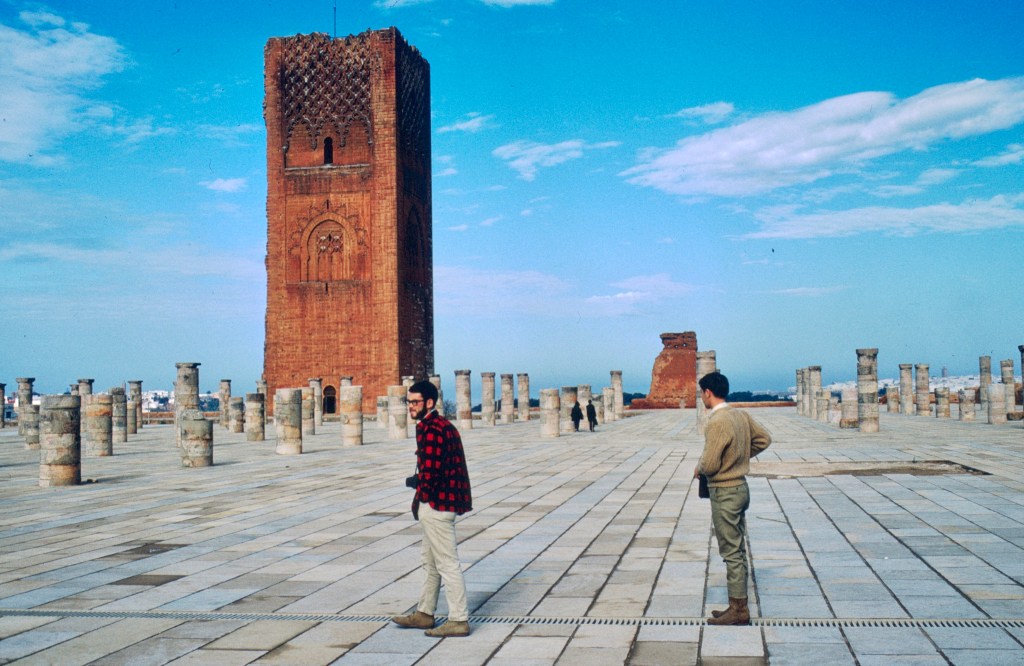
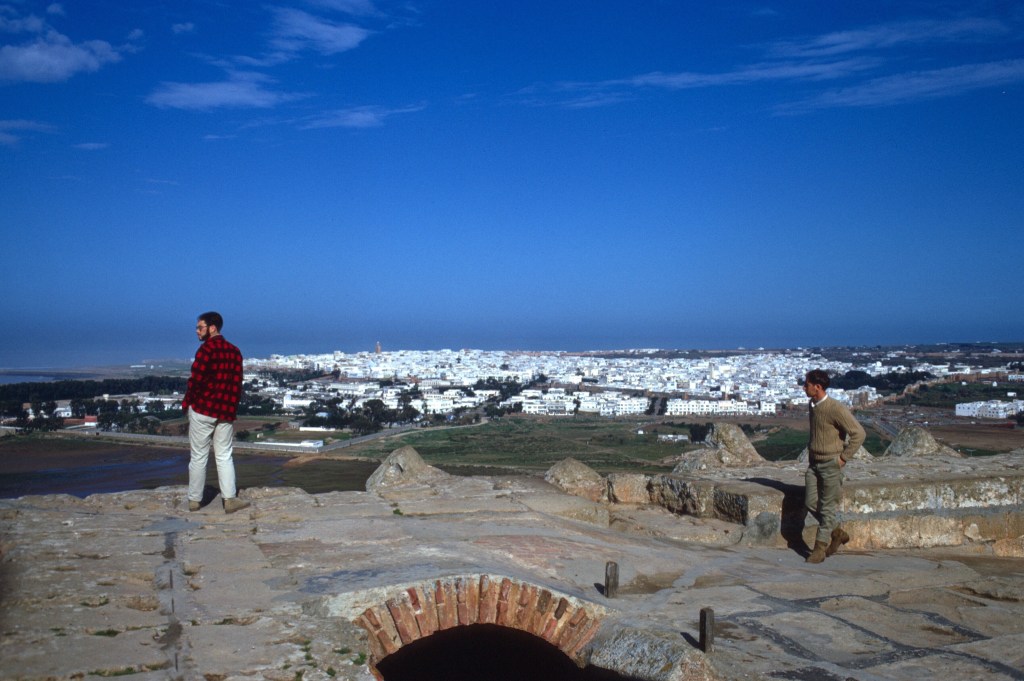
In the 1969, 11 Moroccans died and there was widespread minor structural damage, but the quake spared Sefrou. In Fes, I remember a volunteer’s house in Fes El Jedid that had a crack that extended more than two stories. Strangely, I don’t remember many volunteers talking about the quake, but I do remember a Peace Corps administrator and former volunteer, Don Brown recounting that he and his old Peace Corps volunteer housemate in Oujda were imbibing a late night glass of wine in Don’s Rabat apartment when they felt the shock. I emailed Don about it the other day and this is how he remembered the occasion.
Yes, it is true. PJ and I were on at least the second bottle of Boulaouane when the earthquake happened. As I recall, it happened about 2 in the morning, and like almost everyone else, we got out of the apartment building and roamed the street until the sun came up. We may have had breakfast at the Jour et Nuit.
— Don Brown, RPCV, Peace Corps Administrator, and Agricultural Development Consultant
The modern apartment building where Don lived was adjacent to the Peace Corps office and neither was damaged. For those of you who remember her, Emelina de Ros, the Peace Corps secretary, lived in the same building.

The quake left some Moroccan roads in bad shape. Even without a quake, the winter rains and thin soils often produced mudslides. Combined with the earthquake, many mountain roads were in very poor condition in March 1969, particularly those in the Rif region.

In the fall of 1968 I had moved into the Sefrou medina with another volunteer, Gaylord Barr, who had brought an 8mm movie camera to Morocco, but soon found 8mm film expensive and, lacking a projector, he could not even watch his films. I had brought a 35mm SLR along to Morocco and was taking photos and slides like mad. That convinced Gay that a 35mm camera was what he needed and I offered to help him pick one out. Photo gear was expensive in Morocco, but we knew that Ceuta, the nearest of the two Spanish enclaves on the Moroccan coast, just opposite Gibraltar, had duty-free shopping. We chose a long weekend to go there and decided that we would try to hitchhike rather than take a bus. Morocco was well served by the national bus line, the CTM, and smaller companies provided good service to more remote areas. Volunteers seldom hitchhiked. That said, for whatever reason, we decided to hitchhike from Fes to Tetuan where we could get a local bus to Ceuta. Perhaps we had missed the last bus of the day from Fes.
Gaylord and I must have got on the road late, because I have no memory of anything but a high speed nighttime drive on rough, damaged roads. The trip was through still unfamiliar territory on a dark, rainy night to boot. The driver was headed all the way to Tetuan and was kind to stop for us. All he wanted was some company.
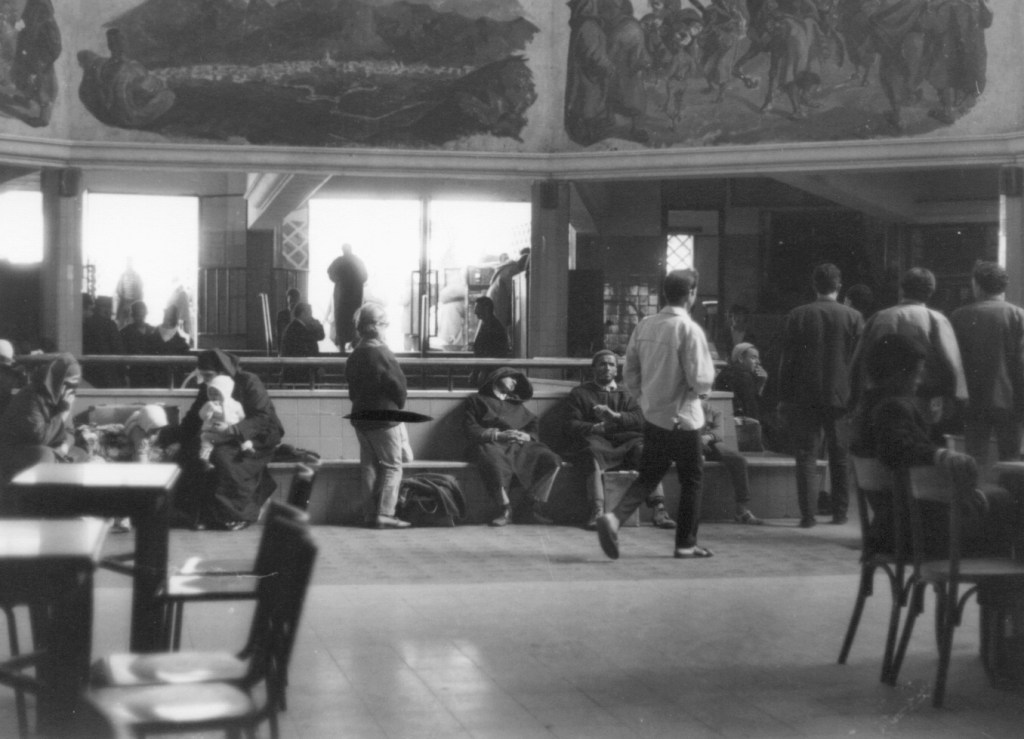
The road from Fes north winds through the relatively hilly country of the pre-Rif, then barrels down mountain valleys between Chauen and Tetuan. As I worked for the Ministry of Agriculture in Fes, I became familiar with the southern part of the route. The Province of Fes then stretched from the pre-Rif to the Upper Moulouya. Later, living in Chauen, I got to know the northern part as well. It was in the north that the Spanish dictator, Franco, then an officer in the Spanish army, participated in a disastrous retreat from Chauen during the Rif War, one in which thousands of Spanish soldiers lost their lives.
Today the entire route takes about five hours, but negotiating rock falls and mudslides probably slowed us down. The driver might have been drinking. He was certainly driving fast under the trying weather and road conditions. The night turned out to be a long one. We got to Tetuan early in the morning safe and sound, but the experience had been somewhat harrowing. That ended my hitchhiking experiences in Morocco, save on the road between Fes and Sefrou, when missing the last bus or grand taxi after work sometimes forced me to stick out my thumb.
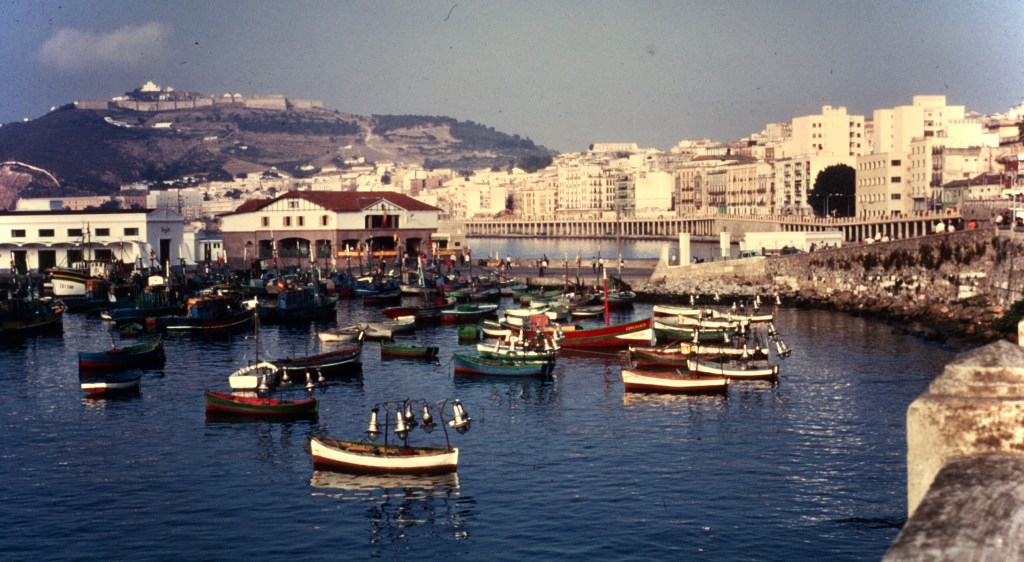
As a footnote, that trip was the first of many to Ceuta. Si Kamir, the director of the Sefrou Centre de Travaux where Gaylord worked, had been impressed by Gaylord’s slides, and asked him to buy an inexpensive projector. We made a special trip for that. It was a tiny, manual Olympus model with a bright lamp and a short throw lens, which proved perfect for slide shows on the walls of the house. I loved it and we had it for a very long time until Si Kamir finally asked for it. He had paid for it after all! In this age of digital photography and cellphones, it may be hard to imagine a time when cameras needed film which then had to be mailed to France for development, and when slide projectors, rare and expensive, were needed to appreciate one’s slides.
The next nighttime adventure happened on the road between Fes and Taza. The eastern Middle Atlas and adjacent Rif mountains are predominately limestone, and caves are plentiful. On one occasion, I went spelunking in a big cave south of Taza with a couple of Peace Corps architects who worked in Fes. I neglected to note that Jeep’s alternator light was red, and, on the way home, we ran out of battery power half way between Taza and Fes at three in the morning. The battery had completely discharged. With a defective alternator, we couldn’t even push start the vehicle. One of the architects hitched a ride into Fes, 45 km distant, found a tow truck, and came back with it. Remarkably, the tow cost virtually nothing. I should add here, for younger readers, that there were no cell phones and even regular telephone conversation was difficult in those days as few residences or small businesses had them. Often a volunteer needed to go to a PTT and use the post office’s booths. In any case, luckily for us, the road from Taza to Fes was a main east-west highway, and there was alway traffic, even in the middle of the night.
If you’ve read other articles in this blog, you already know about me being stuck in mud with swiftly flowing water pouring over a dip in the Tangier coastal road. In a driving rain, late at night, I knew my battery wouldn’t charge, and that I couldn’t afford to be stuck. Nevertheless, I struck out from Chauen for Tangier, in typical wet winter weather, and took the far less traveled coastal road between Tetuan and Tangier. Sure enough, as I came over a rise and into the dip, my car got mired in mud where water was pouring over the asphalt. The engine stalled and I couldn’t restart it, of course. The countryside was pitch black. I opened the driver’s side door to find water up to the sill of my often unreliable Simca 1000, and my glasses slipped off and fell into the rushing water. In total darkness, I frantically felt for them in the mud and the current, and luckily they had not floated far. The water wasn’t deep, so I decided to take off my socks and shoes and try to find help. Fortunately, help found me.
Farmers from the local douar had heard the car stop. I suspect that cars often got stuck there on similar nights, and they were just waiting. In any case, appearing out of nowhere, a half dozen men got the car onto dry land, gave it a push so I could start in gear, and I was ready to go on to Tangier. I rewarded them with the little money I had as well as copious thanks and as many religious blessings as I could remember in my limited Arabic.
And there was the time, another auto adventure, when I just used my Jeep’s gear box, rather than the parking brake, on a mountain road. It popped out of gear, of course. Rolling driverless down a mountain piste with me and Gaylord in hot pursuit, the scene was ridiculous and serious at the same time. Gaylord was able to hop in the doorless vehicle, but he couldn’t get control before the Jeep went into a deep drainage ditch. He wasn’t injured. Young humans often seem to survive in spite of themselves.
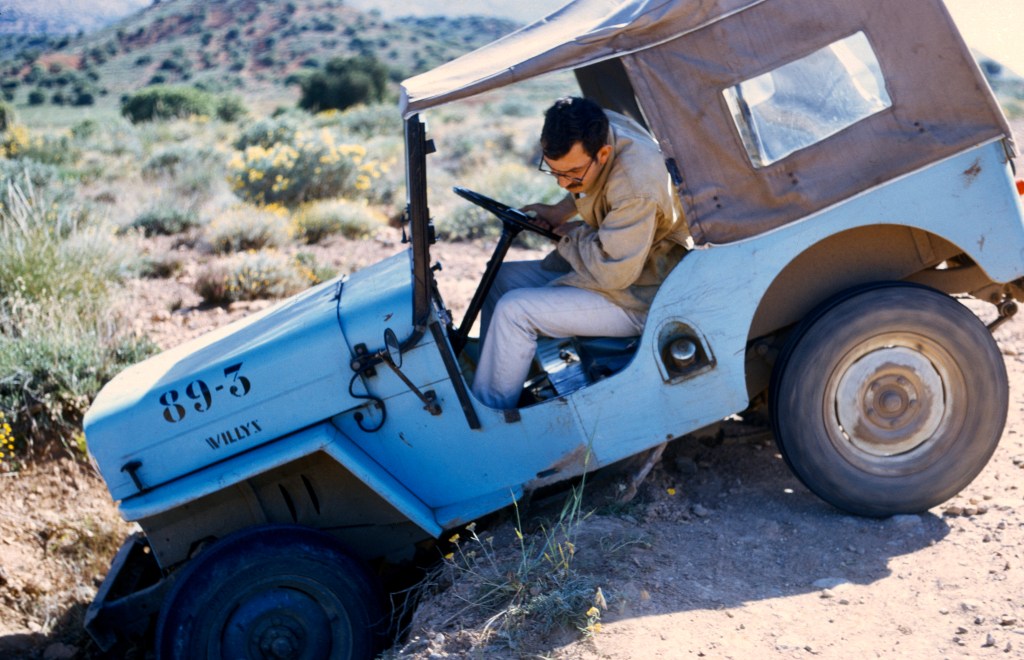
Some of my experiences involved situations requiring a bit of elucidation such as the experience which follows. Others are just mental snapshots of a moment, rightly illustrated by photographic snapshots or not—color film was expensive and exposures demanded tripods.
Thunderstorms provide a great display of the power of nature. Crossing the Great Plains and prairies of North America in early summer, great cumulonimbus clouds often appear, and, from an automobile on flat land, one can see the full extent of the enormous anvil shaped clouds from far off. Sometimes the storm will rise directly over the route. As one’s car enters the cloud, the sky darkens, heavy rain falls, thunder rolls, and lightning begins striking all around. If the rain or hail is not so strong as to force one to pull over, one just continues on through it, emerging in a short time into clear blue skies and a once again dry landscape.
In Morocco, where a Mediterranean climate prevails, thunderstorms are relatively rare. In George Brassens’ song, L’orage, the narrator comically recounts an affair with his neighbor. Her husband sells lightning rods and, alone on stormy nights, she is frightened and seeks comfort. The men in Brassens’s poems are especially good at rescuing damsels in distress, though they are usually not pure in their motives. The protagonists’s affair is doomed, however: the neighbor’s husband makes a fortune and takes her away with him to the sunny, cloudless climes of the Midi.
I recall only two thunderstorms in the seven or so years I spent in Morocco. One in the High Atlas rolled in just as I reached the summit plateau of Jbel Tazaghart in 1973. On the top of a mountain, a person makes a nice target, there is seldom much shelter, and lightning travels in strangely oblique ways on mountain slopes. That storm was in the day and involved a hasty descent from the immense, flat and featureless summit. The other storm occurred in 1970 in the Middle Atlas in midsummer.
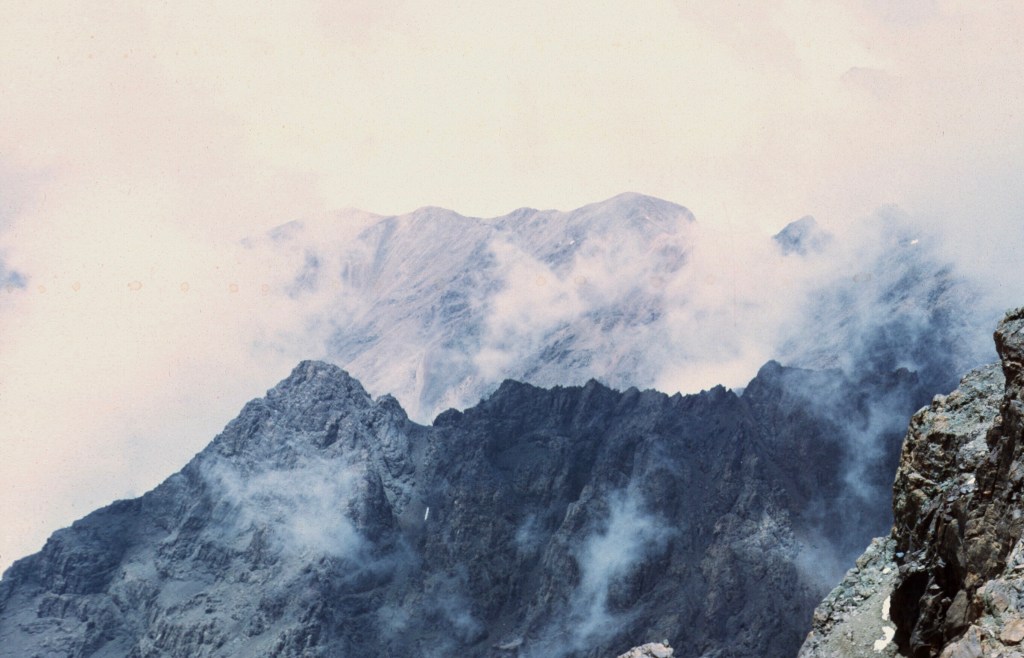
The Sefrou house that I lived in had a roof over the courtyard with windows all around. In the dry summer heat, the inside air made the house stuffy even with all the clerestory windows open, but the rooftop terrace provided relief after the sun went down.

One night, sitting on the terrace in Sefrou, taking in fresh evening air, I watched a summer thunderstorm that lasted for hours. Bright flashes of lightning repeatedly lit up the skies north of Taza, each bringing the Middle Atlas mountain skyline, from Tazzeka to Bouiblane, into sharp relief. A pyrotechnic specialist would have been hard tasked to craft a more dramatic spectacle. No thunder accompanied the lightning. No rain fell on me. The mountains were at least 75 kilometers to tthe east. Sheet lightning and bolts followed in quick succession for hours. I sat watching late into the night, mesmerized. marveling at the storm’s display.

On that same terrace, I often heard nightsounds. In the winter, I stood on the terrace, watching the birds. Small flocks of the lesser Eurasian kestrels nested in the holes of the city wall that bounded the abandoned garden by my house. With the dying ray’s of the sun turning Bouiblane pink, the kestrels would fly in noisy circles before settling in for the night.
The streets surrounding the house were like canyons. On a terrace, guarded by high walls, few street sounds made it to the rooftop. More than once, in the darkness, an owl perched on the parapet of the terrace of my widowed neighbor, the Hadja. Her roof overlooked my own rooftop terrace. The little owls called plaintively with a voice that some Moroccans felt was an ill omen, but I liked the sounds of nature so close at hand. The Sefrou medina was too urban for nightingales. The city’s ancient gardens that hugged the defensive wall had long given way to houses, including the one that I lived in, but I did hear nightingales sing in the mountain gardens of the Sanglier qui fume hotel in the High Atlas.
One of my favorite after-dark spots was not in the mountains, however, but on the Atlantic coast of Morocco where two jetties stretch out into the ocean at the mouth of the river Bou Regreg, one in Rabat, the other in Salé.

The French built the jetties to provide small craft safe entry through the shifting sand bars that once made the river a haven for the Barbary pirates.

The Rabat jetty is easily accessible from the cemetery behind the Casbah of the Oudayas. Though I briefly lived in Sale, I do not recall ever walking to the end of its jetty, but more than once I walked to the end of the one on the Rabat side of the river.

During the day there were usually fisherman trying their luck, young couples or friends walking together, and children playing.

The Atlantic swells rolled in, heavy and impressive, sometimes breaking over the jetty’s revêtement, and leaving shallow puddles on the walkway. Anyone who has lived in the Rabat quarter of l’Océan will remember the loud, booming ring of those swells as they pounded the coastline and exploded against its cave-filled bluffs.
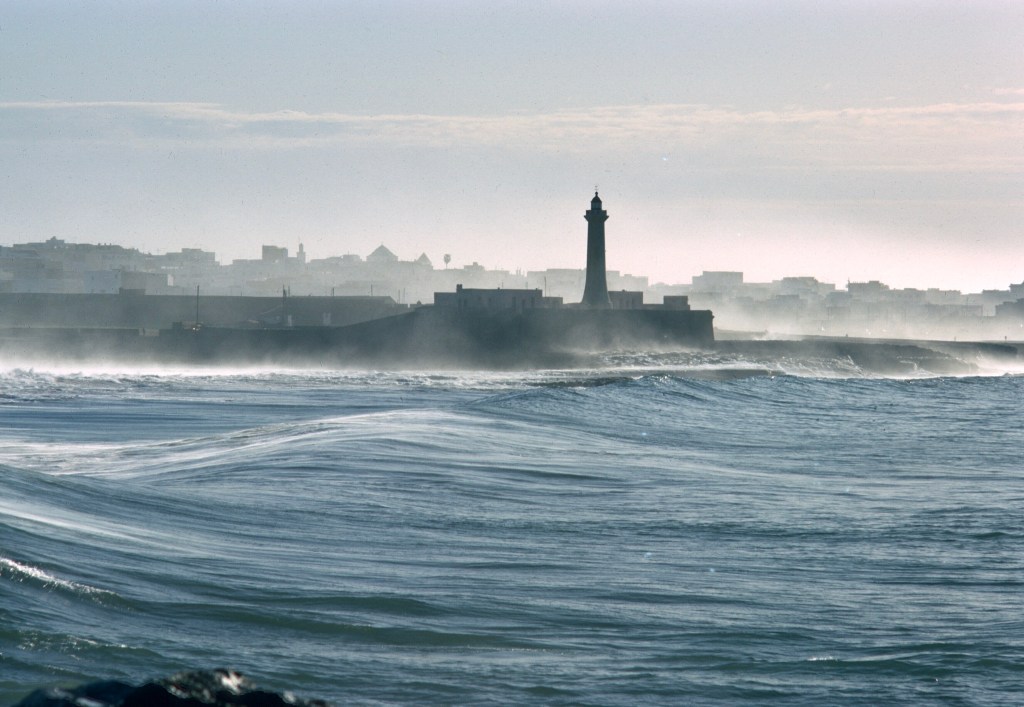

The ocean did not change at night, but the children and young lovers disappeared from the jetty and most fishermen went home. The lights of the city kept the walkway from total darkness, and they were often reflected in puddles left from the ocean spray. As one approached the end of the jetty, the fresh smells of the ocean and the sounds of the surf grew ever stronger, and replaced the heavy, humid urban atmosphere.
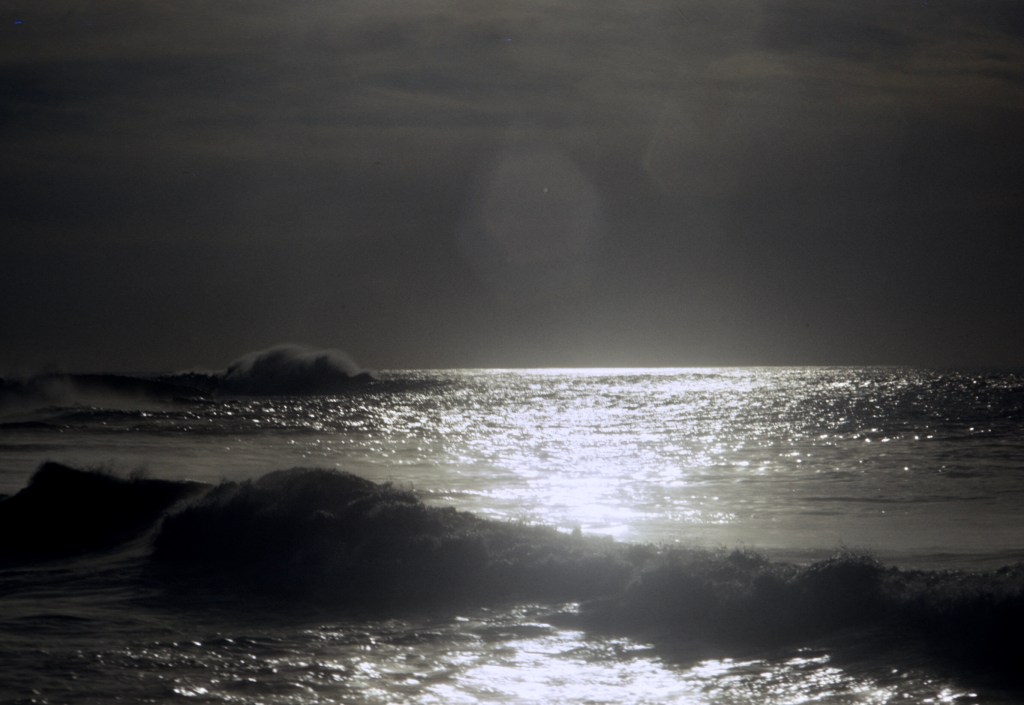
On bright moonlit nights, the swells and breakers caught and reflected the lunar reflection.Today, there are only memories of those moments. My film camera and slow Kodachrome film could hardly capture the night scene the way digital photography now can. Security never seemed an issue then. Today I wonder. In large urban agglomerations like Rabat, crime has always been endemic. Still, in those days of my youth, I never felt insecure on that jetty.
Returning to the mountains, I remember, how could I ever forget, another experience in the eastern High Atlas in April 1970.

Camping in the Cirque du Jaffar with Don Brown and Louden Kiracofe, an urgent need to relieve myself awakened me. I crawled out of the tent in the middle of the night. The night air was freezing at the mile-high altitude of the Cirque. Far from any city, stars filled the clear night sky, and, in the shadow of Ayachi, the light of comet greeted me. Like a searchlight, the comet appeared to perch atop a shoulder of the mountain wall. Half asleep, it took a moment for me to reason out what I was seeing and to accept it as real. I had never seen a comet before, and I have never seen one since in such a dramatic setting. As with the moon, the horizon gives perspective and the comet was truly stunning.

Most Peace Corps volunteers will probably have some similar tales, and perhaps they will recount them with the same wonder and lingering excitement. Night was always a time of mystery and enchantment, a time when marriages were celebrated and Aïcha Kandicha prowled deserted streets looking for prey.
Happily, I never met Aïcha Kandicha, but soon after I moved to Sefrou, one of the primary school teachers where the chicken coop was located got married. I attended his marriage with a couple of other volunteers who were visiting, and drove through the town that night, loaded down with friends and family of the groom, honking the jeep’s horn. The celebrations lasted well into the night, and the wedding was the first of several that I would attend. The groom, Hammad Hsein, became a friend and taught me and others Arabic.
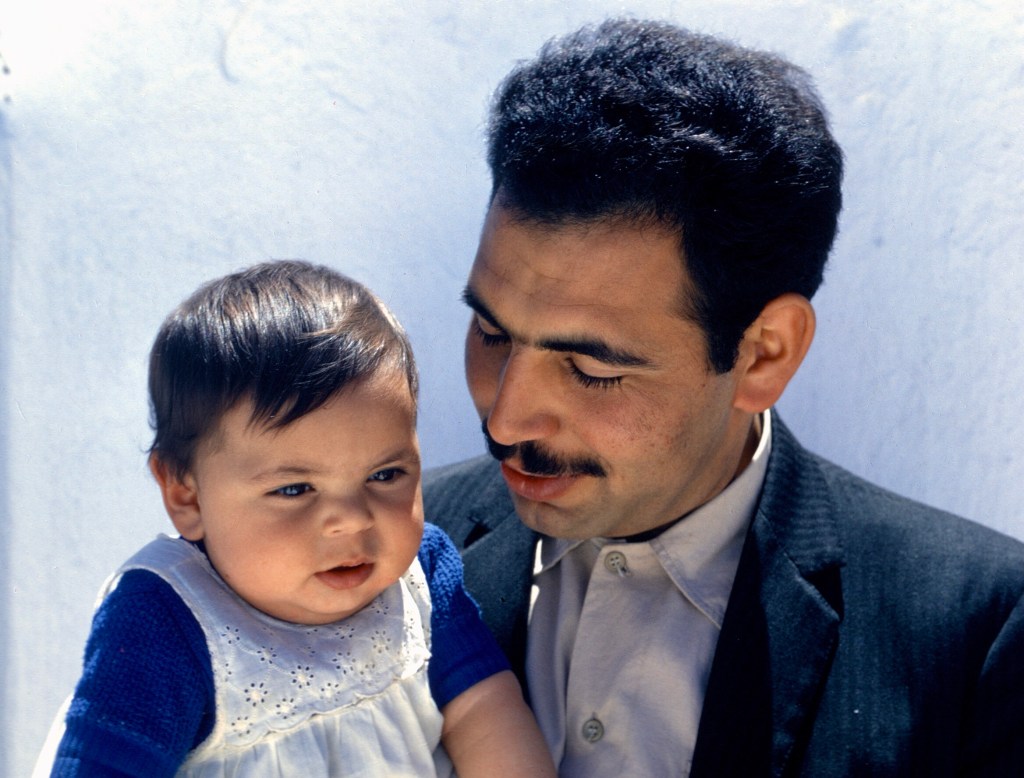
All these recollections did not arise randomly. The other day, I read an article on energy conservation in southwestern France. A small city there had proposed dimming or turning off street lights after a certain hour in order to save energy. The idea of a darkened city brought up more memories of Sefrou and Europe and other experiences. Most have already been touched on elsewhere in this blog. Here they receive a different treatment or a bit more elaboration.
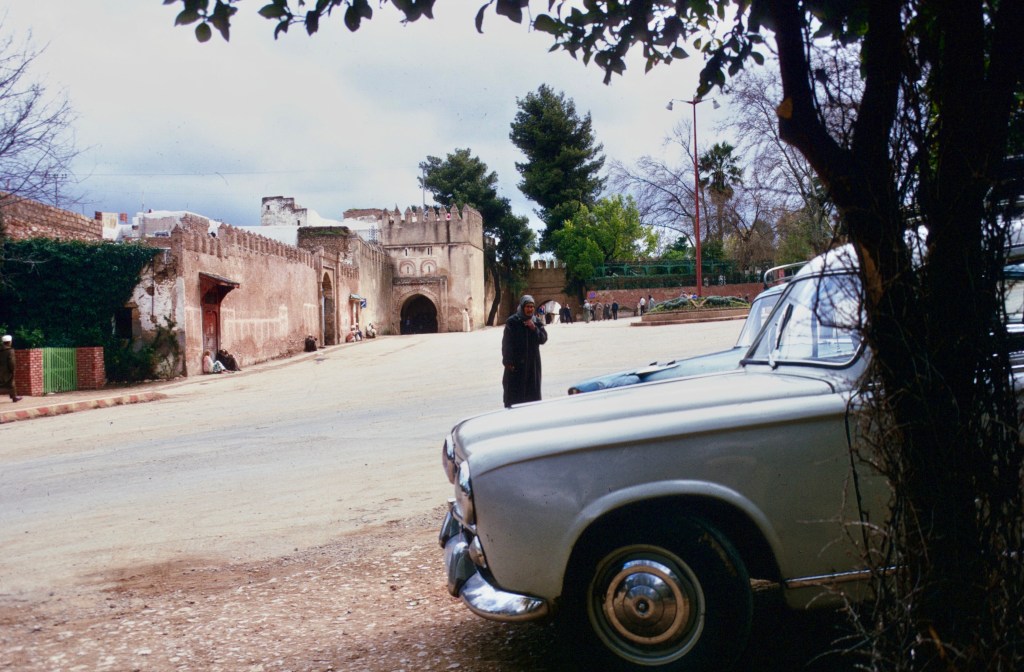
In Sefrou, I lived on one of the main streets of the medina, and going many places often meant crossing the old city. If I left my house and turned left, I immediately walked through a city gate into a newer part of the neighborhood, outside the defensive wall. The new area had wider and straighter streets. Every morning I walked through them up to the grand taxi stand across from the Bab Imkam to ride a bus or taxi to work in Fes.
On the other hand, leaving through my front door and turning right, by way of a twisting street closed to automobile traffic, I was only a minute or two from the main mosque, the kissaria, and the main street that followed the Oued Agaï to the Bab Imkan gate.
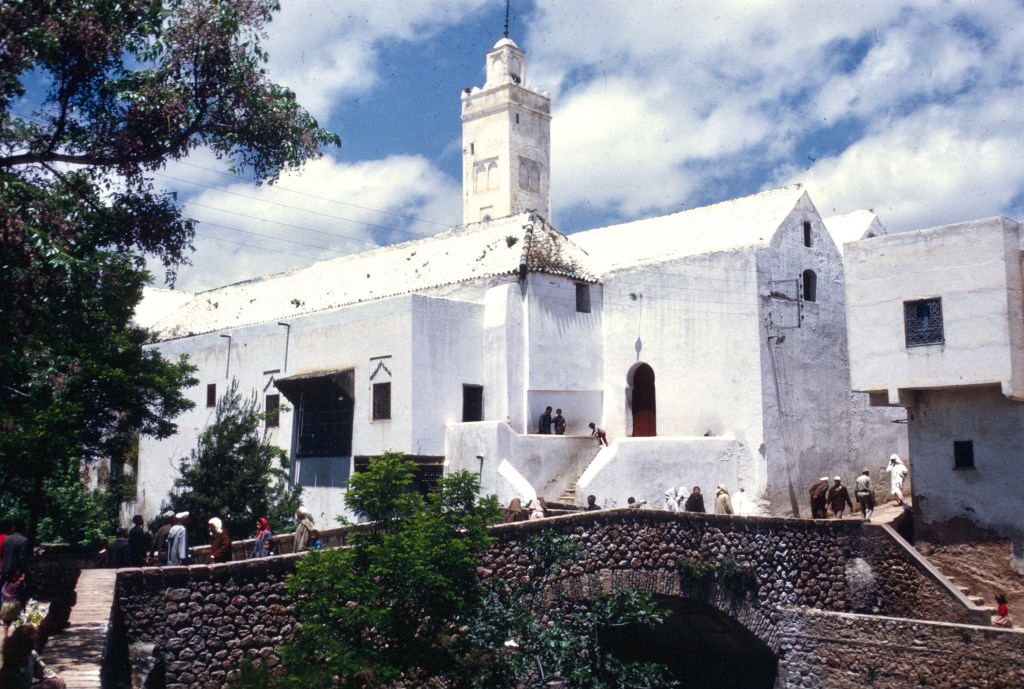
My housemate, Gaylord, and two women volunteers, Ruth and Jan, who moved into the Hadja’s house next to mine in 1970, took this route to traverse the medina once or twice a day to get to the lycee where they all taught English, crossing the river and continued exiting the medina through the Bab Mrebaa.
Walking through the bustling streets to get to shops or work was an everyday routine for us all.

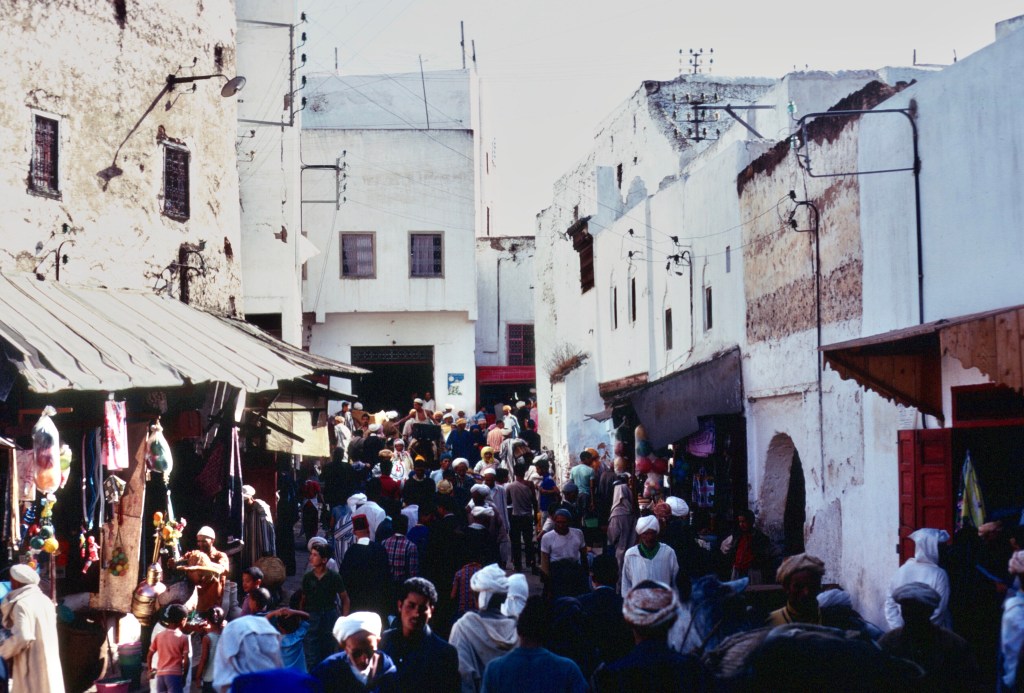
Walking through those same streets on warm summer nights, however, was a different experience, and a kind of enchantment. There were enough street lights to find one’s way, but the streets were dark and unevenly lit, and the lights placed in the winding alleys produced deep and angular shadows. Shops were closed and shuttered. The life of the street ceased for the day and withdrew to private domains as families gathered together in their homes.
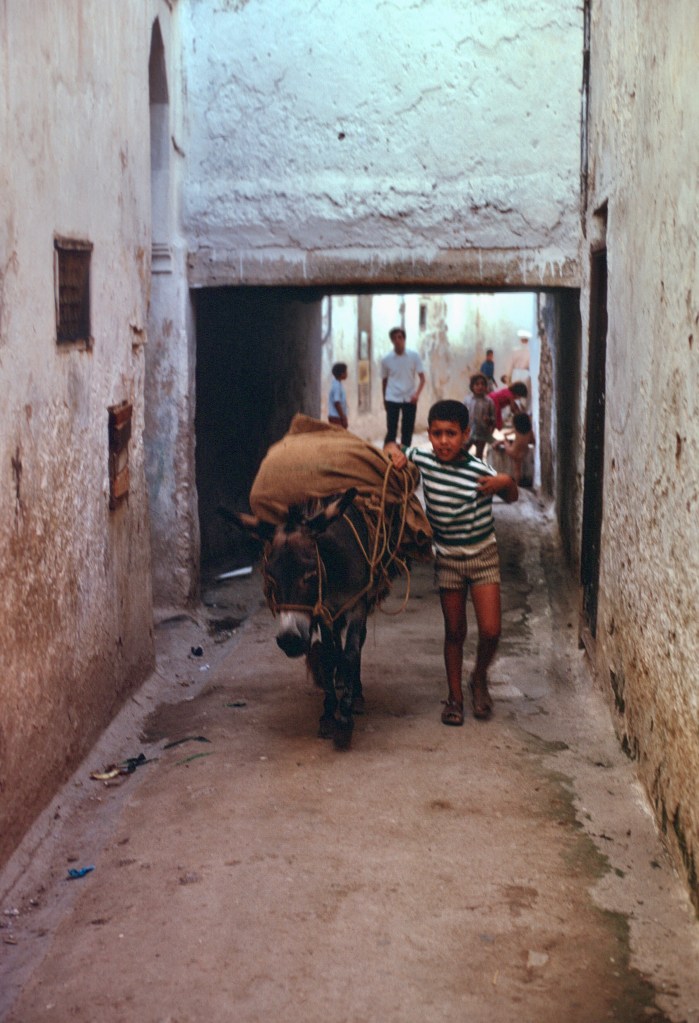

In the streets of the medina, an occasional passerby or two would disturb the silence, perhaps moviegoers returning from the Cinema Al-Arabi or a hammam. If they passed below the room of my house that looked down on the street, I would hear quiet conversations or someone whistling the theme from a spaghetti western. And as they moved away, their voices and their footsteps on the hard packed earth became fainter and fainter until silence flowed back into empty street.
In the summer of 1968, when traveling across Spain, I debarked from the Algeciras- Madrid night train in Cordoba at 4:00 a.m. A bar or two near the station were still open, but the city had gone to sleep. I walked for a time through the old quarters surrounding the Mezquita searching for a cheap hotel or pension. The city became quieter and darker as the streets became narrow and winding. The old medieval area around the Great Mosque was shuttered and dark. Not a single motor vehicule was in those streets, nor any persons. I had left Al Maghreb that day and now I felt truly began to fell that I had entered Al Andalus that night.

The past seemed to invade the present as I approached the great mosque. The hoards of tourists and sightseeing coaches had long disappeared. I would not have been surprised to meet a lamplighter or a night watchman or to have been challenged at a closed gate between quarters, but I met no one, not even an officer of the seemingly omnipresent Guardia Civil.
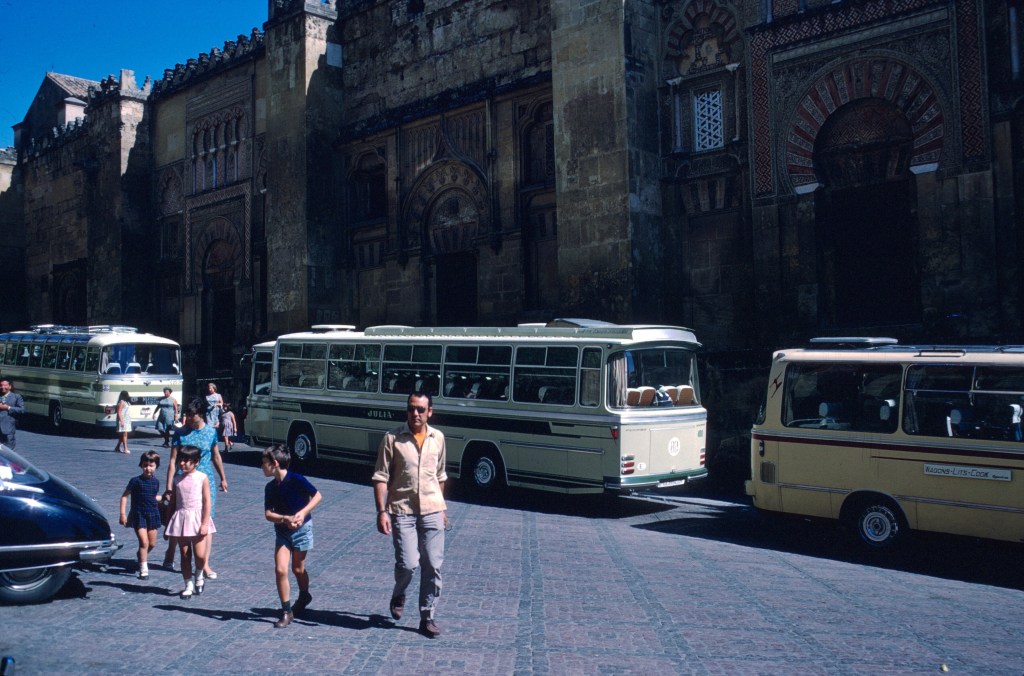
After a long, hot, and dusty day getting to Algeciras from Fes, and another long ride on the train from Algeciras to Córdoba, the fresh air of the summer night carried away some of my weariness. In the predawn darkness fainter shadows filled darker ones, shades of other times. Asleep the old city was magical, a scene that might have been drawn from A Thousand and One Nights. Alas, my tale had no Sheherazade to continue it. I eventually found a cheap place to sleep that night, and, the next night, in Madrid, I fell asleep in the Hotel Atocha to the sounds of traffic and trains rumbling in and out of the station across the boulevard.

One expects solitude in remote places. In the small Pyrenean town of Torla, perched on a mountainside only a few miles from France, I do not remember any night noise except the sounds of the rapids of the Rio Ara.

After long days hiking the national park and without a car, there was no place to go except to the sole bar, where the television replayed the day’s segment of the Tour de France. There I drank a shot of cheap Spanish brandy after dinner, before walking back to my pension room for some needed sleep. The cobble stone streets were dark. The night was calm, but the river, fed by melting mountain snows, roared.

A few miles from Torla and four years earlier, I made a foolish decision to walk up the Col du Tourmalet toll road to the summit of Pic de Midi. My hitchhiking partner had reached the col from Pau, late on a Saturday afternoon after classes, intending to return that night.
The toll road to the summit had closed to motor traffic for the evening, but we were determined to see the view and arrived on the summit just before sunset.
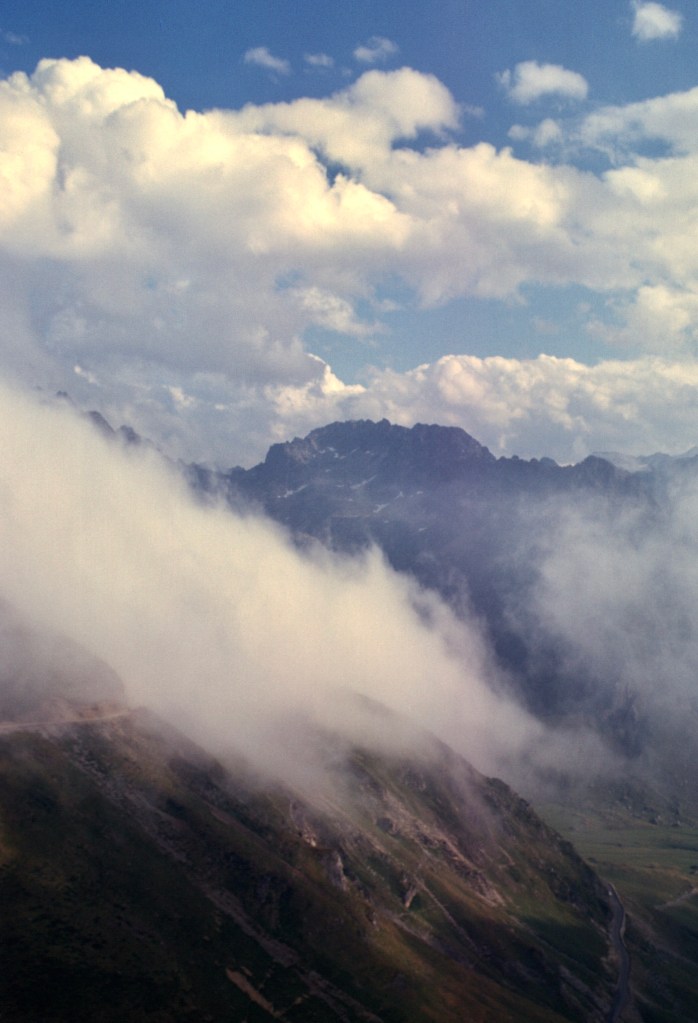
The scene near the summit was spectacular as the sun sank into sea of billowing, white clouds, with only a few peaks poking through.

The quiet serenity and the splendid vista seemed to justify the long hike down, but the rapid onset of night delivered a long, cold, descent to the Col or perhaps farther. We had hoped to catch an auto descending into one of the valleys, but, of course, there was almost no traffic over the Col at that hour, and the few cars which did pass wouldn’t pick up a pair of unexpected hitchhikers. Still, a full moon and a mild night made the long walk down to La Mongie impressive and not so much painful as exhausting. Dressed as we were in light summer clothing, the energy expended walking fast kept us relatively warm though the night air at altitude was cold.
The desk clerk at the ski resort in La Mongie expressed surprise upon our arrival near or after midnight. “I didn’t hear your car,” he said. Guests seldom arrived without a car and late at night, at that. It was not ski season and the hostel was virtually empty and cold, but a big relief from the cold mountain night.
The following day, needing to return to Pau, we once again stuck out our thumbs and waved national flags. A kindly young French family generously took us back up to the summit for a spectacular daytime view.
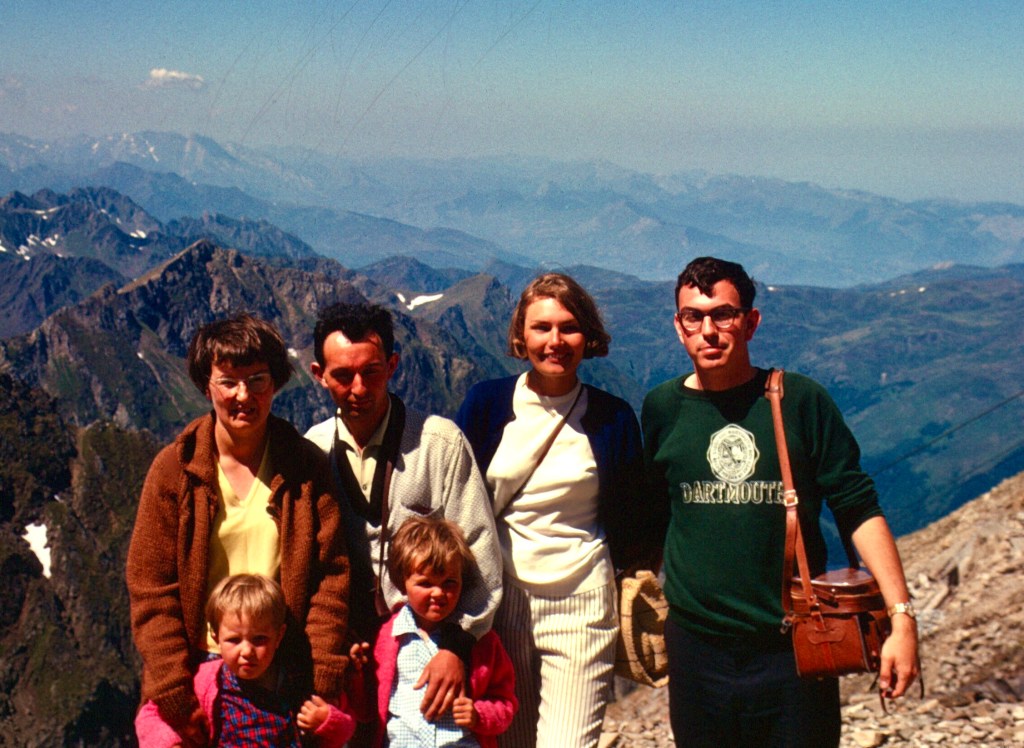
Today the toll road to the summit is closed, but a cable car will take you directly from La Mongie to the observatory atop the peak, where you can witness a sunset with much less effort, eat a good meal, spend the night in a comfortable room perched high in a Dark Sky Preserve, and then wake cozy and warm to a wonderful sunrise.
Finally, there was the night of a thousand stars in the Sahara. The Algerian trucker carrying Anne and me had driven through Ain Salah in a sandstorm. I was tired. The long harsh day that began atop the truck had exhausted me. We stopped for the night at Tajmout outside the dwelling of the self proclaimed poet, Bou Baggara. The driver, who often stopped there, had brought him a cone of sugar. Drinking tea with us, sitting around a brazier under a gas lantern, Bou Baggara and his guests traded gossip and news, and he ended the evening by reciting extemporaneous poetry including one praising Hassan II, then ruler of Morocco, knowing that we had come from Morocco.
Finally, we retired to our sleeping bags, outside on sandy ground, under a clear sky filled with stars. I had spent many hours that day huddled with our gear on the canvas top of the truck. After hours of being burned by the sun, deafened by the truck’s engine, choked by dust, and chilled by the wind, the silent desert night quickly put me to sleep. The next day’s ride took us to Tamanrasset. There were other nights on the desert, but I remember that one above the rest.


In rereading what I have written, I should add to this string of experiences from different times and places, sleeping on the ramparts of an empty British fort adjacent to the slave castle at El Mina on the Gold Coast of Ghana. There was no other accommodation in those days, nor would I have wanted any!


Wonderful – many thanks – my first visit was January/February 1964 https://www.britishmoroccansociety.org/early-volunteers-in-morocco-david-denison/
which was 4 years after the BIG one in Agadir when it’s thought 12,000 to 15,000 died. BMS is relief funding for this quake – guess you’ll have your own US Fund Relief. Best, David Denison
LikeLike
Wow, that was full of tales! I can see why the recent earthquake must have hit close to your heart, Dave. It must have been some job to get all of your slides into digital format. But I liked those projectors. You’d all sit down for a slideshow of an evening and tell tales as you watched. This is something we have lost to technology… unless of course you turned your blog into a podcast-slideshow with commentary. But that wouldn’t be quite the same, would it?
LikeLike