
This article has been contributed by Louden Kiracofe, friend, climbing buddy, and retired doctor.

My wife and I arrived in Rabat in July 1969 – the year of the first lunar landing – for my two-year assignment as Peace Corps physician to care for the P.C. volunteers. The volunteers were situated throughout Morocco. I would see each one at least twice a year to administer required immunizations. As a physician from the United States, I was often asked to see individual Moroccans as patients and was frequently invited to attend private ceremonies rarely seen by foreigners. Often I was sought for medical advice by tourists and Americans living in Morocco. Vincent Crapanzano contacted me regarding his wife, Jane, who had seen a local doctor and was told she had chronic appendicitis and had been scheduled for surgery. At Vincent’s request I saw Jane. After my examination I believed Jane had a bacterial infection – salmonellosis – a common bacterial infection that many volunteers (as well as myself) contracted. I did not believe she needed surgery (an appendectomy) and started her on antibiotics. She rapidly responded. They were grateful and we began to occasionally get together.
Vincent is a world-renowned cultural anthropologist who was researching Sufi beliefs and healing ceremonies. His investigations were later published in a book: Tuhami: Portait of a Moroccan. Vincent asked if I’d accompany him to a Sufi healing ceremony. He had previously witnessed such a ceremony and wanted to be certain that what he’d seen was actual fact (really happening) and not the consequence of his being in a trance along with the Sufis performing the ritual. I readily accepted his invitation.
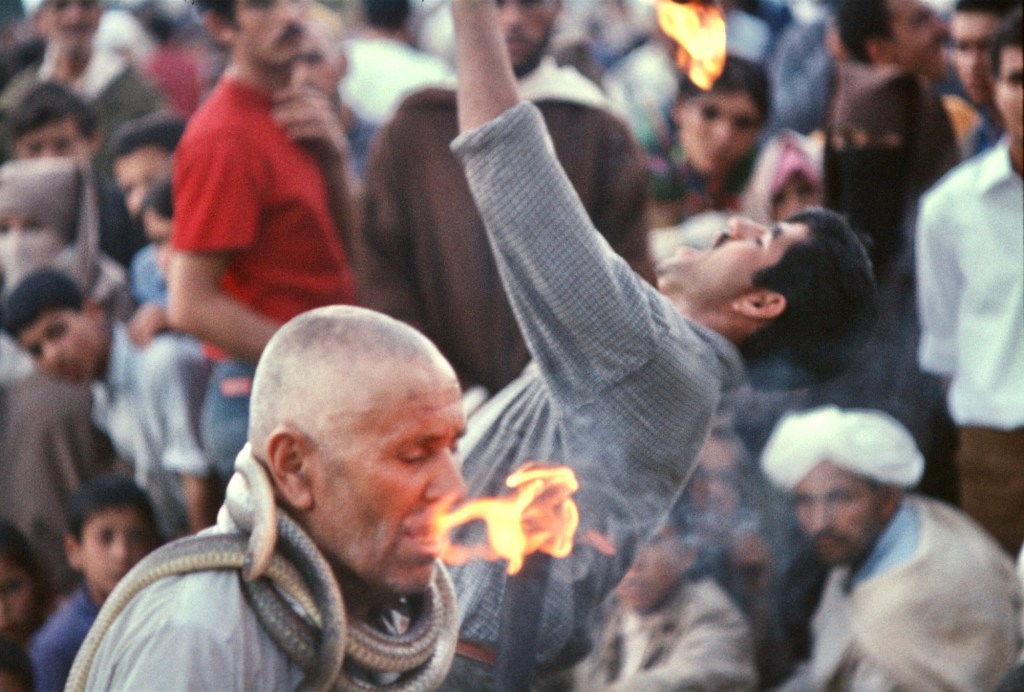
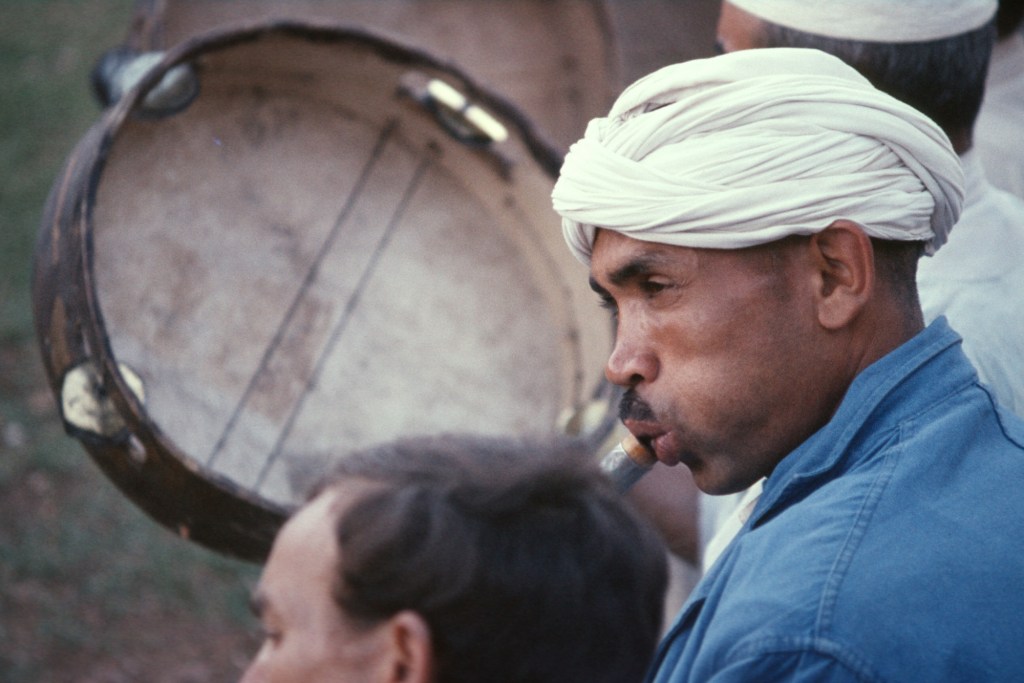
We, one late evening, drove to an old section of Rabat – an area where tourists didn’t venture. Vincent rapped on a door and we were invited in and up the stairs to a small unfurnished room with only two chairs which were for us. The healing ceremony was to heal the young daughter of the host. The 8-year old girl had suddenly suffered a paralysis of her right arm. It was thought to be the consequence of having offended a djinn, a spirit. It would be considered a “conversion reaction” by Western medical standards. Several minutes later another door opened and 10 men clothed in heavy djellabas filed in. One sat on a small stool in a corner with a drum. Seated next to him a man who played the raita, a double-reeded flute with a high pitched, shrill sound. A hibachi with glowing coals was positioned in the center of the room and a small kettle was placed upon it. It quickly began to steam. The rest of the men formed a circle. The playing began. With the loud drumming and shrill sounds of the raita, the circle of men began to chant as they shuffled forward. As the music and chanting grew louder and louder, several men started to brandish jambiyyas (a traditional curved dagger) which had been concealed in their djellabas. At that point it seemed to me that the men were in a trance. The host positioned himself protectively in front of Vincent and me. One of the dancers began slashing his bald scalp with his jambiyya. Blood flowed freely down his face. Another went to the hibachi, picked up the kettle and began pouring the boiling water into his mouth. I could see steam coming from his mouth. Then another removed his sandals and with bare feet stood upon the glowing coals. Then rejoined the men still shuffling in the circle. With no apparent signal the ceremony abruptly ended. The men all left the room together and after several minutes they re-entered having animated conversations with each other. I looked very carefully and saw no evidence of scalp wounds on the man who slashed his shaven bald head; no evidence of discomfort in the man who stood barefooted on the hibachi. Another door suddenly opened and several women carried in large trays of food. Everyone began eating and amiably conversing including the man who’d poured boiling water into his mouth. It was understood that the afflicted girl was healed. I did not have any sense of having been in a trance and believed I could verify that what Vincent had been observing and what we both saw that night had – though almost unbelievable – actually occurred.


 Morocco That Was
A wonderful account of a Morocco fifty years gone by, where ancient ways and present day progress were not so far apart. I wonder if these traditions still exist, and hold the power that they once did. Bravo to the good doctor whose services, thankfully, I never needed. In those days I called him Dr. Cure-a-Cough.
LikeLike
What an absolutely fascinating experience! Thanks for sharing. I never knew you were a medic, Dave.
LikeLike