
My home in Sefrou was about 30 kilometers from my workplace in Fes. I liked the fresh air and small town atmosphere of Sefrou and I was fortunate that I could live there. The downside was that life in Sefrou required that I take a shared taxi or local bus to Fes every morning.
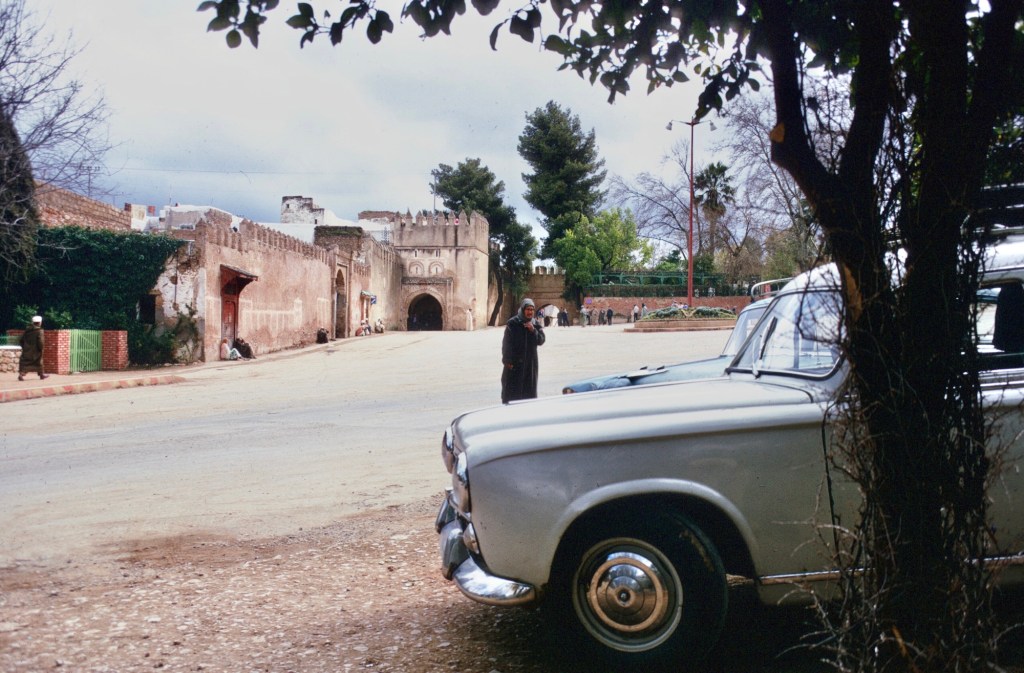
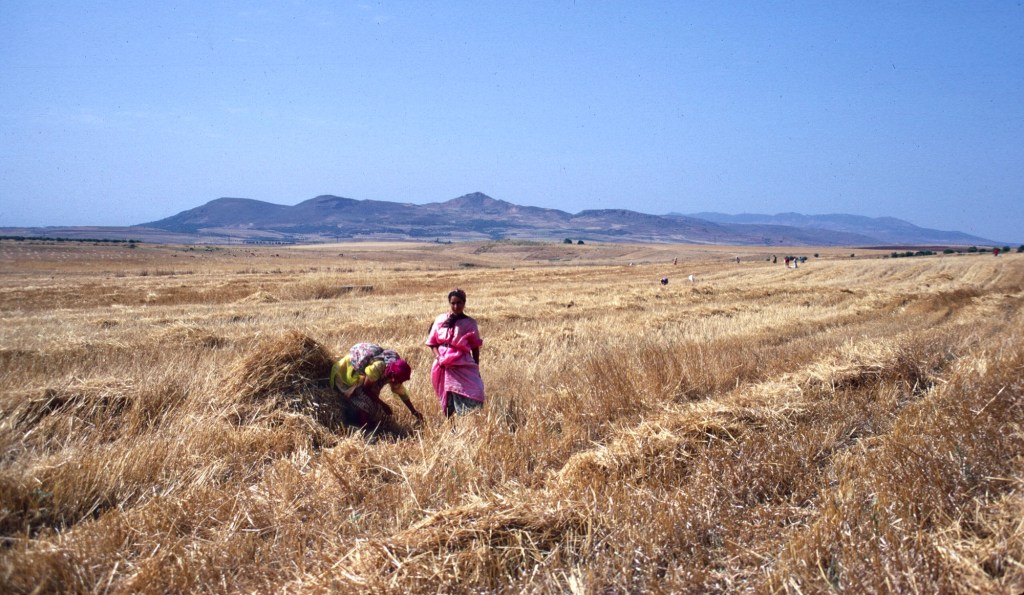
Once one clears the edge of the depression in which Sefrou lies, the road descends to the rich agricultural plains of the Saïs. The ride wasn’t a long one, but it soon became a routine, and I needed a way to pass the time. I read books.
One of most memorable was Mikhaïl Bulgakov’s novel, The Master and the Margarita. Bulgakov died in 1940 and his novel was only published in the late 1960s.

The copy I read must have been the earliest English language translation, and how I came by it, I can’t say, though Peace Corps volunteers often passed on their books to others once they had finished them and I most likely got it from another volunteer.
Today there are many translations of the novel, several in English alone, and Bulgakov’s work is highly regarded as one of the few novels of quality written during the Soviet era. That said, it is not widely read. Many Americans do not like Russian novels because they are often long, and filled with difficult to pronounce Russian names, with patronymics, diminutives, and nicknames. In Dostoyevsky’s novel “The Idiot,” the character Prince Myshkin is referred to by his full name is Lev Nikolayevich Myshkin, his patronymic, Lev Nikolayevich (using his father’s name, Nikolai), his diminutive Myshkin (a shortened, informal form of his last name), his nickname, the Idiot (a derogatory term used by some characters in the novel), and his formal title, Prince Myshkin. These variations do highlight the cultural and social nuances attendant with their use, and the author used them for that purpose.
The Master and the Margarita long and complex structure may also deter some readers. There are three intertwined plots: one centers on a writer driven insane by the havoc wreaked by Satan when he appears in 1930s Moscow, another on Pontius Pilate, with a realistic, but different, depiction of the judgement and death of Jesus, and the last, on a love story of a woman who would sell her soul for the man she loved, a novelist struggling with writer’s block.
The novel satirizes life under Soviet communism. Before he wrote it, Bulgakov had been a successful playwright, and it is said that Stalin attended one of his plays 15 times! Perhaps this is why Bulgakov survived the purges of 1930s. The secret police seem to have known that he was writing an unflattering account of the system.

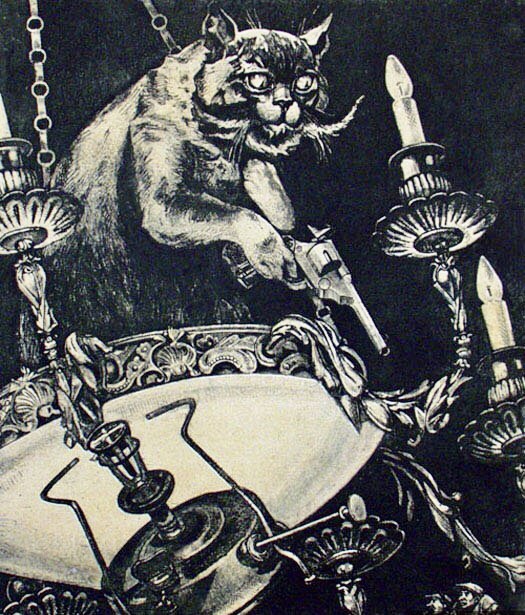
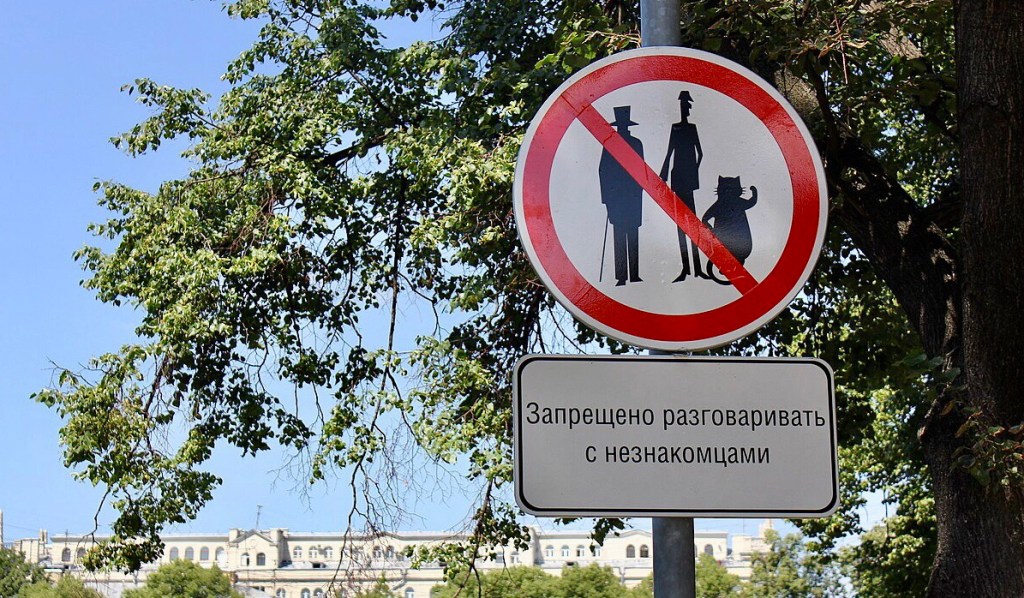
The novel mixes stark realism with fantasy and satire, sometimes in startling ways and sometimes in broadly comic ones. One can read it quickly to pass time as I did then or one can spend a lifetime examining the connections between the characters and plots and speculating on what Bulgakov is really saying. Much in the novel is not as it really seems, which should be taken for granted in a novel where one character is a huge, black, chess-playing cat, who talks, walks on his hind legs, and packs a pistol.
Just recently there have been newspaper articles about a film version of the novel now playing on Russian theaters. The film has become a big hit there, and those commenting on it are quick to speculate on whether (or when) the censors will remove it. Authoritarian hypocrisy and toadyism aren’t limited to the communists.
There’s no better time to read Bulgakov. While many in America make their own Faustian deals in advance of the national election, others look forward to the arrival of Easter with its promise of redemption and new life.

 Morocco That Was
I love it when you get engrossed in a book and then you look up and realise where you are – somewhere amazing like the Fez-Sefrou road at harvest time. And you can also feel a sense of culture shock. Reading a book like that, in your situation, may well have done it it. Another interesting post. Thanks, Dave.
LikeLiked by 1 person