
In his recent debate with Donald Trump, Joe Biden alienated alley cats the world over by accusing Trump of behaving like one. “You have the morals of an alley cat,” pronounced President Biden with scorn. The backlash was immediate and fierce.
“I might be an alley cat, but I’ve never had to resort to a purrnstars for sex,” said one Tom. Another, Minou, from Paris, lamented that some anglophones might confuse being a “félin” with being a felon. Moucha, from Sefrou, said Trump’s Access Hollywood remarks to Billy Bush on grabbing pussies still gave her nightmares.
Cats do not have the right to vote, so Biden’s offensive comment will have no effect on the 2024 election, but his remarks certainly elicited much comment around the kibble.
Trump brushed off the comment, contending that everything that he has ever done is purrfect, and, in any case, the only animals of concern to him were sharks and he would like to kill them all.
In Morocco, cats are regarded in a manner as kindly as possible in a country where many individuals have to scramble to eke out a living and put food on the family table. While living there, I heard stories about the prophet Mohammed and cats including the following which may be apocryphal, but certainly widespread:
“The Prophet had a favourite feline. She was called Muezza, and there’s one well-known story of both of them. One time, when the call to prayers was heard, Muezza was asleep on one of the Prophet’s robes. Rather than disrupt Muezza’s slumber, the Prophet cut off part of his sleeve to leave him in peace. Throughout his life, the Prophet was seen to always practise immense care for Muezza.” (HalalZill)
According to Wikipedia, cats enjoy a special status:
“The cat is considered “the quintessential pet” by Muslims, and is admired for its cleanliness, and was a beloved animal to Muhammad. Unlike many other animals, such as dogs, Islamic Law considers cats ritually pure and possess baraka (blissful energy), and allows cats to freely enter homes and even mosques. Although cats are ritually pure, their flesh is forbidden. Cats are believed to be the most common pet in Muslim countries.”
“In Islamic tradition, cats are admired for their cleanliness. They are considered to be ritually clean, and are thus allowed to enter homes and even mosques, including Masjid al-Haram. Food sampled by cats is considered halal, in the sense that their consumption of the food does not make it impermissible for Muslims to eat, and water from which cats have drunk is permitted for wudu (the ablution that is done by Muslims). Furthermore, there is a belief among some Muslims that cats seek out people who are praying.“
I remember the cats of Morocco fondly. Street cats were common. One night in 1973, on my way to a home in the Oudaïa on Rabat, I came upon a cat and a rat, facing off in the middle of a narrow and dark alleyway. The former sat on his haunches, waiting for his prey to make a move to escape. As I was late, and hurrying, I never saw how that encounter with the rat ended, but I suspect that the cat had a big meal that evening.
Incidentally, that rat was the only one that I ever saw in Morocco, bar one other: moving into the Seti Messaouda house, as I entered the house for the first time, I saw a rat quickly disappear into the hole of the squat toilet in the bathroom. It evidently was able to swim through the sewer system, and it never reappeared as the Merrycat, who had adopted me at the primary school, and moved in to become the resident feline.
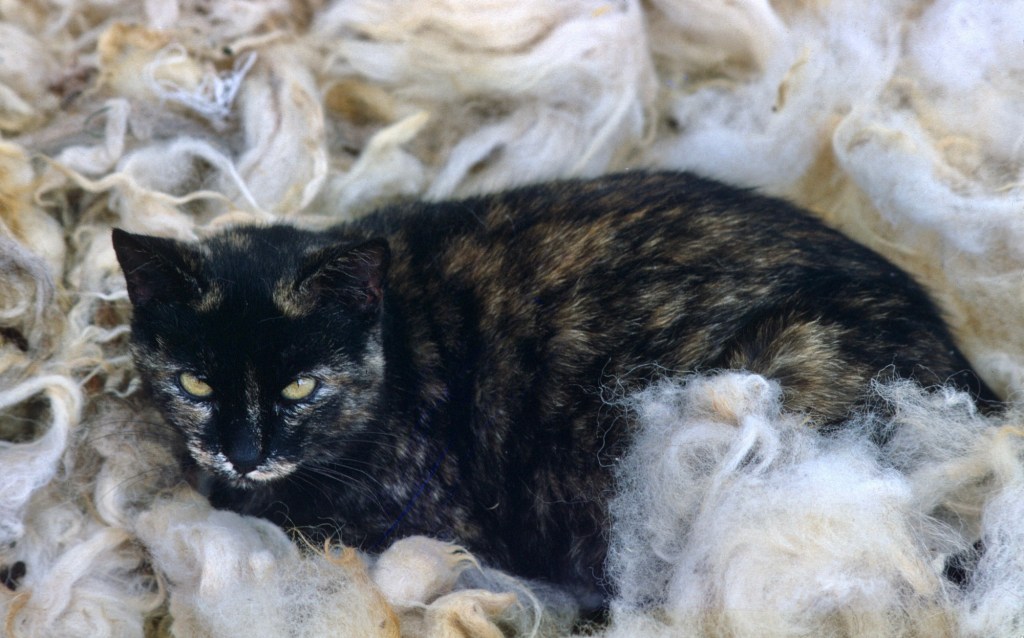
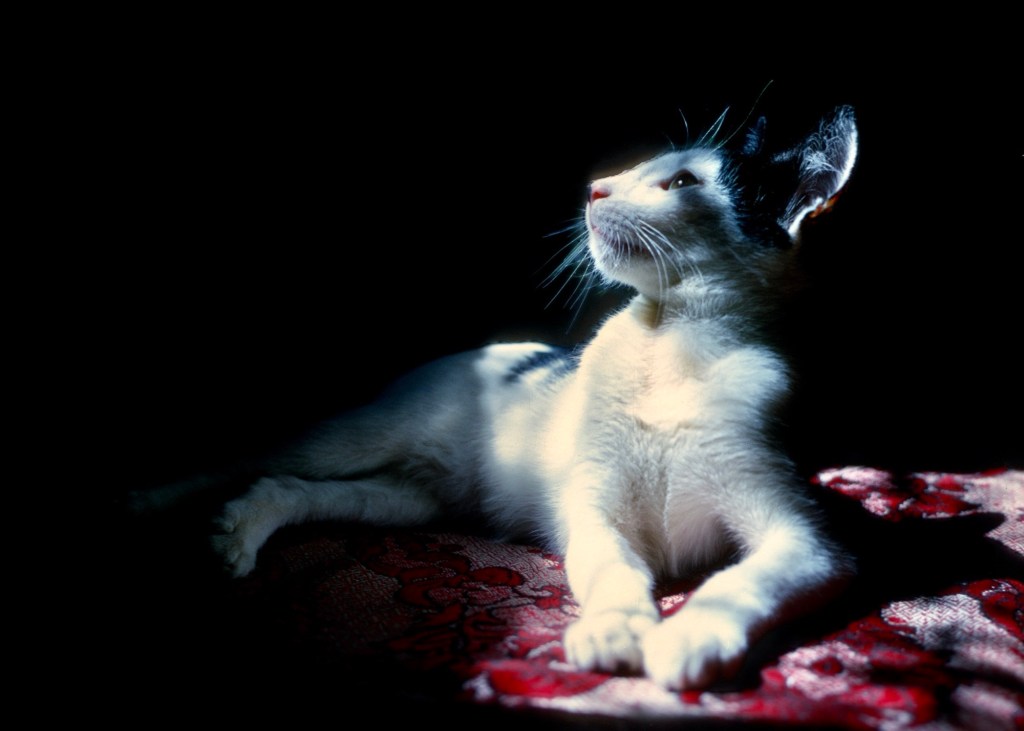
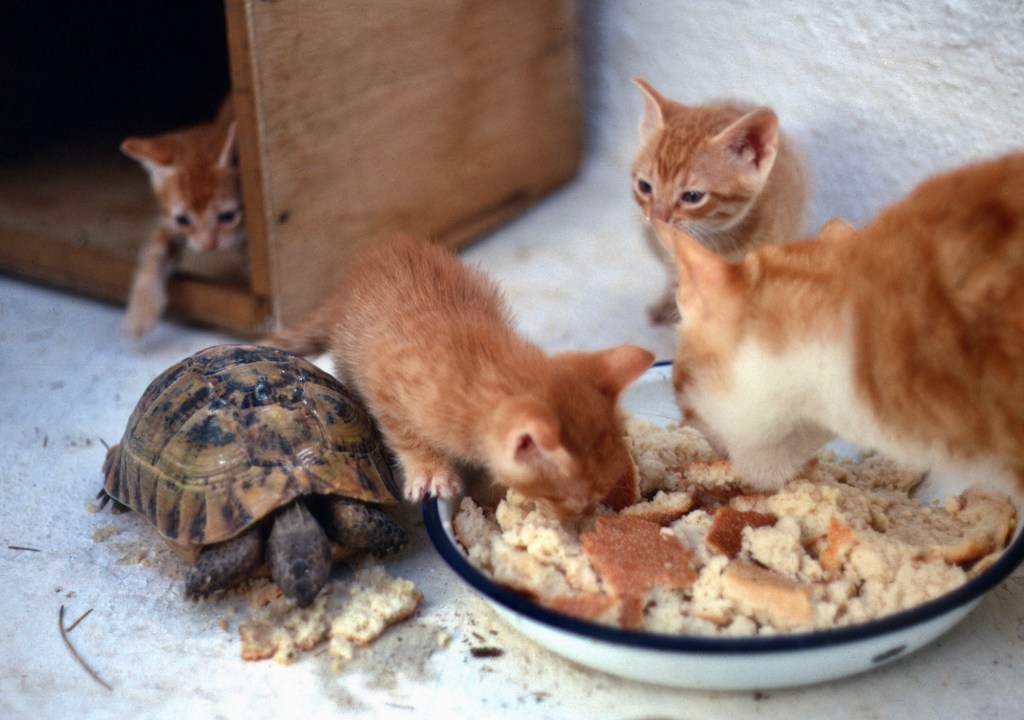
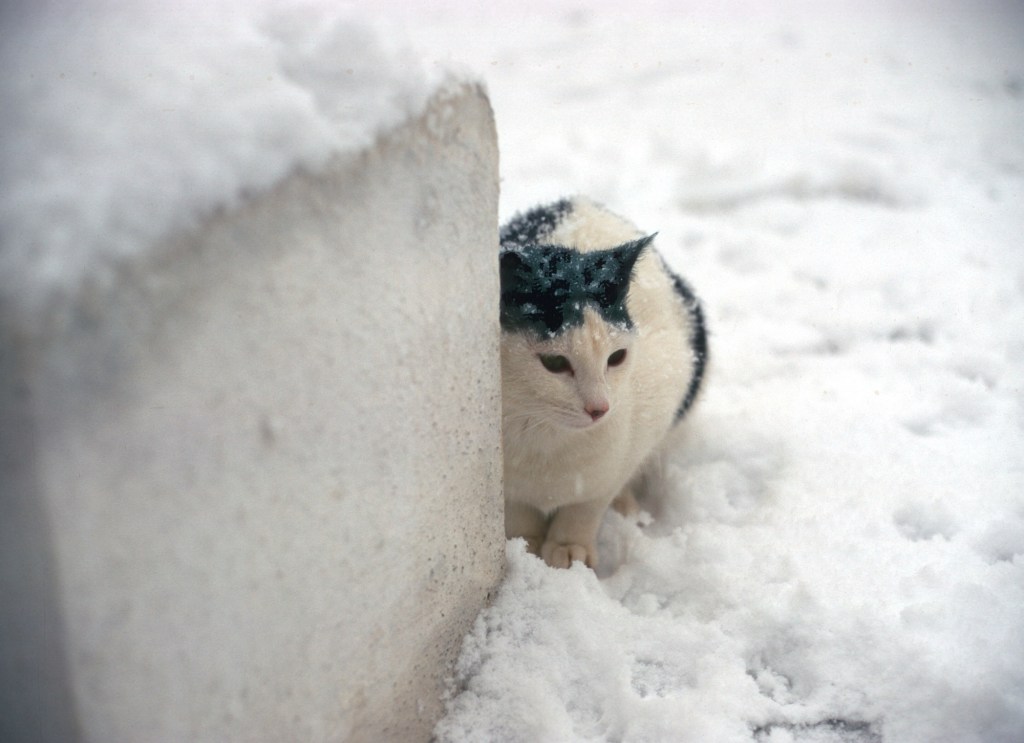
The following small gallery of old photos of Moroccan cats.






I’d say that alley cat comment about Trumpet was an insult to felines.
LikeLike